5.1 External reference
54 Acqiris SA240P User's Manual
5.1 External reference
For applications for which the user wants to replace the internal clock of the acquisition card and
drives the ADC with an external source, an external reference signal can be used. The reference
signal can be entered into the ADC card by the dedicated REF IN connector.
External reference (REFIN)
For applications that require greater timing precision and long-term stability than is obtainable from
the internal clock, a 10 MHz or a 100 MHz reference signal can be used.
The external reference is nominally at 10 MHz or 100 MHz. However, frequencies in a range will be
accepted. If your input is not at exactly the specified value, you must remember to compensate for
the difference in your application since the ADC card and the driver have no way to know about such
deviations.
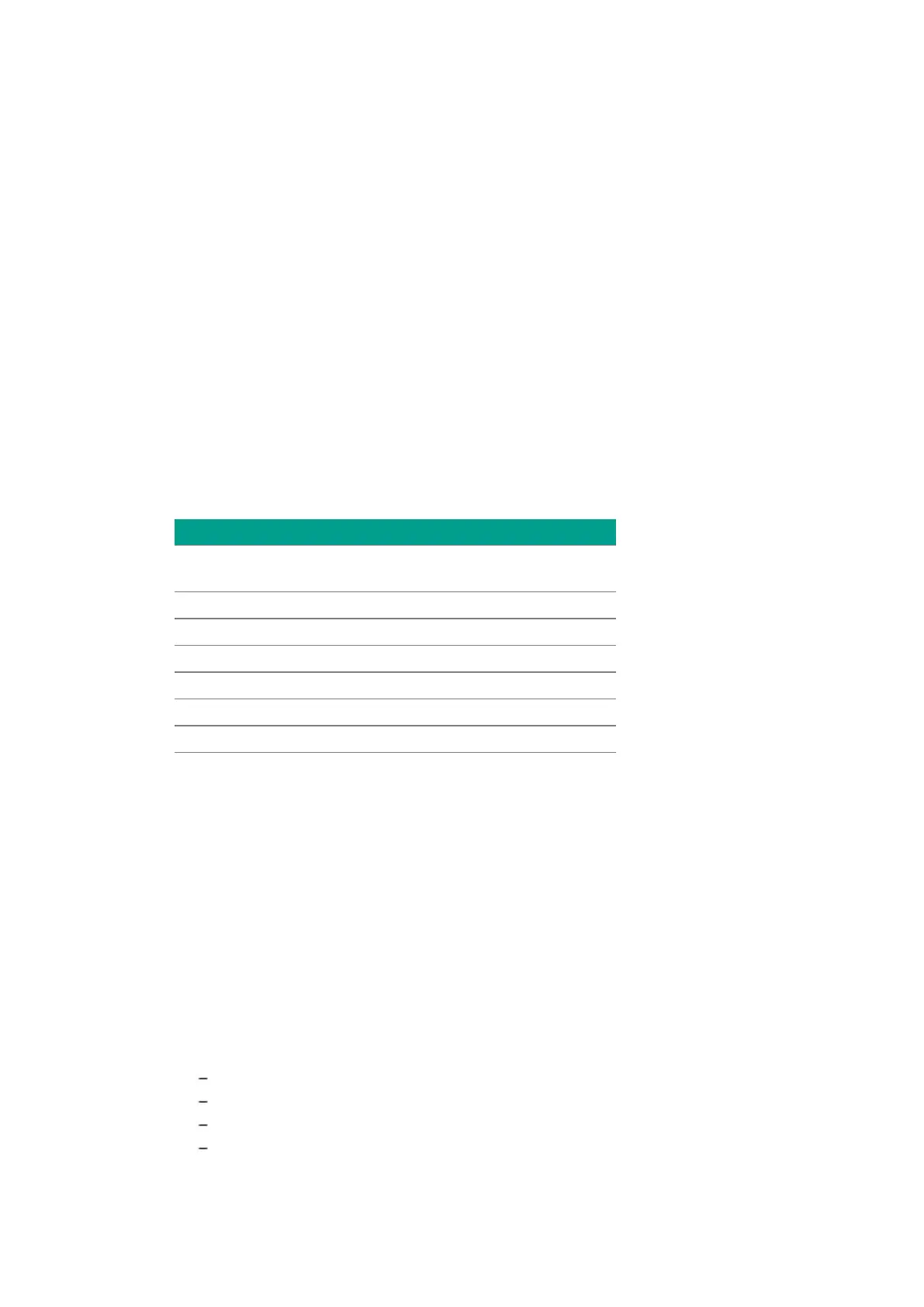
Parameter Value Tolerance
Nominal Frequency
100 MHz or 10
MHz
±1 kHz
Signal level -3 dBm to +3 dBm
Impedance 50 Ω
Coupling AC
Minimum ampliture 440 mVpp (sinus)
Maximum power 2 mW
Maximum voltage 900 mVpp (sinus)
Table 5.1 - External reference specifications.
If synchronization between several ADC cards is required, the reference signal should be applied to
all of them.
5.2 Trigger modes and time-stamps
Trigger modes
As listed previously the trigger source can be:
the signal applied to an input channel (internal triggering)
an external signal applied to the TRG IN front panel input connector (external triggering)
a software trigger (See How to generate a software trigger? (page 76))
a self-trigger (See Self-Trigger (page 57) for this specific mode)



 To Next Page