ACT550 USER MANUAL
480258EN-1.0 29/06/2016 Page 12 of 34
POL.
C/ CALIDAD, 66
28906 GETAFE
Tel: +34 91 665 26 26
Fax: +34 91 665 23 24
N.I.F. ES-A-28905065
ER-
4.8. How the Reception of Radio Works
AM and FM radio signals are broadcast from transmitter towers located around your city. They are
intercepted by the radio antenna on your vehicle. This signal is then received by the radio and sent to the
vehicle speakers.
When a strong radio signals has reached the vehicle, the precise engineering of your radio system
ensures high quality reproduction. However, in some cases the signal coming to the vehicle is not strong
and clear. This can be due to factors such as the distance from the radio station, closeness of other
strong radio stations or the presence of buildings, bridges or other large obstructions in the area.
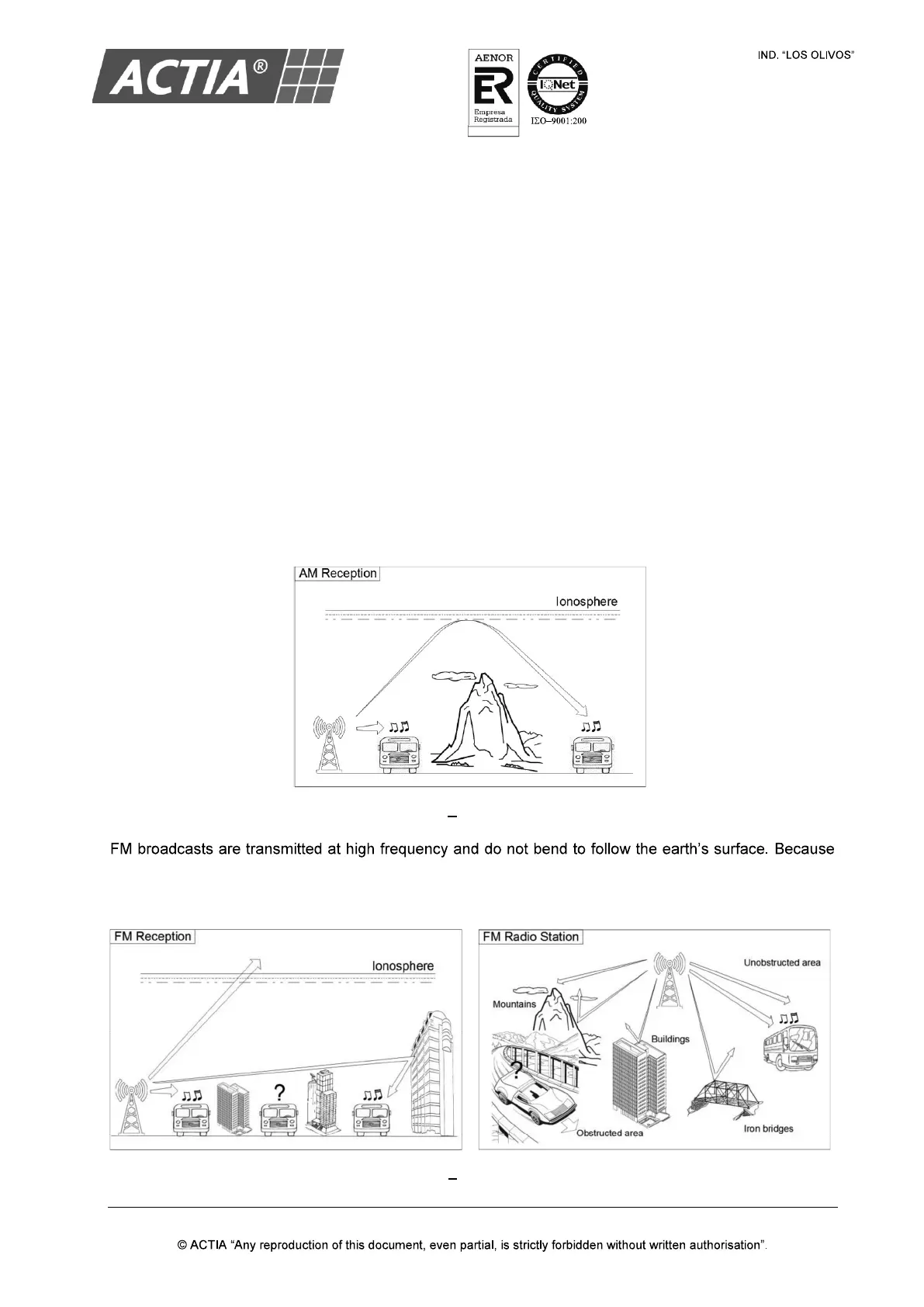
AM signal reception is usually better than FM reception. This is because AM radio waves are transmitted
at low frequency. These long, low frequency radio waves can follow the curvature of the earth rather than
travelling straight out into the ionosphere. In addition, they curve around obstructions so that the can
provide better signal coverage. Because of this, clear AM broadcasts can be received at greater
distances than FM broadcasts.
Figure 6 AM Reception
of this, FM broadcasts generally begin to fade at short distances from the station. Also, FM signals are
easily affected by buildings, mountains, or other obstructions.
Figure 7 FM Reception


 To Next Page