8
3.4. Does Blood Pressure Vary?
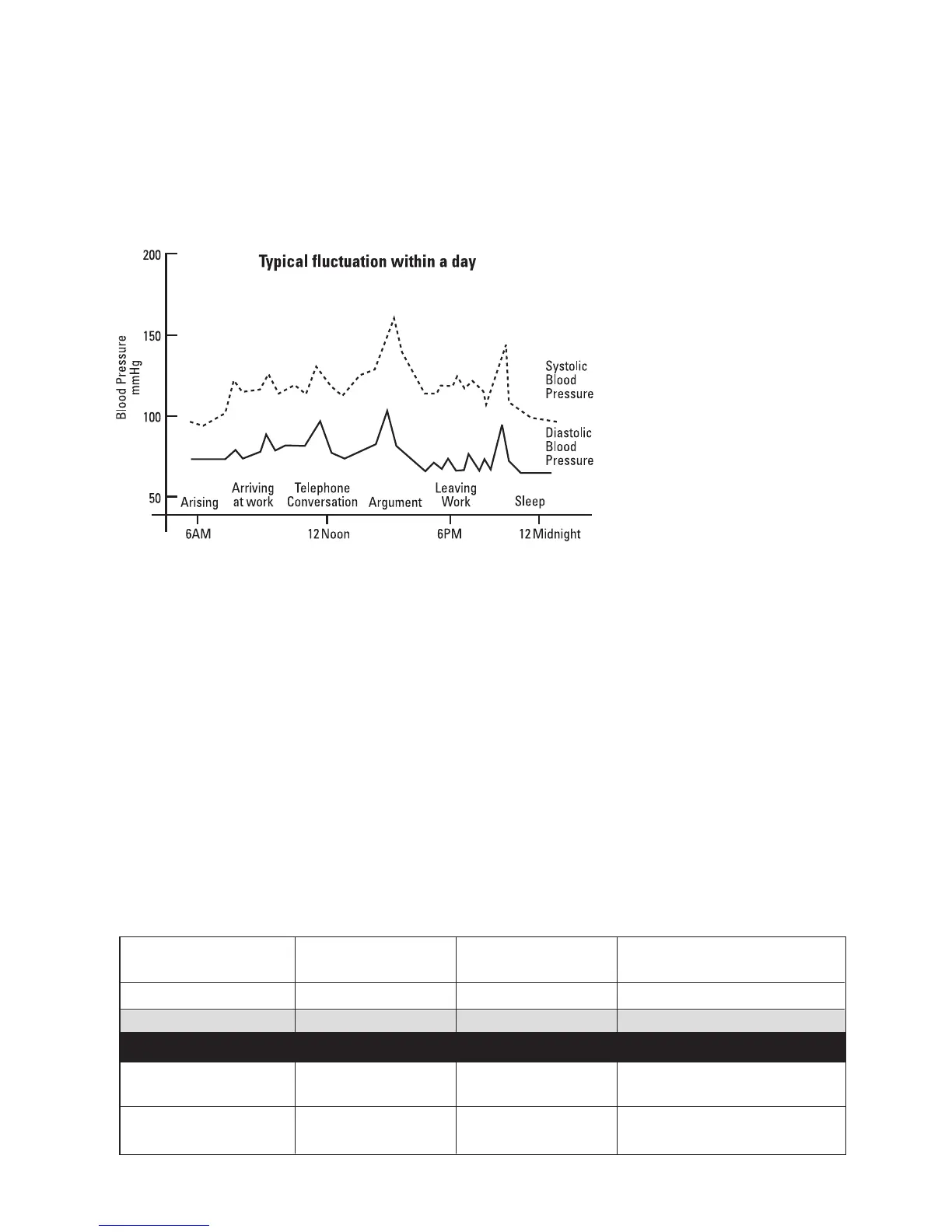
Constantly. An individual's blood pressure varies greatly on a daily and seasonal
basis. It changes throughout one's lifetime. It is not uncommon for systolic
pressure to vary by 40mmHg or more throughout the course of a single day!
While generally not as volatile, diastolic pressure can still vary significantly. In
hypertensive individuals,
variations are even more
pronounced. Normally,
blood pressure is at its
lowest during sleep and
rises in the morning and
throughout the day. The
chart (left) illustrates the
fluctuations that could
occur in a typical day.
3.5. What is Hypertension?
Hypertension (high blood pressure) is elevated systolic or diastolic levels. In 90
to 95 percent of the diagnosed cases, the specific causes are unknown,
although the condition is often linked with family history, and lifestyle. This is
referred to as essential hypertension. In the remaining cases, high blood
pressure is a symptom of an underlying, often treatable condition, which if
corrected, may normalize blood pressure. This less common type is known as
secondary hypertension. Hypertension, if left untreated, may contribute to kidney
disease, heart attack, stroke, or other debilitating illnesses. The following
standards for assessment of high blood pressure in adults have been established
by the Joint National Committee, 2003.
Range Systolic Diastolic Precaution
Classifications Blood Pressure Blood Pressure Measures
Normal <120 <80 Monitor regularly
Prehypertension 120 - 139 80 - 89 Contact your physician
–– H Y P E R T E N S I O N ––
Stage 1 140 - 159 90 - 99 Contact your
(Moderate) physician Immediately
Stage 2 ≥160 ≥100 Contact your
(Severe) physician URGENTLY
(JNC-7 report: Joint National Committee on Prevention, Detection, Evaluation and Treatment of High Blood Pressure / 2003)



 To Next Page