! WARNING !
- Keep brake discs free from oil and
fatty materials; otherwise braking
effect will be strongly reduced.
- Having performed any work on
the braking system, one must
always actuate hand brake lever or
foot brake pedal, to ensure that
brake pads will fit against brake
disc and pressure is established.
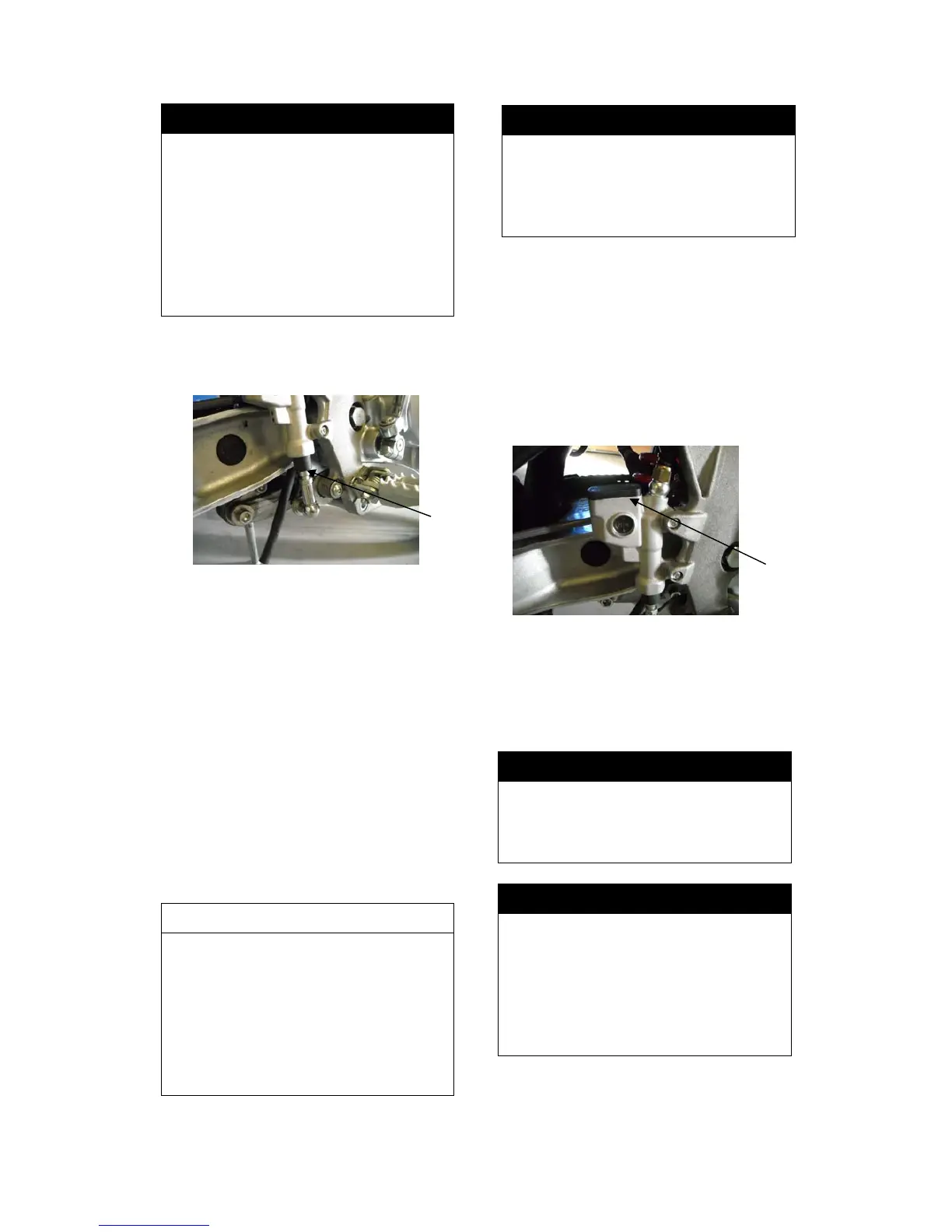
Changing the basic position of the
brake pedal (*)
Free play can be changed by turning
piston (1).
Measured on the outside, the foot brake
pedal must have 3 to 5 mm of free play,
before the piston rod can move the
piston in the rear brake cylinder.
Checking rear brake fluid level
The reservoir for the rear disc brake is
integrated in brake pump, placed in the
right side of the engine, near exhaust
pipe.
Brake fluid level must not drop below
the “MIN” marking when the vehicle is
in an upright position.
! CAUTION !
- If free play is not present, then
pressure can build up in the brake
system when driving, causing rear
wheel to brake. Brake system can
overheat and may even completely
fail in extreme cases.
- Don’t ride with foot pressing rear
brake pedal.
Refilling the rear brake fluid
reservoir (*)
Unscrew the cap (1), diaphragm and
add brake fluid DOT 4 until it reaches
the MAX mark, then place diaphragm
and cap back on. Clear off spilled or
overflowing brake fluid with water.
Checking the rear brake pads (*)
The brake pads can be inspected from
the rear. The thickness of the linings
cannot be less than 1mm.
! WARNING !
At their most worn point brake pad
linings should not be thinner than
1mm, otherwise can lead to brake
failure.
! WARNING !
- Store brake fluid out of reach of
children.
- Brake fluid can cause skin
irritation. Avoid contact with skin
and eyes. If you get brake fluid in
your eyes, clear with plenty of
water and consult a doctor.
! WARNING !
If brake fluid level drops below the
minimum or brake system has a
leak or brake pads are completely
worn. In this case, consult an
authorized dealer immediately.
1
1
PR4 User’s manual Page
22


 To Next Page