48
Discharge ductwork:
As the heat pump takes the energy contained in the extract air, the stale air discharged by the system is cold.
To avoid all risks of condensation inside or outside the duct, the ductwork must have at least 25 mm
insulation.
Wherever possible, the ductwork should preferably not be in the heated space.
The stale air can be discharged through the wall or the roof.
In all cases, the air outlet will be designed suitable to avoid generating major pressure drops. An air
outlet that generates too many aeraulic pressure drops can cause the system to malfunction. Ideally use ALDES
aeraulic roof/wall outlets.
Precautions for using flexible ducts:
• Make sure that the ductwork is leaktight at the sleeves and connections using fixing collars.
• Avoid pointless bends.
• Stretch the duct in the straight sections.
• Make sure that the ducts are not crushed.
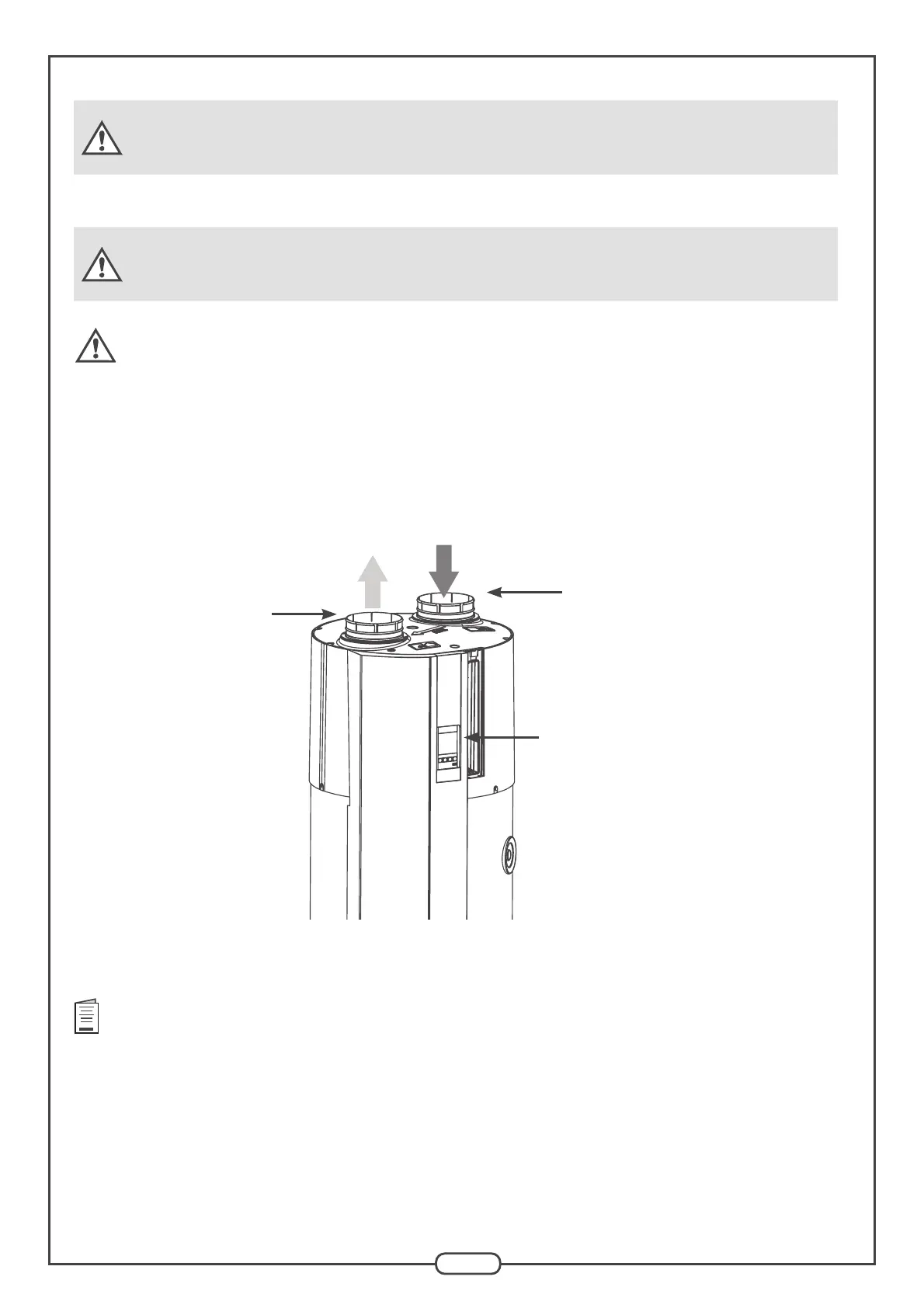
3.4.1. Air intake and discharge connectors
The ducts must be one with the water heater, for example by using the collars supplied as accessories. Make sure,
nevertheless, that it will still be possible to dismantle the aeraulic ductwork in the future.
Refer to the layout diagram (1.5) for detailed dimensions.
Supply (extracted hot air)
Front of the control panel
Discharge (cold air)


 To Next Page