11
Testing Steam Pressure Gauge
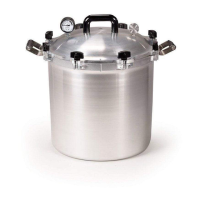
ALL AMERICAN pressure cooker canners are weighted-gauge canners. The pressure dial gauge is supplied
as a reference only for when the unit is pressurized and timing for canning may roughly begin, or when the
pressure has dropped to zero and the lid may be safely removed. The accuracy of your pressure dial gauge is
+/- 2 pounds.
To test if the pressure dial gauge is functioning properly, compare the dial gauge to the regulator weight
when heating the unit. If the gauge is within +/- 2 psi of what you have the regulator weight set at when it
jiggles, the gauge is fine and doesn’t need to be replaced. If the gauge is more than +/- 2 psi of what the
regulator weight is set at when it jiggles, the gauge should be replaced.
Use Adequate Liquid/Water
It is critical to understand the importance of having enough water in the cooker when in use. During cooking
or canning, you should use 2 to 3 inches of hot water in the bottom of the canner before you place the filled
jars on the rack. Water level must be maintained during the canning process. Check the water level between
batches. Please read the recipes or canning instructions. You must never allow the pressure cooker to boil
dry. If there is not enough water in the pressure cooker and it boils dry, the unit will be ruined, cannot be
repaired, and must be replaced.
Filling Cooker
The pressure cooker/canner should never be more than
2
⁄
3
full when cooking foods like soups or stews.
When cooking foods which expand, please refer to number 11 on page 1 for foods you should never cook.
Otherwise, fill the cooker only
1
⁄
2
full. Half full means the pot is
1
⁄
2
full of the food and water combined,
resulting in never occupying more than half of the total volume of the cooker.
Excess Pressure
The pressure regulator weight is designed to release excess steam at 18 pounds of pressure. However, if the
vent pipe becomes clogged inside with food or grease buildup, it will not function. If the steam pressure
gauge registers in the black CAUTION range and the pressure regulator weight has not automatically
released pressure, do the following at once:
1) Turn off the heat source. Do not move the pressure cooker.
2) Allow the cooker to stand until cold to the touch (this may take an hour or more). Only then is it safe to
remove the cover, and only remove cover after the gauge reads at ZERO.
3) Clean the vent pipe and the pressure dial gauge passage as described on page 10. You may purchase a
new vent pipe from the factory if needed.
Temperature Fluctuation
Do not subject your cooker to sudden extreme temperature changes as this will cause expansion or
contraction which can crack cast aluminum. Do not move a pressure cooker from a cold storage area directly
onto a hot flame. Do not add cold water to a pressure cooker which has boiled dry and is still hot. Do not cool
a hot pressure cooker suddenly by pouring cold water on it or wrapping cold wet cloths around it.
Opening Safely
Be sure the pressure gauge has dropped to zero and that you have removed the pressure regulator weight
before loosening the wing nuts. When removing cover, raise the farthest edge first to protect face and
arms from steam.
Dropping the Pressure Cooker
If you ever drop your pressure cooker, it must be examined for damage. If it is dropped on a hard surface,
call for a Return Authorization number and return the unit to Wisconsin Aluminum Foundry with a note
explaining that the unit was dropped and that you would like it examined. We will check it thoroughly,
including the pressure regulator weight and steam pressure gauge, and notify you of our findings and the
repair charges.



 To Next Page