45
BASIC COOKING INSTRUCTIONS
Check Metal-to-Metal Seal for Lubrication and check to make sure vent pipe is clear. (See page 10)
Place Food and Water Inside
Place 2 to 3 inches of water (or the amount called for in the recipe or canning instructions) in bottom of
cooker. Always place a rack in bottom of the pressure cooker with the rim facing down when using pans,
canning jars, or tin cans. Never allow these containers to stand directly on the bottom of the cooker. The rack
is also useful for holding meat or vegetables out of the water while cooking.
Place Cover On Cooker
Place cover on cooker bottom so that arrow on cover aligns with the notch mark on the bottom. Gradually
and evenly tighten two opposite wing nuts at the same time, maintaining the same size gap around the entire
unit where the cover meets the bottom. Never tighten just one wing nut at a time. (See page 9)
Using Cooker
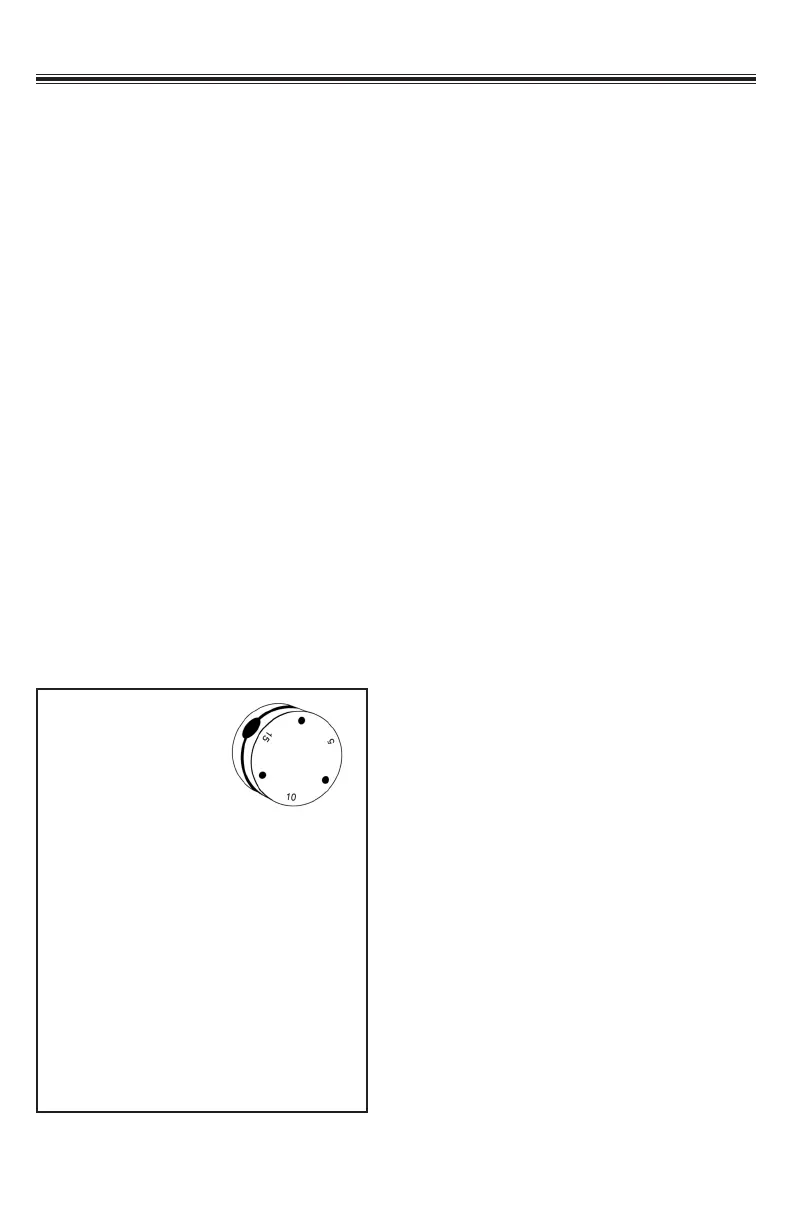
1. Set the pressure regulator weight over vent pipe, aligning the weight so that the hole corresponding to the
desired pressure is directly over the vent pipe.
2. Place pressure cooker over heat source, and when the pressure regulator weight begins to jiggle and
sputter, adjust the heat until it jiggles only one to four times each minute. The pressure regulator weight
will jiggle or rock when the pressure is reached. NEVER TURN UP THE HEAT TO THE POINT THAT A
CONSTANT FLOW OF STEAM IS ESCAPING, THEREBY CAUSING THE PRESSURE REGULATOR WEIGHT
TO BE CONSTANTLY IN THE “UP” POSITION. REDUCE THE HEAT SO THAT THE PRESSURE REGULATOR
WEIGHT ONLY JIGGLES AND SPUTTERS FROM ONE TO FOUR TIMES A MINUTE.
Experience with the pressure regulator weight will teach you what setting on your stove will maintain the
proper pressure and how long it takes to bring the pressure cooker to the point where the pressure
regulator weight jiggles or rocks. This will depend on which size pressure cooker you have and how
much food your are cooking.
Please understand that there will not be an exact
correlation between the pressure shown on the gauge
to the corresponding pressure setting on the pressure
regulator weight. For example, even though you have
set the pressure regulator weight at 10 lbs., the gauge
may show a range during the cooking process of 8 to
12 lbs. Do not expect the gauge to always show the
exact pressure setting as the pressure regulator weight,
as the pressure is changing within the unit as the
pressure regulator weight jiggles and sputters, which
is simply a process of constantly building up and
releasing pressure to maintain the setting on the
pressure regulator weight.
Even in the situation where the gauge is not registering
correctly for any reason, you can be assured that the
unit will still operate at the pressure regulator weight
setting. The basic reason that our pressure cooker
retains the gauge is to provide additional information
as to the pressure and temperature within the unit, but
you can be assured that the unit is functioning at the
pressure regulator weight setting.
The pressure regulator
weight lets you select
one of three pressure
settings.
Pressure Cooking Temperature
5 lbs. 228° F 109.0°C
10 lbs. 240° F 115.5°C
15 lbs. 250° F 121.0°C
When the pressure cooker reaches the
proper temperature, the pressure regulator
weight will jiggle audibly, and you can see
the steam being released. The pressure will
be automatically maintained for proper
pressure cooking. The pressure regulator
weight itself never requires adjustment or
testing for accuracy.



 To Next Page