508155-01 Issue 2108 Page 37 of 49
Applications Using a Single-Stage
Thermostat
B - Heating Sequence -- Integrated Control Thermostat
Selection DIP Switch 1 ON in “Single-Stage” Position
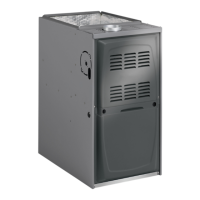
See Figure 26 for ignition control sequence.
NOTE: In these applications, two-stage heat will be
initiated by the integrated control if heating demand has
not been satised after the eld adjustable period (7 or 12
minutes).
1. On a call for heat, thermostat rst-stage contacts
close sending a signal to the integrated control. The
integrated control runs a self-diagnostic program and
checks high temperature limit switches for normally
closed contacts and pressure switches for normally
open contacts. The combustion air inducer is energized
at low speed.
2. Once the control receives a signal that the low pressure
switch has closed, the combustion air inducer begins a
15-second pre-purge in low speed.
NOTE: If the low re pressure switch does not close
the combustion air inducer will switch to high re. After
a 15 second pre-purge the high re pressure switch
will close and the unit will begin operation on high re.
After 10 to 20 seconds of high re operation the unit
will switch to low re.
3. After the pre-purge is complete, a 20-second initial
ignitor warm-up period begins. The combustion air
inducer continues to operate at low speed.
4. After the 20-second warm-up period has ended, the
gas valve is energized on low re (rst stage) and
ignition occurs. At the same time, the control module
sends a signal to begin an indoor blower 30-second
ON-delay. When the delay ends, the indoor blower
motor is energized on the low re heating speed
and the HUM contacts are energized. The integrated
control also initiates a second-stage on delay (factory-
set at 7 minutes; adjustable to 12 minutes).
5. If the heating demand continues beyond the second-
stage on delay, the integrated control energizes the
combustion air inducer at high speed. The control also
checks the high re (second stage) pressure switch
to make sure it is closed. The high re (second stage)
gas valve is energized and the indoor blower motor is
energized for operation at the high re heating speed.
6. When the thermostat heating demand is satised, the
combustion air inducer begins a 5-second low speed
post-purge. The eld-selected indoor blower o delay
begins. The indoor blower operates at the low-re
heating speed.
7. When the combustion air post-purge period is
complete, the inducer, the HUM contacts as well as
the 120V ACC terminals are de-energized. The indoor
blower is de-energized at the end of the o delay.
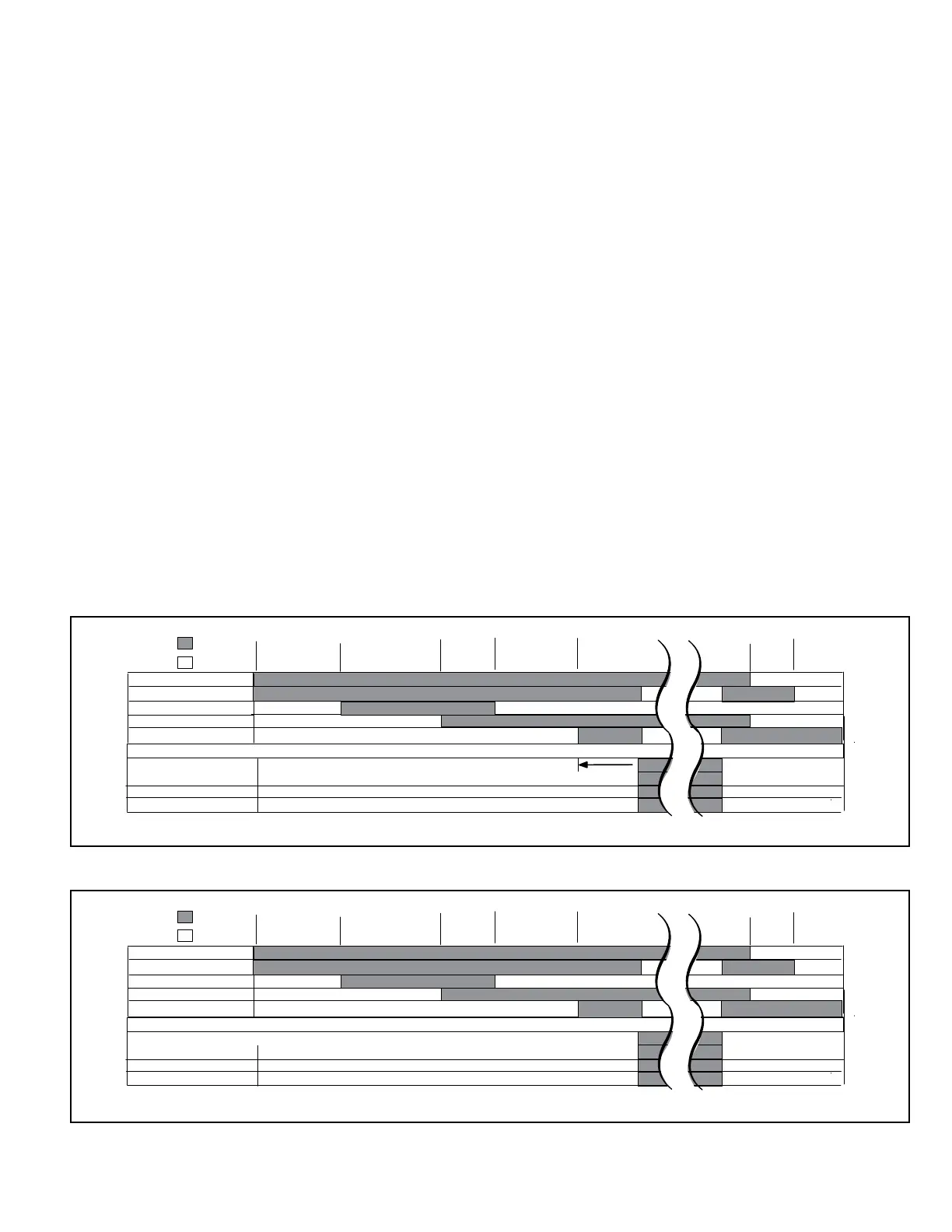
Figure 25. Heating Operation with Two-Stage Thermostat
1 stg heat demand
2 stg heat demand
15
ON
OFF
low speed CAI
35
1
Pre-Purge
Ignitor Warm-up
30* second
blower
“on” delay
Post
Purge
5 SEC80
ignitor
low fire gas valve
indoor blower low heat
high speed CAI
high fire gas valve
indoor blower high heat
39
Trial For
Ignition
blower
“off”
delay
RECOGNITION PERIOD
30 seconds
* Conventional thermostat 30 seconds, thermostat set for 30 adjustable 15 to 45 seconds.
Figure 26. Heating Operation with Single Stage Thermostat
heat demand
15
ON
OFF
low speed CAI
35
1
Pre-Purge
Ignitor Warm-up
30* second
blower
“on” delay
Post
Purge
5 SEC80
ignitor
low fire gas valve
indoor blower low heat
high speed CAI
high fire gas valve
indoor blower high heat
39
Trial For
Ignition
blower
“off”
delay
7 or 12 minutes after heating demand begins, furnace switches to high fire (depending on setting)
* Conventional thermostat 30 seconds, thermostat set for 30 adjustable 15 to 45 seconds.


 To Next Page