Chapter 5 Parameter Introductions
http://www.acdrive-china.com
113
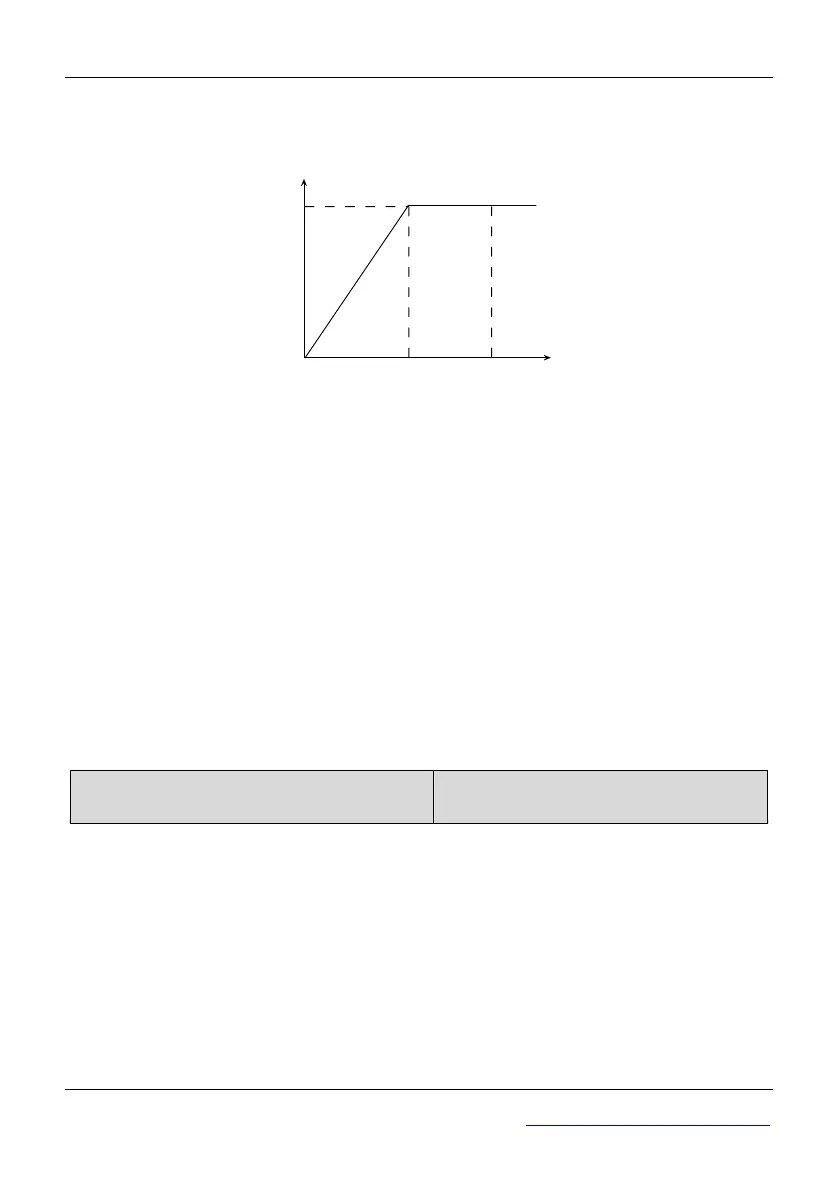
application needed. But at this time, the V/F characteristics of the load and its
contributed need must be considered. As shown in Fig. 5-0-1
Output Voltage(V)
Rated Voltage
Output Freq.(Hz)
Basic
Frequency
Max output
Frequency
Fig. 5-0-1 V/F characteristic diagram
◆Max frequency F
MAX:
This setting is the max frequency allowed to be output of this
series ac drive. If reference is bigger than rated value of drive equipment, the motor
and equipment may be damaged.
◆Frequency upper limit f
H
is the highest frequency that ac drive allowed to work. In
addition, frequency lower limit f
L
is the lowest. Setting frequency upper limit and
frequency lower limit, can automatically ensure that the output frequency is’ not
higher than frequency upper limit and not lower than frequency lower limit. This
function usually used to guarantee motor working in allowed frequency, to avoid
mistake action or mechanism or ac drive backfire. It is especially useful in avoid
low-speed or over-speed. See P2.04.
◆Max output voltage is output voltage when the ac drive runs at basic frequency.
Usually it is the rated input voltage of motor, which is marked on the nameplate of
motor.
P0.11 Step length of digital encoder
regulation
Range: 0~250* (0.01Hz/1rpm) 【0】
Note:
This parameter is effective for reference frequency and rotate speed of surveillance
state online regulating.
◆If P0.11 is set to 0, digital encoder integral regulation function is enabled. That is
keeping on turning digital encoder, the length of every step can rise from 1 to10 and
the max 100.
◆If P0.11 is set to non-zero, fixed-length regulation function is enabled. The value of
P0.11 is the step length of digital encoder regulation, which means turning left/right
the digital encoder one cycle, the value of reference frequency will decrease/increase
((P0.11)*30).*(0.01Hz/1rmp).
◆when the adjusting object is reference frequency/ reference speed ,the unit of P0.11 is


 To Next Page