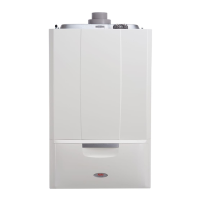
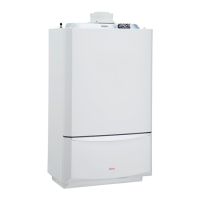
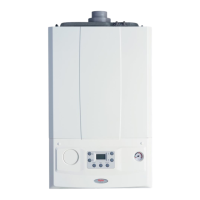
Alpha InTec² 25XE and 28XE
3
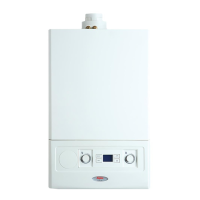
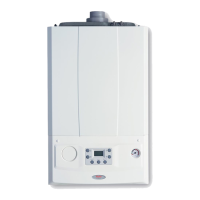
Alpha E-Tec S 20 and 30
Summer setting - This function can only be used if the boiler is fitted with an Alpha Diverter Kit allowing control of the
hot water cylinder using the boiler controls. This has the added advantage of allowing you to independently control the
temperature of the heating hot water and the cylinder hot water. In this mode the boiler will only supply hot water to the
cylinder when the temperature of the cylinder water is below that set by the hot water selector buttons (items 4 and 5 in Fig.
1). When heating the hot water cylinder the central heating will not function even if requested by any controls. The desired
hot water cylinder temperature can be set using the hot water selector buttons.
Winter setting - In this mode the boiler will operate to requests for both heating and hot water. For a system fitted with a
standard Y or S plan the boiler should always be left in the winter mode. The boiler will always prioritise hot water when
requested by external controls. The heating will activate depending on the request from any external controls fitted. The LCD
display will then display the actual temperature of the water leaving the boiler when operating to provide heating or hot water.
Note: When using a standard Y or S plan system the central heating water temperature must be set above the
cylinder thermostat value using the buttons 6 and 7 in Fig. 1
External weather compensation sensor (only for use with the Alpha Diverter Kit) - The temperature of the central
heating water can be adjusted by using the central heating buttons (items 6 and 7 in Fig. 1). When the heating is on the
temperature of the water leaving the boiler to the radiators will be displayed.
If an external weather compensation sensor is fitted, indicated by the
symbol (item 12 in Fig. 1) in the display, it will
automatically vary the temperature of the water in the radiators and on mild day the radiators will not feel as hot as on a cold
day, this is normal and not a fault with the boiler or heating circuit. The room temperature will still be maintained as set by the
room thermostat.
When an external weather sensor is fitted, the central heating selector buttons (items 6 and 7 in Fig. 1) will no longer adjust
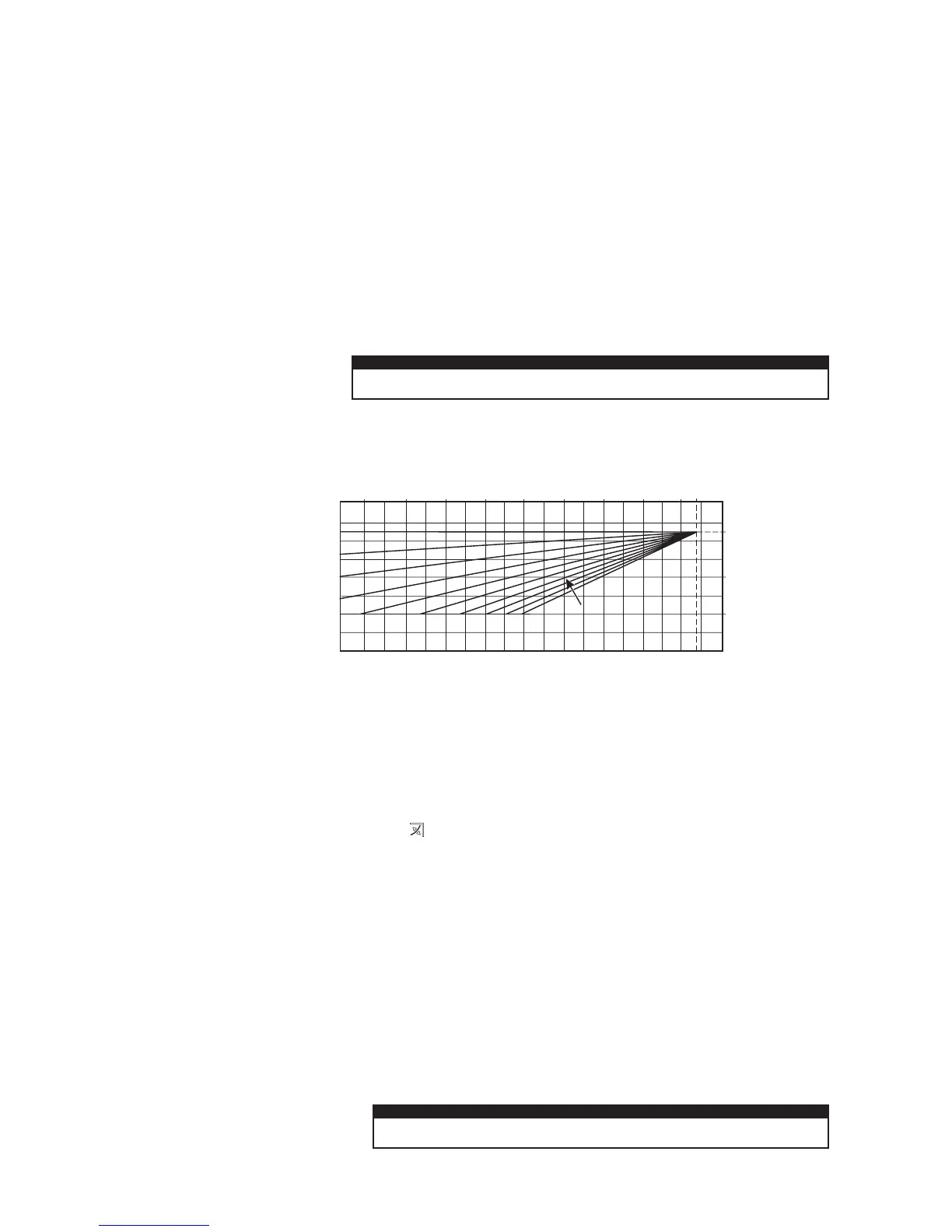
the flow temperature in °C, instead the display will show a scale of 1 to 9. Each number corresponds to a line on the graph in
Fig 2 i.e. line 6 will give a flow temperature of 60°C when the external temperature is 10°C.
Note: This is the temperature of the water supplied to the radiators and not the desired room temperature. The time and
temperature will still be maintained according to the setting of the room thermostat.
3 HEATING AND HOT WATER TEMPERATURE
Fig. 2 - External weather compensation sensor fitted
Flow temperature (°C)
External temperature (°C)
27 15
5
-510 0 -10 -1520
25 (25)
60 (40)
85 (50)
Flow temperature in brackets
ie. 25 to 50°C range when boiler
is used with a low temperature
system such as under floor heating
Setting 1 to 9 as selected using
the central heating selector switch
4 FILL AND PRESSURISE THE SYSTEM
E-Tec S models should have a filling loop fitted by the installer located in the pipework below the boiler.
Do not attempt to fill or pressurise the system while the system is hot - wait for it to cool.
The filling loop will have a tap connection at either end.These taps should normally be in the closed position 90° to the tap
housing.
To fill or pressurise the system open one tap fully by turning it 90° anticlockwise in line with the tap housing. The second tap
should be opened a quarter of a turn and the water will start to refill the system (water should be heard filling the system).
You should see the pressure gauge (item 8 in Fig. 1) rise back up into the green area on the pressure gauge between 1 bar
and 1.5 bar pressure.
Once the pressure gauge is in the green area turn the taps back to the off position and the water will stop filling the system.
If you happen to fill the system too much and the pressure gauge needle is over the green area, just bleed water from a
radiator until the pressure on the gauge goes down into the green area.
It is normal for the pressure to be in the black area of the gauge when the boiler is operating


 To Next Page