MAXXo Water Heater
3737
At least once a year, the following works must be
carried out:
1. Check the CO
2
percentage at Minimum and
Maximum load. Adjust if necessary, (see page 33)
2. Check the output at full load by measuring the gas
usage. If this deviates more than 10% from the
nominal value (see Section 2, Technical Details)
then this is an indication of dirt or blockages
in the ue gas exhaust channel, the air supply
channel or the condensation drain.
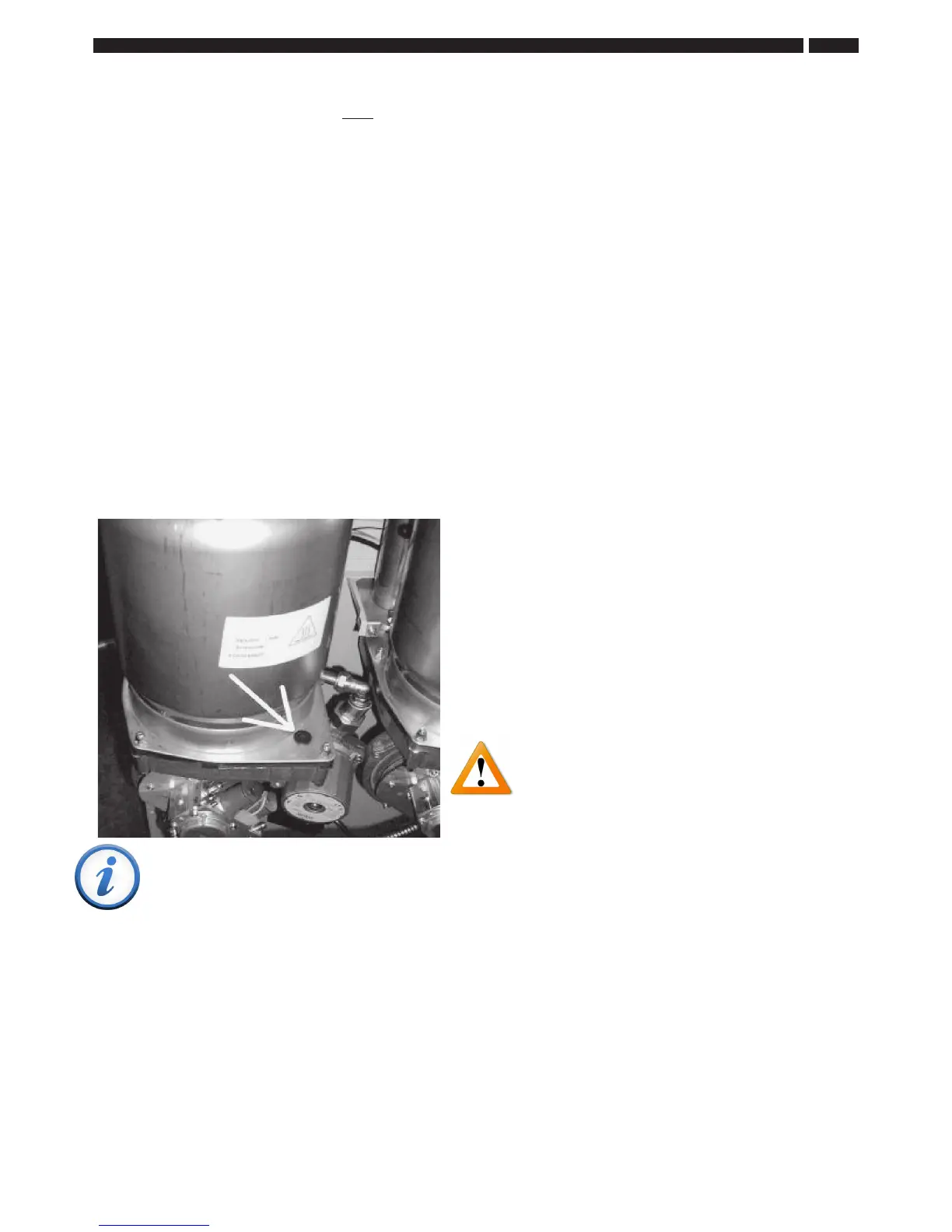
3. Check the condensation drain and rinse the
condensation tray and condensation drain with
clean water. An opening has been provided for
this on the top of the condensation tray, see
Fig 16 (below). Rince with fresh water until
the condensation drain is running clear. It is
recommended that the condensate hose and 90
O
drain elbow is removed from each heat engine to
remove all debris from the sump.
It is important to make sure the sump is
clear and the condense can ow freely
4. Check the ionisation electrode. is must be
straight and clean (light residue is normal).
5. Flush the water heater tank by opening the
drainage tap. Let water ow out of the water
heater until no more chalk residue comes out with
the water. In areas with hard water, it is necessary
to ush out the water heater more frequently.
6. Test the operation of the TRV and expansion
valves by opening and letting an adequate
amount of water ow and then shutting them,
until water ow stops. Whilst doing this, make
sure the discharge pipe does not back up.
7. If the water heater is to be drained for any reason,
rst take the water heater out of operation and
then proceed as follows:
(i) Turn off the water tap in the cold water supply.
(ii) Open one of the warm water taps that can be
found at a point higher that the water heater
in order to bleed the warm water pipe section.
If the water heater is set up above the level
of the drainage points, it will be necessary to
open the warm water connection to let the
appliance run empty.
(iii) Open the drainage tap of the water heater so the
appliance runs empty. Be careful, the water
owing out can be very hot!
8. e storage tank should be inspected annually
and cleaned if required. To gain access, rst drain
the tank as above. Remove the inspection hatch
clamp securing the hatch and lift out the hatch
plate. Please check the hatch seal as a new one
may be required.
9. Unscrew and remove the head of the pressure
reducing valve, clean and reasemble.
Burner and exchanger
e burner and exchanger do not normally need to
be cleaned. If there is a suspicion of dirt then the
exchanger should be opened on the bottom. New
gaskets must always be used when assembling. e
top of the exchanger must never be opened.
e hot surface igniter is a vulnerable part that should
only be removed if it has to be replaced.
Only original parts recommended by the
manufacturer can be used as replacement
parts. Components that are sealed may not
be altered or dismantled.
MAINTENANCE
Fig 16 – Flushing Point
MAINTENANCE • SECTION 7



 To Next Page