Manual, Control Module, PROFINET, DL10
Document #9620-20-C-DL10-04
Pinnacle Park • 1031 Goodworth Drive • Apex, NC 27539 • Tel: 919.772.0115 • Fax: 919.772.8259 • www.ati-ia.com
C-22
2.5.4 TSI Behavior
The modules rely on the status of the Ready‑To‑Lock (RTL) sensors and the TSIV input to
determine when it is appropriate to unlatch the Tool. The RTL sensors indicate if the Master and
Tool are coupled while the TSIV input indicates when the TSI switch on the Tool is actuated,
thereby indicating that the Tool is in the stand.
There is both a rmware and hardware interrupt for the Unlatch output signal. Firmware compares
the RTL sensor signals with the TSIV input and enables the Unlatch output signal only if it meets
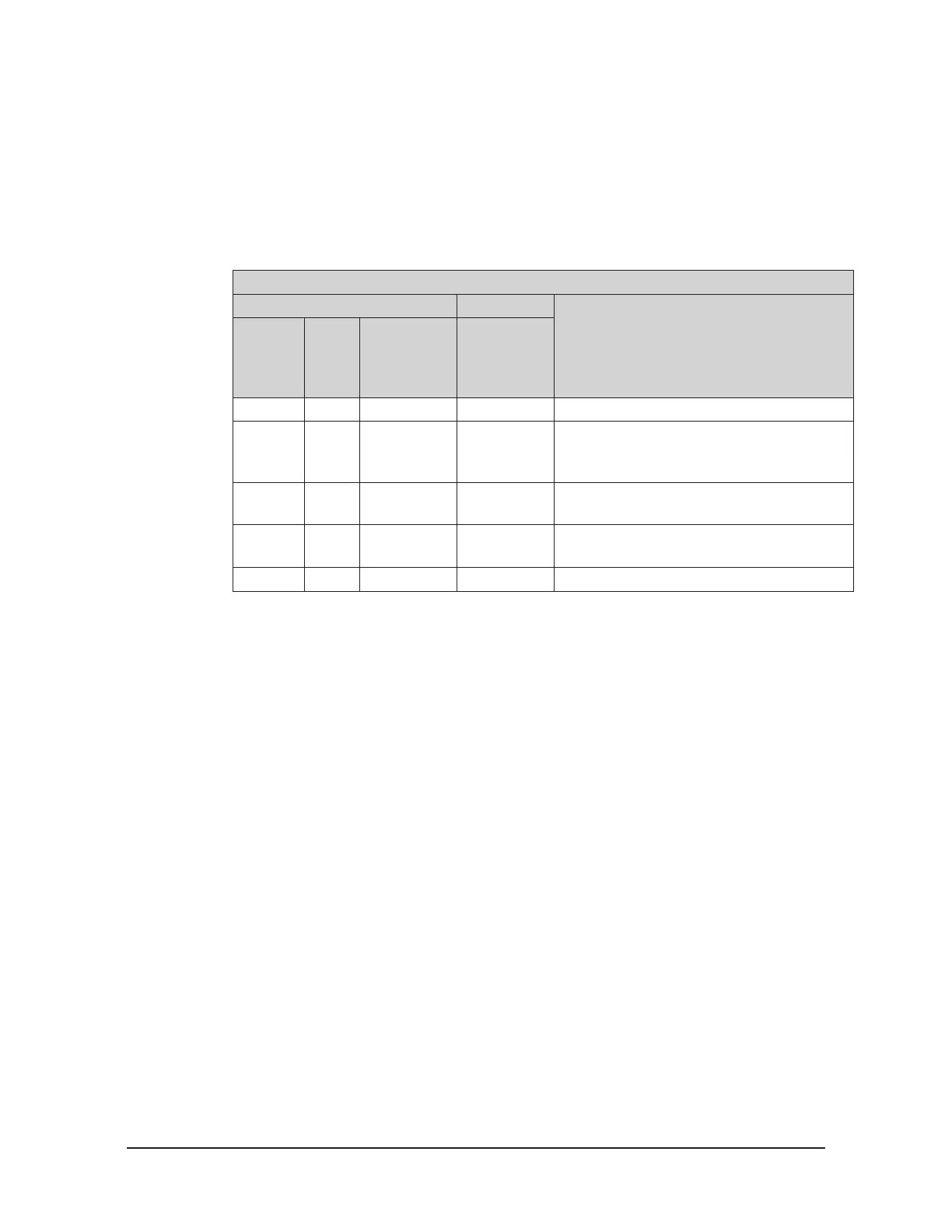
the conditions in Table 2.8.
Table 2.8—UNLATCH Enable Logic and Truth Table
Inputs Output
Status of Master Body
Tool
Present
TSIV
Disable
UNLATCH
Error
Condition
UNLATCH
Enabled
0 0 0 1 No Tool and positioned in the free air.
0 1 0 1
No Tool and positioned in the tool stand
(This is a transient state which is only
true just prior to RTL being made).
1 0 0 0
Tool is present and positioned in the free
air.
1 1 0 1
Tool is present and positioned in the tool
stand.
X X 1 0 Error condition.
For example, if the module receives an UNLATCH output signal and the RTL sensor signals
indicate that Master and Tool are coupled but the TSIV indicates that the Tool is not in the tool
stand, then the UNLATCH output signal is ignored.



 To Next Page