DECT
Registering with a base station
Select > SETTINGS > DECT > REGISTER.
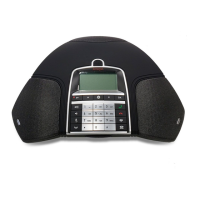
The Avaya B169 registration guide starts.
See page 12 for a detailed description of the registration process.
Deregistering from a base station
This option only works with a Avaya DECT base station.
Select > SETTINGS > DECT > DE-REGISTER.
The Avaya B169 retrieves a list of the handsets that have been registered with that particular
Avaya DECT base station. There is a filled box in front of the name of the handset that you are
using (Avaya B169).
Mark the handset you want to de-register and press OK to remove it.
Enter the base station’s PIN code (0000) and confirm your choice by pressing OK.
Select a base station
Select > SETTINGS > DECT > BASE.
The AUTO option and the base stations that are registered are displayed as options in the menu.
AUTO (default) means that the Avaya B169 automatically selects the registered base
station that has the greatest signal strength.
Enabling PARK code
Select > SETTINGS > DECT > PARK.
Disabled is defalult. PARK is a function that makes it possible to lock a handset/
conference phone to a specific base station using a security code.
Select Inband DTMF generation
Select > SETTINGS > DECT > ACTIVATE DTMF.
DTMF (Dual-tone multi-frequency signaling) is used for telecommunication signaling
over analog telephone connections, eg. to a PBX or to log on to a phone bank or a
conferencing service.
The tones can be generated by the phone (inband – which is default) or by the PBX it is
connected to.
SETTINGS


 To Next Page