Need help?
Do you have a question about the Avaya B169 and is the answer not in the manual?
Details about software licensing terms and conditions.
Explanation of Concurrent User License (CU).
Important warnings regarding water, opening casing, power adapter, and battery.
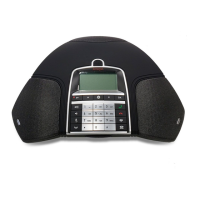
Overview of the Avaya B169's wireless, OmniSound, USB, and conference capabilities.
Instructions for cleaning the equipment using a soft, dry cloth.
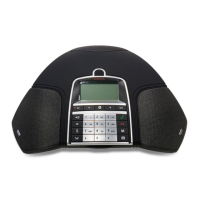
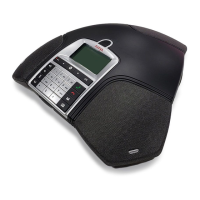
Diagram and description of keypad buttons and navigation.
Method for entering text using the keypad, including character selection.
Details status indicators for signal, date, time, and call duration.
How to navigate and select options within menus.
Visual representation of the phone's menu structure and options.
List of items included in the Avaya B169 package and base station.
Steps for inserting the battery and connecting the unit.
How to switch between DECT, USB, and mobile connection options.
How to use the B169 for VoIP calls via a PC connection.
How the B169 functions as a conference unit with PC software.
Steps to manually disable the USB connection.
Procedure to turn the Avaya B169 on and off.
Instructions for recharging the battery via cradle or cable.
Process for putting the base station and phone into registration mode.
Confirmation of successful registration and troubleshooting for failures.
Guidance on configuring analog extensions for IP Office, CS1000, and CM.
Basic steps for answering and initiating calls.
How to redial numbers and make calls from the phonebook.
Guide to setting up multi-party DECT calls.
Instructions for making VoIP calls using the phone with a PC.
Steps for connecting and using the phone with a mobile device.
How to make calls using the phone as a mobile accessory.
Procedure for ending calls made via a mobile connection.
How to adjust speaker volume, including for multiple connections.
How to mute the microphone during a call.
Steps to put a call on temporary hold.
How to end an active call.
Adding, holding, or disconnecting call connections.
Step-by-step guide to setting up conference groups.
Procedure for initiating calls to predefined conference groups.
Steps for when participants do not answer during conference setup.
How to create and make ad-hoc multi-party calls.
How to view participants in a conference group.
How to modify existing conference groups.
Steps to remove individual conference groups.
How to erase all saved conference groups.
Adjusting signals for PBX compatibility in multi-party calls.
Instructions for text input within the phonebook.
Methods for finding contacts in the phonebook.
Steps to add new entries to the phonebook.
How to modify existing contact information.
Procedure for removing individual contacts.
How to erase all entries from the phonebook.
Information on the number of contacts stored and available capacity.
Steps to initiate call recording.
Functions for managing recording during a call.
How to play back recorded calls on the device or PC.
Editing names, deleting recordings, and adjusting indicators.
Registering, deregistering, and selecting DECT base stations.
Enabling PARK code for security and configuring DTMF generation.
Managing DTMF generation and G722 audio codec.
Adjusting language, screen text, and LCD contrast.
Setting the current date, time, and format.
Changing the date and date format.
Adjusting ring volume, keypad tones, equalizer, and microphone levels.
Option to deactivate the device's sleep mode.
Resetting settings, checking version, and disabling recording.
Steps to download and install the upgrade software.
Guide to restarting the device in upgrade mode and updating.
Physical and memory specifications of the Avaya B169.
Details on wireless, PC, mobile connections, and charging cradle.
Information on OmniSound technology, microphone, and speakers.
Temperature, humidity, and acoustic requirements.
Specifications for the DECT base station, including power and compatibility.
 General
| Control type | Buttons |
|---|---|
| Display type | LCD |
| Product type | IP conference phone |
| Product color | Black |
| Frequency range | 200 - 7000 Hz |
| Built-in display | Yes |
| Languages support | DAN, DEU, DUT, ENG, ESP, FIN, FRE, ITA, NOR, POL, RUS, SWE, TUR |
| Display resolution | 128 x 64 pixels |
| Phonebook capacity | 200 entries |
| Cable lock slot type | Kensington |
| Sound pressure level | 90 dB |
| Compatible memory cards | SD |
| Maximum memory card size | 2 GB |
| Microphone direction type | Omnidirectional |
| Suitable for room area up to | 30 m² |
| AC input voltage | 100 - 240 V |
| Operating temperature (T-T) | 5 - 40 °C |
| Operating relative humidity (H-H) | 20 - 80 % |
 Weight and Dimensions
| Width | 240 mm |
|---|---|
| Height | 77 mm |
| Weight | 1000 g |

 To Next Page