4-2 LNT Programmer’s Manual
Defining the Codabar Options Tag (Optional)
Use the Options tag to define Codabar-specific information.
Valid values include: a 32-bit unsigned decimal number.
It contains the following attributes: density, narrowbar, widebar, narrowspace, widespace, and
interchargap.
Syntax <Options density=”value” narrowbar=”value” widebar=”value”
narrowspace=”value” widespace=”value” interchargap=”value” />
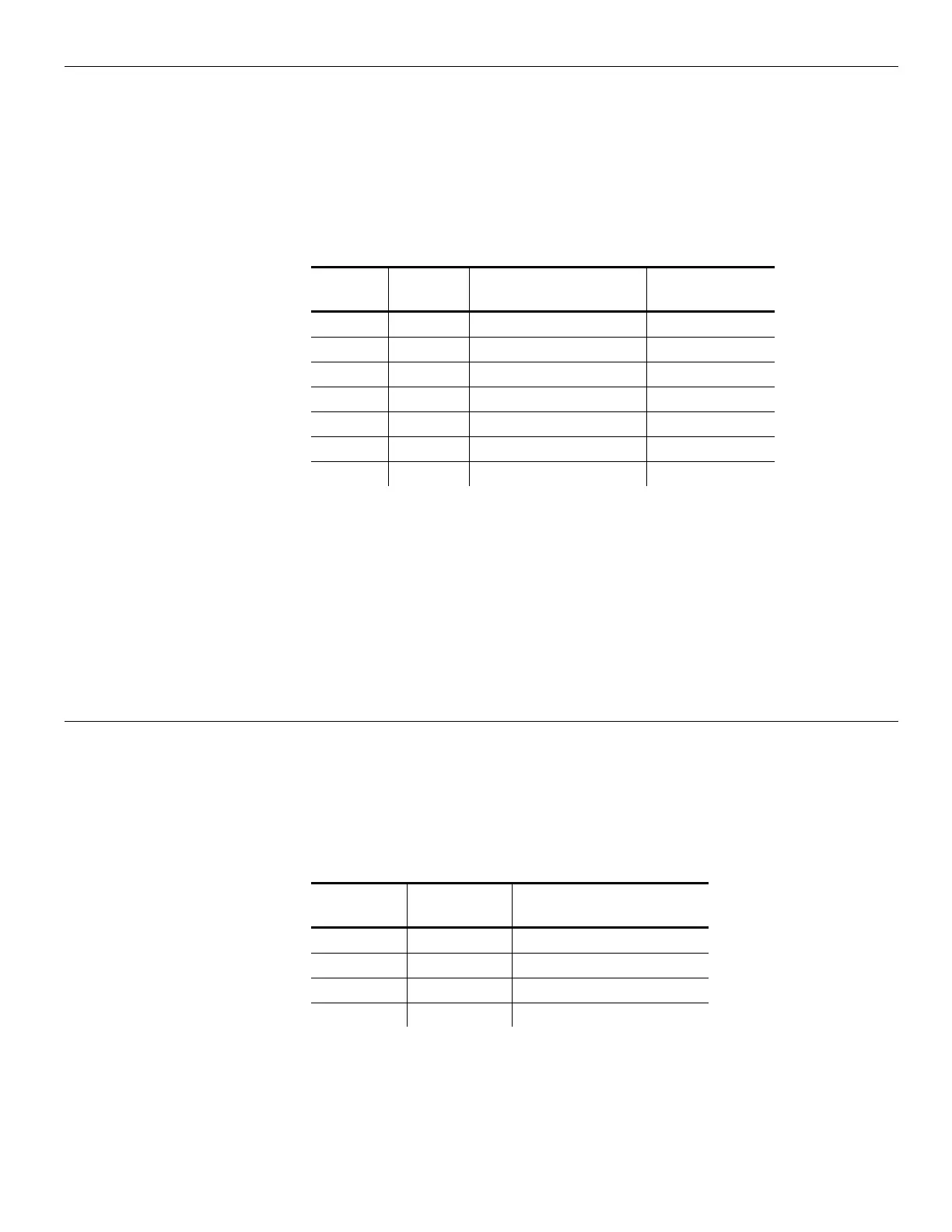
density Bar code density. Options: 2 to 9 as shown below. The default is 8.
Selector
(% or cpi)
in Dots/Mils
Ratio
2 2.1 8 /39.4 1:3.0
3 3.0 6 / 29.6 1:2.5
4 4.6 4 / 19.7 1:2.5
5 5.1 4 / 19.7 1:2.0
7 8.4 2 / 9.9 1:3.0
8 9.2 2 / 9.9 1:2.5
9 10.1 2 / 9.9 1:2.0
narrowbar
widebar
narrow space
wide space
Use the density table above. Using a non-standard value may produce
unreadable bar codes. Define in Pixels.
interchargap The inter character gap between two character representations. This is usually
defined the same as narrowspace. Define in Pixels.
Example <Options density=”4” interchargap=”1” />
Creates a Codabar bar code with a density of 4 and an intercharacter gap of 1.
Defining the Code 16K Options Tag (Optional)
Use the Options tag to define Code 16K-specific information.
Valid values include: a 32-bit unsigned decimal number.
It contains the following attributes: density and subbarheight.
Syntax <Options density=”value” subbarheight=”value” />
density Bar code density. Options: 4, 6, 8, or 20 as shown below. The default is 8.
Selector
(% or cpi)
in Dots/mils
20 3.5/7.0 5/24.6
4 4.4/8.7 4/19.7
6 5.8/11.7 3/14.8
8 8.7/17.5 2/9.9
subbarheight The height of each row of bars. Define in Pixels.
Example <Options density=”6” />
Creates a Code 16K bar code with a density of 6 and does not specify a subbarheight.







 To Next Page