ENGLISH
54
Avalanche Awareness
This is a basic introduction to avalanche safety and awareness.
We encourage you to read this manual thoroughly. We strongly
suggest taking an avalanche course in your area before venturing
into the backcountry.
Before leaving, call your local avalanche forecast center and determine
the danger level in the area you intend to visit.
U.S. www.avalanche.org
Canada www.avalanche.ca
Europe www.lawinen.org
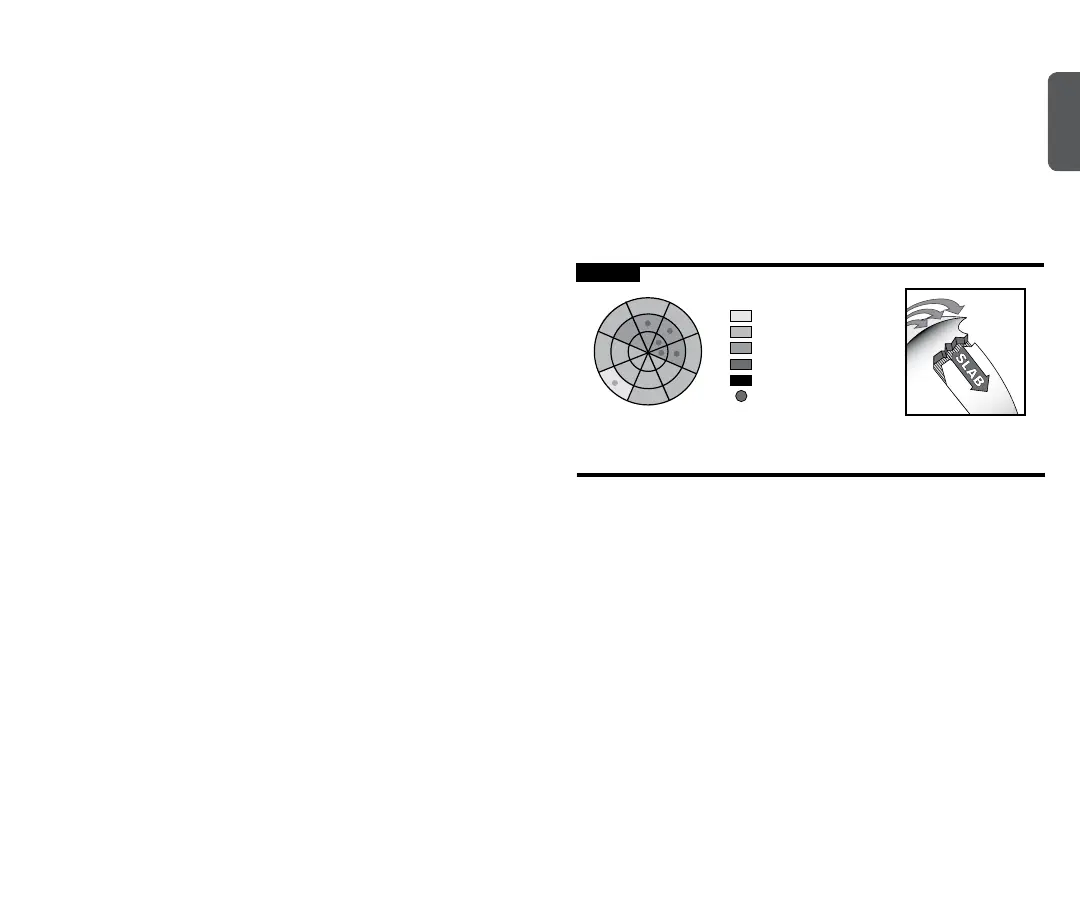
Figure B
Avalanche Forecasts
Low
Moderate
Considerable
High
Extreme
Pockets of next danger level
N
S
E
W
Low
Moderate
Considerable
High
Extreme
Pockets of next danger level
Bulletins from your local avalanche forecast center will enable you to
identify the avalanche problems to avoid when planning your route.
Avalanche Awareness
At the trailhead, check that each person has a working transceiver,
probe, and shovel—and knows how to use them. We also recommend
the use of avalanche airbags and two-way radios.
Learn to recognize avalanche terrain:
• Doesthisslopehaveahistoryofsliding?
• Whatistheangleandaspectoftheslope?
• Willrecentweatherimpactsnowstability?
Learn to avoid avalanche terrain:
• Isthereanyevidenceofrecentavalancheactivity?
• Istheslopeanglebetween30and45degrees?
• Doestheslopeyouplantousehavedangerousterraintraps
(rocks,trees,gullies,clis,etc.)?
No avalanche transceiver can help save lives without a fully trained user.
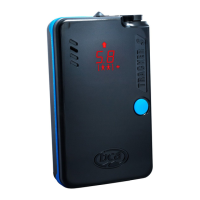
Practice frequently with your Tracker S before going into the backcountry.
Learn and understand the inherent dangers of backcountry travel. Become
educated in avalanche hazard evaluation, route selection, and self-rescue.
In addition to your transceiver, always carry a probe and shovel—and
always travel with a partner. We also recommend the use of avalanche
airbags and group communication devices, such as two-way radios.
Make sure all rescue equipment is functioning properly before venturing
into the backcountry. Perform a transceiver trailhead test every time
you use your Tracker S. Check that all transceivers transmit and receive
properly—andthatallreceiveasignalataminimumdistanceof30meters
(98feet).
Do not place cellular phones, communication radios, GPS devices, digital
cameras,oranyotherelectronicequipmentwithin50cm(20inches)of
Tracker S while performing a transceiver search. In receive mode, irregular
readings, decreased range and multiple burial indications can be caused
by these and other sources of electrical interference, such as power lines,
electrical storms, and electrical generating equipment. In transmit mode,
keepTrackerSatleast20cm(8inches)fromotherelectronicequipment
or large metal objects. Use only alkaline batteries of identical age and
brand. Do not use rechargeable, lithium, or any other non-alkaline
battery.
This owner’s manual covers the basic techniques required to use
TrackerSeectively.Toincreaseyoureciency,refertoourwebsite:
www.backcountryaccess.com.Hereyouwillalsondimportantresources
for obtaining avalanche education and updates on regional avalanche
conditions.
Toensurewarrantyprotectionandtobenotiedofsoftwareupdates,
pleasecompleteanonlinewarrantyregistrationat:
www.backcountryaccess.com/warranty.
Disclaimer


 To Next Page