Chapter 5: ECG Technical Reference
Advisor
®
Service Manual 5-1
Respiration Leado Sensing and Active Noise Suppression
Leado is determined by the presence of excessive DC oset. No AC waveform is associated with this function.
Tall T-Wave Rejection Capability
With a standard 1 mV p-p QRS having a T-wave amplitude of 0 to 1.2 mV (0 to 120% of R-wave height), the
displayed heart rate remains correct.
Heart Rate Averaging Method and Display Update Rate
The rate digit display is updated every second. Rate averaging is accomplished using a “box car” method as
follows:
Let • n = the averaging interval 8 seconds. Each second, the oldest 1/n data points are discarded and
replaced with the latest 1/n points. Then, all the points are summed and divided by n. The resulting
average is the value displayed.
Heart Rate Meter Accuracy and Response to Irregular Rhythm
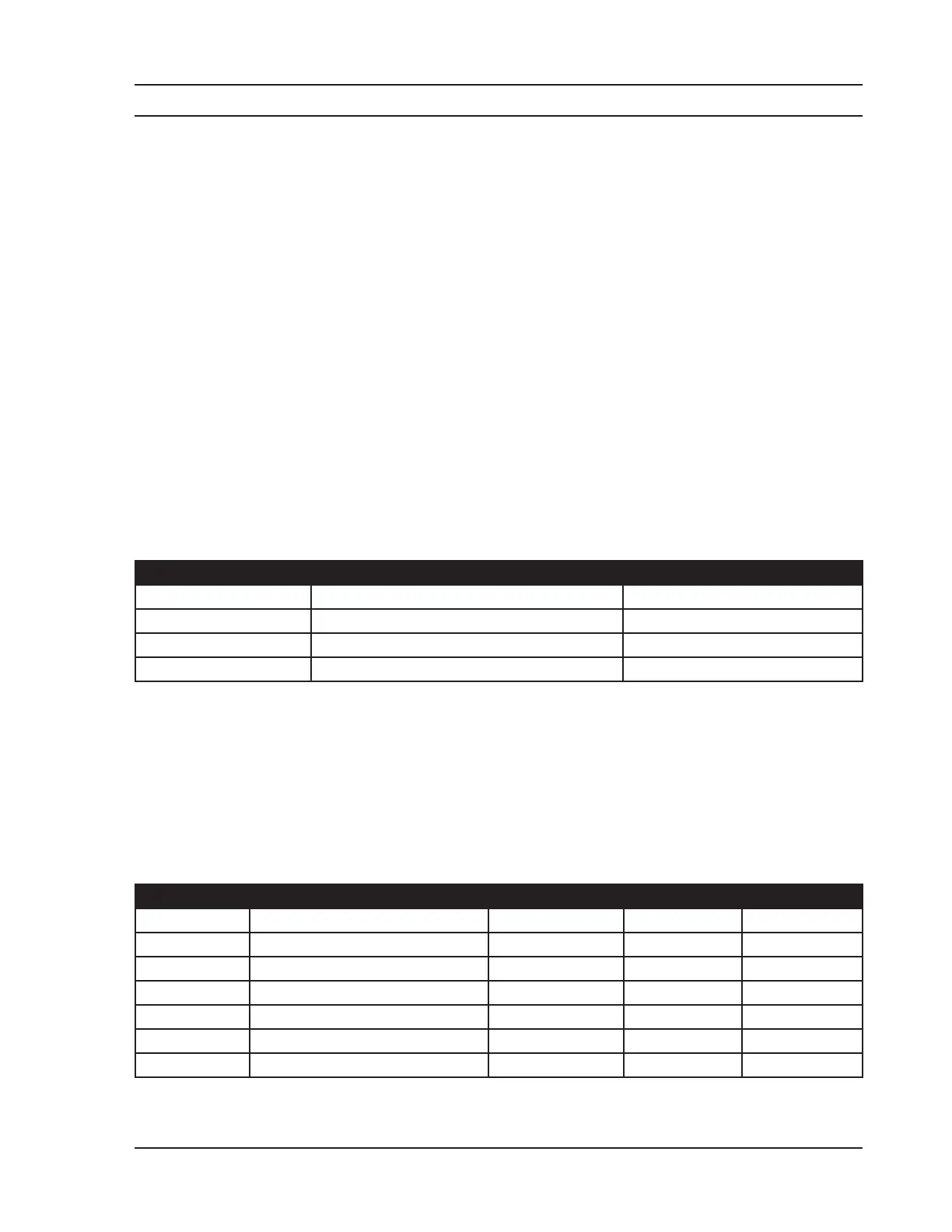
Reference EC-13 Test Specications
WAVEFORM DESCRIPTION RATE
Figure 3a Ventricular Bigeminy 40 bpm
Figure 3b Slow Alternating Ventricular Bigeminy 30 bpm
Figure 3c Rapid Alternating Ventricular Bigeminy 120 bpm
Figure 3d Bi-directional Systoles 90 bpm
Response Time of Heart Rate Meter to Change in Heart Rate
From 80 to 120 bpm, response ranges from 6.0 to 7.0 seconds, average 6.8 seconds. From 80 to 40 bpm, the
response range is 8 to 9 seconds, average 8.8 seconds.
Time to Alarm for Tachycardia
Reference EC-13 Test Specications
WAVEFORM DESCRIPTION AMPLITUDE RESPONSE TIME SECONDS
Range Average
Figure 4a Ventricular tachycardia (HR = 206) 1.0 mV 6 to 7 6.6
0.5 mV 4 to 5 4.8
2.0 mV 5 to 9 6.8
Figure 4b Ventricular tachycardia (HR = 195) 4.0 mV 2 to 4 2.6
1.0 mV 7 to 8 7.6
2.0 mV 3 to 4 3.4
Chapter 5: ECG Technical Reference


 To Next Page