EasyManua.ls Logo

BD BACTEC MGIT 320 - User Manual

Default Icon
10 pages
Print Icon
To Next Page IconTo Next Page
Loading...
MA0120(11) (2022-04) • English 1
Icons Reference
Daily QC/Maintenance
Routine Operations
Error Codes
Error Station Resolution
Before using this Guide, it is important that
all users review the BD BACTEC™ MGIT™
Instrument User’s Manual for comprehensive
operating instructions, including important
warnings relating to operator safety.
Becton, Dickinson and Company
7 Loveton Circle
Sparks, Maryland 21152 USA
Becton Dickinson Ireland Ltd.
Donore Road, Drogheda
Co. Louth, A92 YW26
Ireland
BD Switzerland Sàrl
Terre Bonne Park – A4
Route de Crassier 17
1262 Eysins, Switzerland
Australian and New Zealand Sponsors:
Becton Dickinson Pty Ltd.
66 Waterloo Road
Macquarie Park NSW 2113, Australia
Becton Dickinson Limited
14B George Bourke Drive
Mt. Wellington Auckland 1060, N
ew Zealand
BACTEC™ MGIT™
Instrument
Quick Reference Guide
(BD BACTEC™ MGIT™ 960 and BD BACTEC™ MGIT™ 320)
BD, the BD Logo, BACTEC, EpiCenter, and MGIT are trademarks of Becton, Dickinson and Company or its
affiliates. © 2022 BD. All rights reserved.
441743
445870
Question and Answer IconNeed help?

Do you have a question about the BD BACTEC MGIT 320 and is the answer not in the manual?

Summary

Entering New Tubes

Entering New MGIT Tubes

Step-by-step guide for entering new MGIT tubes into the instrument.

Entering New AST Tubes

Step-by-step guide for entering new AST tubes into the instrument.

Removing Tubes

Removing Positive Tubes

Procedure to remove positive tubes from the instrument stations.

Removing Negative Tubes

Procedure to remove negative tubes, including single or batch removal.

Removing Completed AST Sets

Procedure to remove completed AST sets from the instrument.

Error Codes E01 - E34

Error Codes E35 - E92

Resolving Errors

Resolving Station Errors

Flowchart and steps to resolve station errors, including tube status and return procedures.

Overview

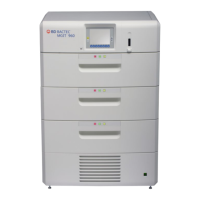
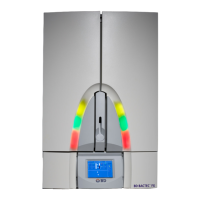
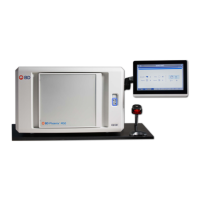
The BD BACTEC™ MGIT™ Instrument, available in 960 and 320 models, is a sophisticated system designed for mycobacterial growth detection and susceptibility testing. This Quick Reference Guide provides an overview of its operation, maintenance, and troubleshooting, serving as a companion to the comprehensive User's Manual.

Function Description

The primary function of the BD BACTEC™ MGIT™ Instrument is to detect the presence of mycobacteria in clinical samples and to perform antimicrobial susceptibility testing (AST) on positive isolates. It utilizes a fluorescent sensor technology to monitor oxygen consumption, which is indicative of microbial growth. The instrument automates the incubation, detection, and data management processes, providing timely and accurate results crucial for diagnosing and managing mycobacterial infections.

Important Technical Specifications

While specific technical specifications like dimensions, weight, and power requirements are not detailed in this quick reference guide, the instrument's core functionality implies several key characteristics:

  • Capacity: The "960" and "320" in the model names likely refer to the number of tubes the instrument can accommodate, indicating a high-throughput capability for the MGIT 960 and a smaller capacity for the MGIT 320, suitable for different laboratory volumes.
  • Detection Method: Fluorescent sensor technology for oxygen consumption.
  • Temperature Control: Precise incubation temperature control, typically around 37 °C, with a tolerance of +1.0/-2.0 °C, is critical for optimal mycobacterial growth. The instrument monitors and displays drawer temperatures, ensuring consistent conditions.
  • Barcode Scanning: Integrated barcode scanner for efficient and accurate identification of tubes and carriers, minimizing manual data entry errors.
  • Data Storage: Capability to save data to external storage media, ensuring data integrity and facilitating record-keeping and transfer.
  • Software Updates: The system supports software updates, allowing for continuous improvement and adaptation to new protocols or features.
  • Alert System: Audible and visual alerts for various statuses, including positive results, errors, and system alerts, ensuring prompt operator attention.
  • Connectivity: Potential for network integration (E40 Network error) and LIS (Laboratory Information System) parameter changes (E43), indicating connectivity features for streamlined laboratory workflows.

Usage Features

The BD BACTEC™ MGIT™ Instrument is designed for user-friendly operation, with clear visual indicators and a structured workflow:

  • Station Statuses:
    • Positive (+): Indicates mycobacterial growth detected.
    • Negative (-): No growth detected.
    • Available (○): Station is empty and ready for a new tube.
    • Ongoing (●): Tube is currently being processed.
    • Anonymous (?): Tube identity is unknown, requiring resolution.
    • Error (!): A problem has occurred at the station.
    • Blocked (⊗): Station is intentionally taken out of service.
    • AST Ongoing Set (●●●): Antimicrobial Susceptibility Test set is in progress.
    • AST Complete Set (●●●●): AST set has finished processing.
  • Drawer Statuses:
    • Loading Software (A): Drawer is in the process of loading software.
    • Normal (B): Drawer is operating normally.
    • Offline (C): Drawer is not connected or active.
    • Testing (ΦΑ?): Drawer is currently performing tests.
  • Configuration Options:
    • Audible Alert Volume: Adjustable sound level for alerts.
    • Instrument Number: Setting the unique identifier for the instrument (960 or 320).
    • Report Language: Selection of the language for printed reports.
    • Accession Barcoding: Enable or disable the use of accession barcodes for enhanced sample tracking.
    • Protocol Length: Setting the duration of testing protocols.
    • AST Set Configuration: Defining the number of tubes in an AST set (2, 3, 4, etc.) and setting default AST configurations.
    • Time/Date Settings: Adjusting the instrument's internal clock and date format.
  • Main Status Screen: Provides a quick overview of the instrument's current date, time, configuration, maintenance needs, AST set status, system alerts, print reports, and temperature readings.
  • Entering New Tubes:
    • MGIT Tubes: Involves opening the drawer, selecting "tube entry," scanning the tube's barcode, and optionally an accession barcode (if enabled), then inserting the tube into the assigned, green-illuminated station.
    • AST Tubes: Similar process, but involves scanning an AST carrier's barcode, optionally an accession barcode, and then inserting the AST tube set into the assigned stations, ensuring the Growth Control tube is leftmost. The system allows for changing AST set definitions and isolate numbers.
  • Removing Tubes:
    • Positive Tubes: Select "remove positive tubes," scan the barcode of the positive tube, and remove it.
    • Negative Tubes: Can be removed individually by scanning or in a batch by selecting "remove negatives – batch," removing all tubes from flashing green stations, and confirming with "OK."
    • Completed AST Sets: Select "remove completed AST sets," scan the carrier's barcode, and remove the set.
  • Resolving Errors: A guided workflow helps resolve station errors, including identifying missing tubes, determining if they can be returned, and using the "force station available" soft key.

Maintenance Features

Regular maintenance is crucial for the instrument's optimal performance and longevity. The guide outlines several key maintenance procedures:

  • Check Indicator Lamps: A step-by-step process to verify the functionality of external lamps, alarm indicators, and individual station LEDs (green and red) for all drawers. This helps identify and block faulty stations.
  • Check Printer Paper: Simple check to ensure sufficient paper is available for printing reports.
  • Check Temperatures: Involves comparing the instrument's temperature readings with a manual thermometer reading of a Temperature QC tube. The instrument's readings should be within 1.5 °C of the manual reading, and the controller/heaters should maintain 37 °C within a +1.0/-2.0 °C range.
  • Print QC Report: Generating a Quality Control report to monitor instrument performance.
  • Monthly Maintenance: Cleaning and replacing air filters, as detailed in the User's Manual.
  • Copy Data to Storage Media: Essential for data backup and transfer.
  • Update Software: Allows for system upgrades and bug fixes.
  • Replace Calibrators: Procedure for replacing single or all calibrators to maintain measurement accuracy.

Error Codes and Corrective Actions

The guide provides a comprehensive list of error codes (E01 to E92) and their corresponding corrective actions, emphasizing the importance of consulting the User's Manual or contacting BD for persistent issues:

  • E01 Positivity Algorithms Reset: Occurs after an uncorrected error.
  • E02 Temperature alarm: Check incubator/room temperature, thermometer tube, clean filters, and remove from heat sources.
  • E04 Flash cache error: Software error; save data and contact BD.
  • E05 Calibration error: Calibrator out of tolerance; check for debris, replace calibrator.
  • E06 Detector error: Object impeding detector; reboot and contact BD.
  • E07 Power supplies high/low: Contact BD; do not reboot.
  • E08 Drawer voltage high/low: Check line voltage, clean filters, reboot; note sub-codes if error recurs.
  • E09 No tests in over 4 hours: Determine cause (power off, drawer openings), save data, contact BD.
  • E10 Database corruption: Checksum test failed; save data, contact BD.
  • E11 Printer error: Check paper, cable connections, power, and online indicator.
  • E12 Station error: Check tube seating, missing tubes; use "force station available."
  • E13 Power Failure: Note times in log.
  • E30 Unexpected tube was scanned: Locate tube or press "force station available."
  • E31 Storage media error: Insert blank, formatted media.
  • E32 Drawer full: No available stations; remove negatives.
  • E33 Moved tube with no error: Refer to User's Manual.
  • E34 Update error: Repeat software update.
  • E35 Incorrect drawer: Tube scanned belongs to another drawer; open next drawer and rescan.
  • E37 Barcode scan order incorrect: System expected sequence number but received accession barcode (or vice versa); scan correct type.
  • E38 No storage media in drive: Insert blank, formatted, write-enabled media.
  • E39 Storage media full, insert another: Insert blank, formatted, write-enabled media to complete save.
  • E40 Network error: Start BD EpiCenter™ system.
  • E43 LIS parameter changed: Instrument must be restarted; select OK or not OK.
  • E45 Drawer error: Drawer not fully closed.
  • E50 Internal software error: Software error; save data, contact BD.
  • E92 AST Set Error: Main error code for AST station error; refer to User's Manual.

This comprehensive overview highlights the BD BACTEC™ MGIT™ Instrument's capabilities in mycobacterial detection and AST, its user-centric design, and the importance of routine maintenance and proper error resolution for reliable laboratory operations.

BD BACTEC MGIT 320 Specifications

General IconGeneral
ModelMGIT 320
Incubation Temperature37°C
Power Requirements100-240 VAC, 50/60 Hz
TypeAutomated mycobacterial culture system
Capacity320 tubes
Detection MethodFluorescence
CompatibilityCompatible with MGIT tubes

Related product manuals