Commissioning/application notes
CU1521-xxxx, CU1561 27Version: 2.5
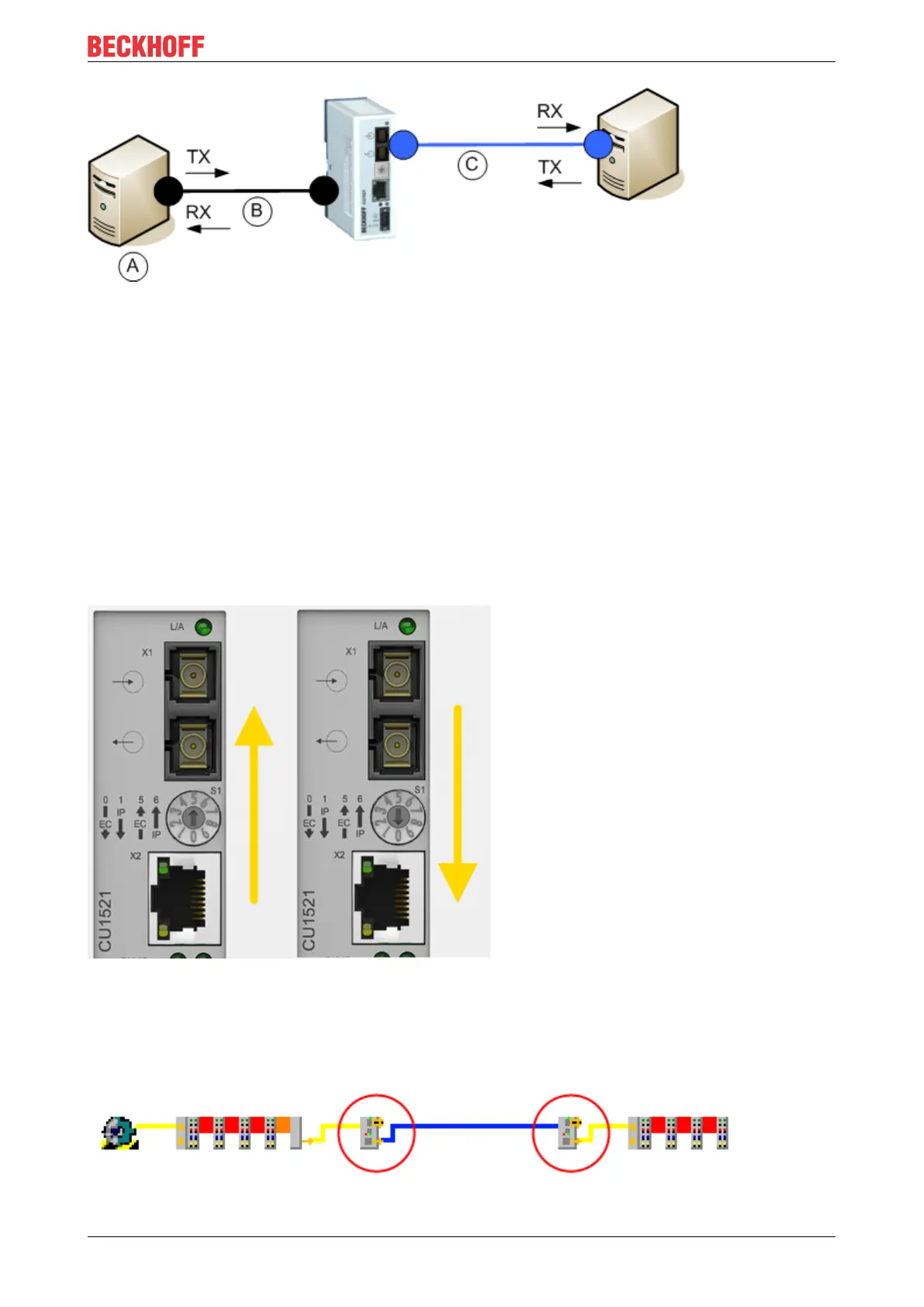
Fig.15: Interposed media converter in the Ethernet connection
In both IP settings the CU15x1 operates as a store and forward network device with checksum function.
Frames that are faulty (CRC error), too short (< 64 bytes) or too long (> 1522 bytes) are not passed on.
Used for: EtherCAT 100Mbit
Other characteristics are required if it is used as a media converter in an EtherCAT network:
• Consistently low delay in the frame transit, irrespective of frame length
• Fast link detection when the connection is established and interrupted
• Identification as separate EtherCAT device with diagnostic function
EtherCAT slaves process the EtherCAT telegrams in forward direction from the perspective of the master.
Accordingly, in the CU15x1 the forward direction may be X1 --> X2 or X2 --> X1, depending on the
application. It has to be set at the rotary switch prior to commissioning. The direction of the arrow of S1
indicates the set forward direction.
Fig.16: Setting the forward direction at the media converter
Make sure the rotary switch is set to the right position, so that the CU15x1 operates in forward direction. For
example, in Fig. Copper -> optical fiber-> copper operation of two media converters, the CU15x1 on the left
operates as a copper --> optical fiber converter (rotary switch position 5), the CU15x1 on the right operates
as an optical fiber --> copper converter (rotary switch position 0).
Fig.17: Copper -> optical fiber-> copper operation of two media converters


 To Next Page
 Loading...