8
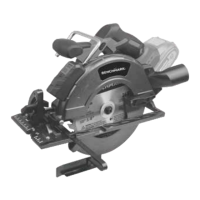
20V BRUSHLESS 7-1/4" CIRCULAR SAW
1265-002
accuracy of cut and reduces the chance of the blade binding.
• Always use blades with correct size and shape (diamond versus round) of arbor
holes. Blades that do not match the mounting hardware of the saw will run
eccentrically, causing loss of control.
• Never use damaged or incorrect blade washers or bolt. The blade washers and
bolt were specially designed for your saw, for optimum performance and safety
of operation.
CAUSES & OPERATOR PREVENTION
OF KICKBACK
Kickback is a sudden reaction to a pinched, bound or misaligned saw blade, causing
an uncontrolled saw to lift up and out of the workpiece toward the operator.
• When the blade is pinched or bound tightly by the kerf closing down, the blade
stalls and the motor reaction drives the unit rapidly back toward the operator.
• If the blade becomes twisted or misaligned in the cut, the teeth at the back edge
of the blade can dig into the top surface of the wood causing the blade to climb
out of the kerf and jump back toward operator.
• Kickback is the result of tool misuse and/or incorrect operating procedures or
conditions and can be avoided by taking proper precautions as given below.
• Maintain a firm grip with both hands on the saw and position your arms to resist
kickback forces. Position your body to either side of the blade, but not in line with
the blade. Kickback could cause the saw to jump backwards, but kickback forces
can be controlled by the operator, if proper precautions are taken.
• When blade is binding, or when interrupting a cut for any reason, release the
trigger and hold the saw motionless in the material until the blade comes to a
complete stop. Never attempt to remove the saw from the work or pull the saw
backward while the blade is in motion or kickback may occur. Investigate and
take corrective actions to eliminate the cause of blade binding.
• When restarting a saw in the workpiece, centre the saw blade in the kerf and
check that the saw teeth are not engaged into the material. if saw blade is binding,
it may walk up or kickback from the workpiece as the saw is restarted.
• Support large panels to minimize the risk of blade pinching and kickback. Large
panels tend to sag under their own weight. Supports must be placed under the
panel on both sides, near the line of cut and near the edge of the panel.
• Do not use dull or damaged blades. Unsharpened or improperly set blades
produce a narrow kerf causing excessive friction, blade binding and kickback.
• Blade depth and bevel adjusting locking levers must be tight and secure before
making a cut. If blade adjustment shifts while cutting, it may cause binding
and kickback.
• Use extra caution when making a “plunge cut” into existing walls or other blind
areas. The protruding blade may cut objects that can cause kickback.


 To Next Page