10
Overview of Possible Issues (1.3)
Issue Description
Vehicle Diagnostic
Trouble Codes
(DTCs)
The Bendix Fusion system will not operate and will set a DTC if any of the following
vehicle systems also show a relevant DTC: engine, engine cruise, instrument cluster,
Bendix
®
ABS, Bendix
®
ATC, Bendix
®
ESP
®
, or transmission. These components must
be repaired and cleared of DTCs before troubleshooting the Fusion system. (NOTE:
Clearing the vehicle DTCs may be the only step needed to reestablish full Fusion
system functionality. Refer to Section 2.6: Clearing Diagnostic Trouble Codes (DTCs).
System familiarity Verify the system functionality. Is it operating normally or not? Drivers who are unfamiliar with
the system may report dissatisfaction over the way it beeps or how it activates the brakes.
Refer to Section 1.0: Introduction to Troubleshooting, Section 1.1: Troubleshooting Basics,
and Section 2.5: Diagnostic Trouble Codes to verify if the system is functioning normally;
then continue.
DTCs caused by
temporary operating
conditions
Some DTCs indicate a temporary condition and will clear when that condition is no longer
present. If these persist, further investigation is warranted.
Refer to Section 1.1: Troubleshooting Basics.
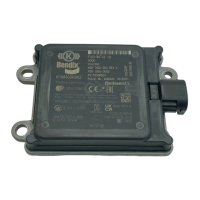
Radar sensor
blocked
If the system doesn’t seem to work at all, the radar sensor may possibly be blocked. If the
radar is blocked, an alert should be issued to the driver to indicate this condition. Visually
inspect the area around the radar, clear the blockage, turn the ignition on and run through
a power cycle. Refer to Appendix A3 for more information about radar mounting and
clearances.
Damaged radar
sensor or bracket
If the vehicle has been in an accident, it is likely the radar sensor will need to be re-inspected
or replaced. Inspect the radar sensor and housing for damage. Radar sensor discoloration
orsmallscratchesmaybeacceptable.Signicantdamage(suchascracksorbrokenpieces)
will require radar sensor replacement. Regardless of the exterior condition, check for DTCs
outlined in the Section 2.5: Diagnostic Trouble Codes (DTCs) to determine if radar sensor
replacement is necessary.
Damaged connector
or wiring
Visuallyinspecttheconnectorandwireharnessforcorrosionorchang.Refer to Sections
2.7: Troubleshooting Diagnostic Trouble Codes: Power Supply and 2.8 Serial Data (J1939)
Communications Link of this document for additional troubleshooting.
Radar sensor
misalignment
Inspect the front of the vehicle. If a) it has been damaged; or b) the vehicle does not track
straight, either of these conditions must be repaired before troubleshooting the Bendix Fusion
system.
If there is a DTC set or if the system does not function, the radar sensor may be severely
misaligned and the Fusion system will not operate until this is corrected.
J1939 network
problems
If the entire system is non-functional, it may be a J1939 network problem. Follow the
instructions in Section 2.8: Serial Data (J1939) Communications Link.
Power to radar
sensor problems
If the entire system is non-functional, another likely cause may be a lack of power to the radar sensor.
Follow the instructions in Section 2.7: Troubleshooting Diagnostic Trouble Codes: Power Supply.
Table 3 – Overview of Possible Issues
1.3 OVERVIEW OF POSSIBLE ISSUES
Some customer issues are actually misunderstandings of how the Bendix
®
Fusion
™
system performs normally. Use Table
3 below to learn the causes of potential issues if the Fusion system is not performing correctly. Some issues can be
investigated by a visual inspection. Others may cause a Diagnostic Trouble Code (DTC) to be logged: Refer to Section
2.5: Diagnostic Trouble Codes.


 To Next Page