5
Troubleshooting Basics (1.1)
Questions/Instructions Next Steps
1. Does the driver hear a
long warning beep?
If no problem is found and the test is passed, no additional beeps/lamps will be
displayed nor will a Diagnostic Trouble Code (DTC) be set.
If the system has found an issue that will prevent it from functioning properly, a long
warning beep will sound to alert the driver, and a DTC will be logged in the system
(typically with a status indicator/dash icon illuminated). For descriptions of all DTCs,
refer to Section 2.5: Diagnostic Trouble Codes.
2. Have the driver describe
the system behavior that
they believe shows it is not
working properly.
When diagnosing the system, especially in cases where there are no DTCs logged,
ndoutwhichpartofthesystembehaviorappearstobeoperatingimproperly.
NOTE: False brake applications are often misdiagnosed and are, in fact, not brake
applications, but rather loss of engine throttle caused by a J1939 communication failure
on the vehicle. This is frequently caused by aftermarket components installed in the
vehicle CAN line (i.e. electronic drivers logs [EDLs], GPS, or telematics systems).
3. Fill out the Troubleshooting
Checklist and generate a
DTC report.
The Checklist and DTC report will clarify the problem and be necessary if a call to the
Bendix Tech Team is needed.
Refer to Section 1.2: Narrowing Down the Problem.
Call the Bendix Tech Team at 1-800-AIR-BRAKE (1-800-247-2725), option 2, for troubleshooting assistance.
Table 1 – Troubleshooting Basics
1.0 INTRODUCTION TO
TROUBLESHOOTING
This section introduces three (3) initial steps to accurately
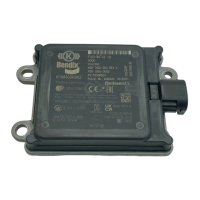
troubleshoot the Bendix
®
Fusion
™
FLR-25
™
Radar Sensor.
Read this introductory section – as well as the
Troubleshooting/Diagnostics Section (2.0) – before
performing any troubleshooting.
When diagnosing the Fusion system, a current version of
Bendix
®
ACom
®
PRO
™
Diagnostic Software is required.
This software is available as a download at B2Bendix.com.
NOTE: Prior to troubleshooting, all aftermarket-installed
components should be removed from the vehicle and the
vehiclemustbereturnedtofactoryspecications.Oncethe
vehicleisreturnedtofactoryspecications,thefaultshould
be recreated prior to performing troubleshooting steps.
1.1 TROUBLESHOOTING BASICS


 To Next Page