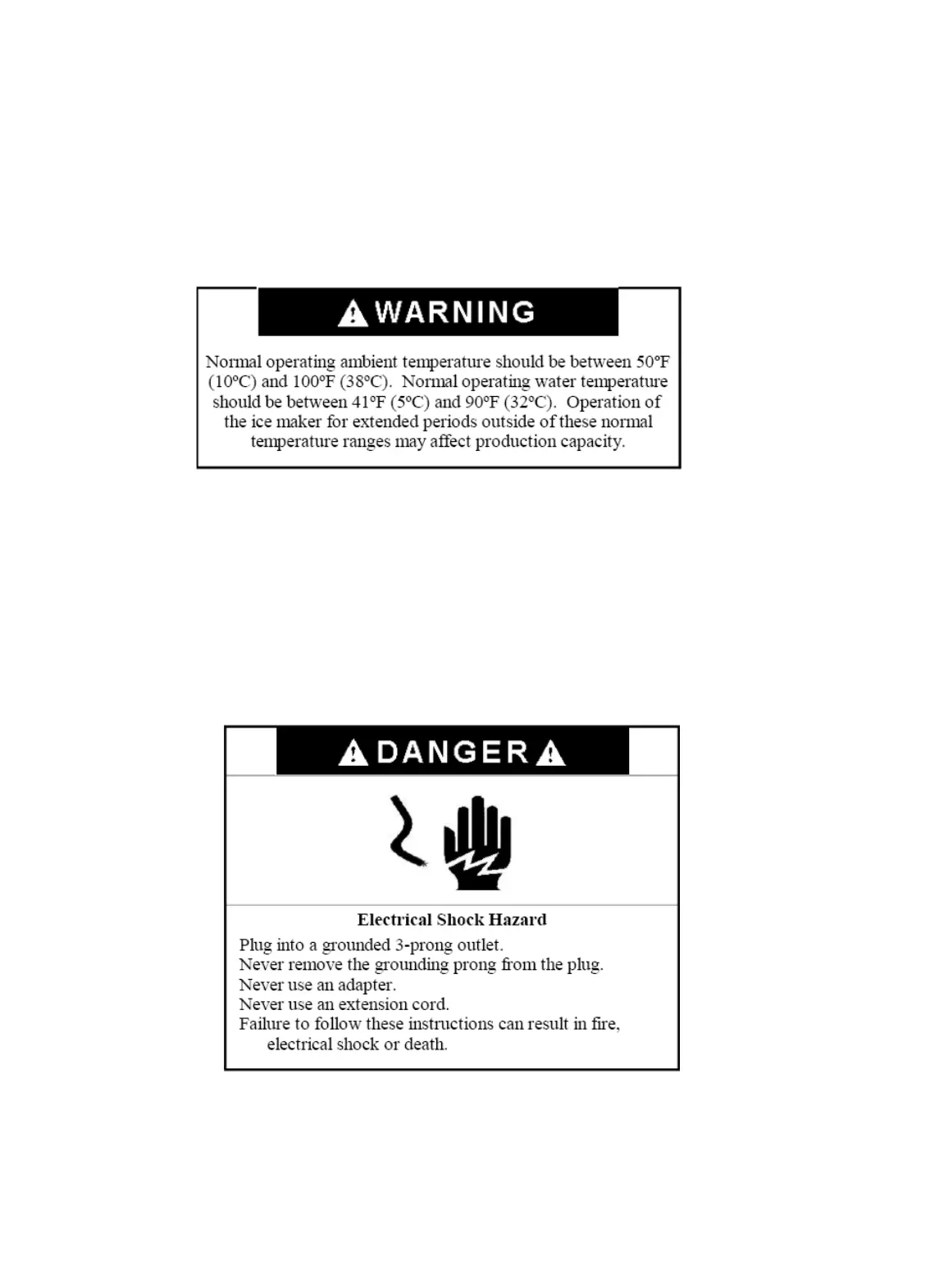
Choose a well-ventilated area with temperatures above 50ºF (10ºC) and below 100ºF
(38ºC). This unit MUST be installed in an area protected from the elements, such as
wind, rain, water spray or drips.
The unit should not be located next to ovens, grills or other sources of high heat.
Installation of the ice maker requires a cold water supply inlet of 3/8” (9,5 mm) soft
copper tubing with a shut-off valve.
The ice maker requires a continuous water supply with a minimum pressure of 15 psig
and a static pressure not to exceed 80 psig. The temperature of the water feeding into
the ice maker should be between 41ºF (5ºC) and 90ºF (32ºC) for proper operation.
IT IS STRONGLY RECOMMENDED TO USE A WATER FILTER. A FILTER,
IF IT IS OF THE PROPER TYPE, CAN REMOVE TASTE AND ODORS AS
WELL AS PARTICLES AND CAN PROLONG THE LIFE OF THE MACHINE.
The ice maker must be installed with all electrical and water connections in accordance
with state and local codes.
The unit should be located on a firm and level surface. It is important for the ice maker
to be level in order to work properly. If needed, you can adjust the height of the ice
maker by rotating the feet. See the Leveling the Ice Maker section.
Electrical Requirements
Before you move your ice maker into its final location, it is important to make sure you
have the proper electrical connection. A standard electrical supply (115 VAC only, 60
Hz, 15 A), properly grounded in accordance with the National Electrical Code and local
codes and ordinances, is required. The ice maker should always be plugged into its own
individual electrical outlet. It is recommended that a separate circuit, serving only your


 To Next Page