28 Recording ECGs and IEGMs
Recording ECGs and IEGMs
The intracardiac electrograms received from the
implant as well as the surface ECG and the
esophageal lead can be simultaneously displayed and
printed. The recording of the surface ECG does not
depend on other functions, so that the implant can be
interrogated and programmed during the ongoing
ECG display. The recorded electrograms can be saved
and measured with electronic calipers.
Overmodulation When the ECG input is overmodulated, the signal is
displayed only as a solid line on the upper frame of the
ECG window.
1 Test the electrode contacts.
2 Remove other devices from the patient.
3 Turn off sources of interference.
Miniclinic
The pacing pulses delivered by the implant are
continually recorded and evaluated along with the
surface ECG. The values for rates, pulse width, and AV
delay (for multi-chamber pacing only) are
automatically calculated and displayed based on this
information. This recognition software, the system’s
Miniclinic, can monitor all single- and dual-chamber
pacemakers, regardless of the brand or manufacturer
of the pacemaker. If only one pulse is detected, this is
assigned to the ventricle. If two pulses are detected,
these are interpreted as atrial and ventricular pulses.
Note: When working with the software, maintain minimum
amplitudes or values of physiologic patient signals. If
these values are not met, inaccurate results may be
produced.
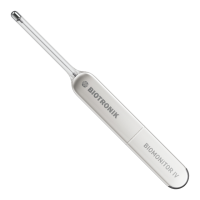
The M 50 magnet can be used to check the pacing
function of the implanted pacemaker.




 To Next Page