Posture
This is easier than you think. The two exercises
in the preceding strengthening section will give
you the strength you need to hold your neck in
a neutral position so that your joints won’t jam,
even when you are bending forward. Posture is the
practical daily application of that strength. It’s often
explained in a confusing and complicated way and
it doesn’t need to be. Here’s how simple it is:
1 For the neck, hold your chin in a little. Don’t let it
poke out.
2 For the upper and middle back, hold your
shoulders back and down a little. Don’t let them
hunch.
If you’re not sure exactly how far to go, just do
both actions as far and as hard as you can, then
relax a little from that position. Initially you’ll often
forget to hold your neck and shoulders like this, but
don’t give up – it becomes automatic with enough
practice, and easy when the muscles get stronger.
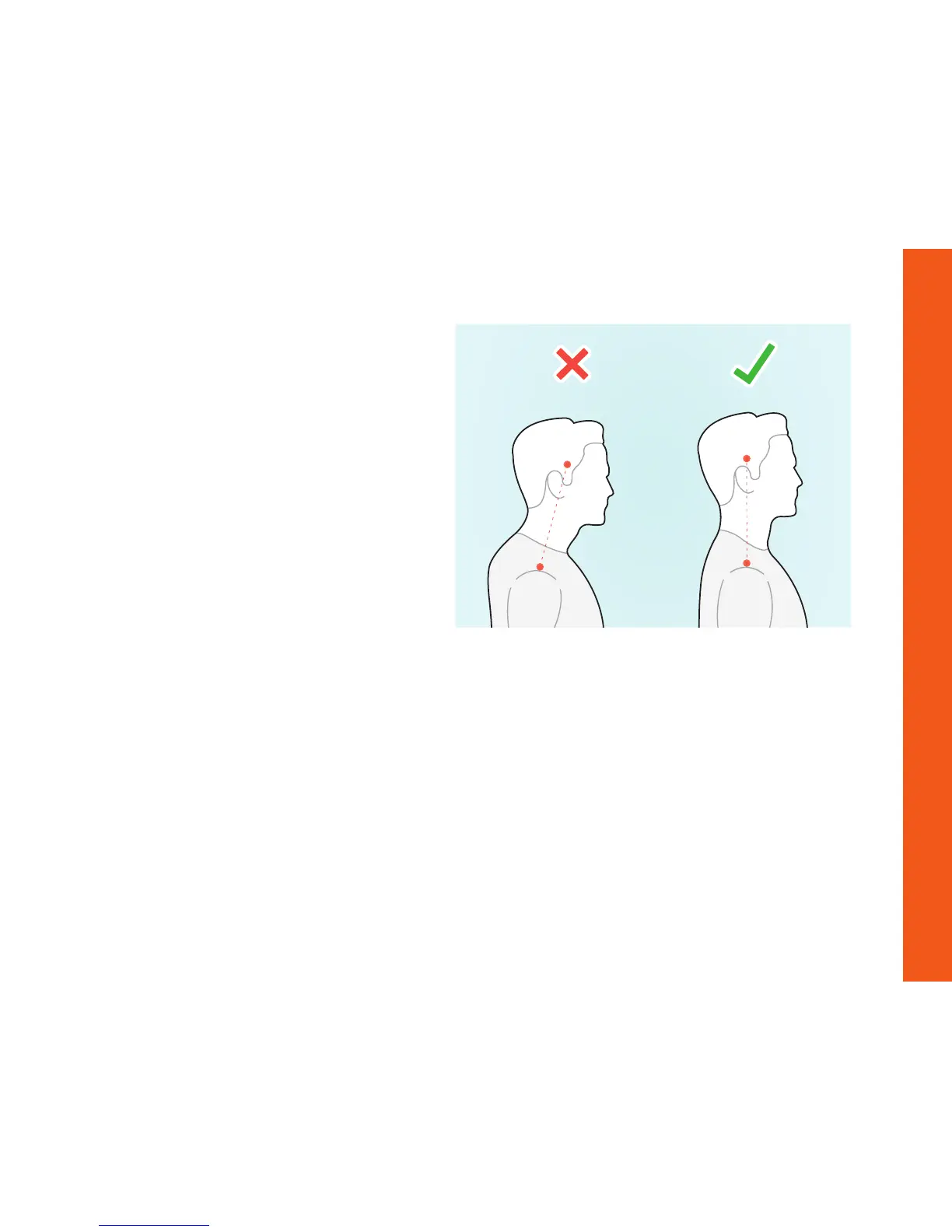
One indicator that you’re getting it right is that
your ear lobe sits vertically above the point of your
shoulder. (You can notice someone getting it badly
wrong – seen from side on, the back of their head
will sit vertically above the front of their chest.)
Posture is important not just for pain relief.
Research shows a hunched posture indicates and
may even drive a lack of personal confidence, and
also correlates strongly with not being listened to.
Perfect posture gets attention. For an inspiring
explanation of this, Google Dr Amy Cuddy’s TED talk
(with over 40 million views) on posture and body
language.
Home care programme
12



 To Next Page