Massage - two simple techniques
In an ideal world, frequent massage would be
part of our lives. Failing that, here are the two
massage techniques that are of most use in most
neck problems. You need a massage partner. If
you haven’t got someone on hand, find someone
else with a neck problem – which shouldn’t be too
difficult!
The main muscles that need massage run from
the base of the skull down the back of the neck
to below the shoulder blades, and also out to the
points of the shoulders. (The main ones are called
the trapezius, rhomboid and levator scapulae
muscles.) When they fatigue and strain, small tears
occur which scar up as part of their repair process.
A build-up of this scarring (called adhesive fibrosis)
shortens the muscles, lifting the shoulders up
towards the ears and pulling the head back so the
chin pokes out.
The upper trapezius stretch shown in the stretching
section on page 9 is a good daily way of keeping
that part of these muscles elastic but if they are
scarred enough they will also need massage.
Massage has much more leverage on tight, tough
muscle scarring than just stretching – like a rolling
pin flattening out a chunk of dough into a pancake.
Deep tissue massage like this shouldn’t be done
more than once a week – the tissues need time to
recover. You will need some massage wax, massage
oil or cooking oil to let your fingers slide easily over
the skin.
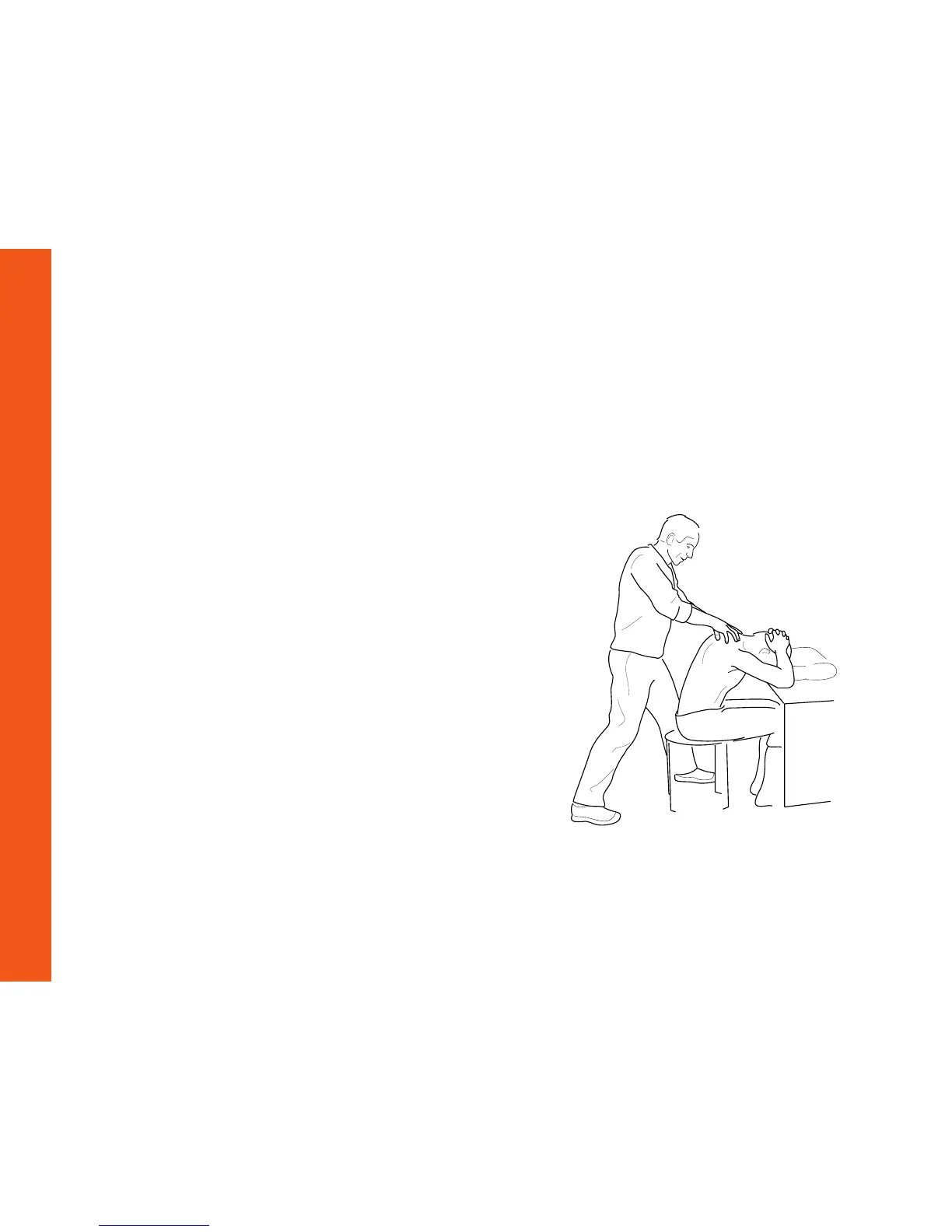
1 Sitting massage position.
Patient: sit at a desk or table with your forehead on
a pillow, rolled towel or something else comfortable.
Home care programme
13


 To Next Page