Cervical laminectomy or foraminotomy operations
are performed to trim back any bony impingement on
the nerves as they exit between the vertebrae, usually
at the C5/6 or C6/7 level. These patients are typically
older, with hunched thoracic spines. Excessive thoracic
kyphosis hunching requires the patient to extend
their neck just to look ahead, which has a closing
down effect on the nerve exit canals, exacerbating
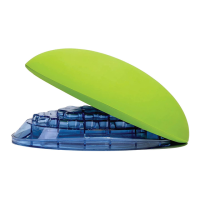
any impingement. The Backpod® used in the usual
way reduces an excessive thoracic kyphosis, thereby
reducing the closing down of the cervical nerve exit
foramina, and allowing full benefit from the operation.
Further, these hunched patients hold their heads
up by overusing the upper trapezius and other neck
extensor muscles. These muscles become fatigued,
strained and scarred – from adhesive fibrotic repair
of the repeated micro-trauma of overuse. The fibrotic
scarring and shortening pulls the cervical spine into
excessive extension – which closes down the nerve
exit canals. This is increased by surgical scarring after
a posterior entry operation. These shortened cervical
extensors are usually found in conjunction with very
weak longus colli and deep neck flexors, giving rise
to a poked-chin posture. The Backpod® user guide
stretches, massage, posture and strengthening
exercises will specifically counter this pattern, so the
patient then gets the full and lasting benefits of the
operation performed.
Persisting pain after thoracic surgery is an
appallingly common problem. This is unsurprising
as the stretch on the intercostal (IC) muscles and
costovertebral (CV) and sternocostal (SC) joint
capsules required for most procedures is massive.
Normal adhesive fibrotic repair after such surgery
frequently leaves frozen CV joints, plus wound and
strain scarring of the IC and other muscles, plus or
minus tethering of the IC nerve(s). Ongoing pain is
particularly distressing for the patient as every time it
hurts they think the original problem is coming back.
Generally, they respond readily to the Backpod® used
to free up the contracted CV capsules (as outlined
on pages 19 & 20); massage in side lying for IC, lat.
dorsi, middle and lower trapezius tethering; specific
gentle hands-on IC muscle stretching; and therapeutic
ultrasound (1.4W/ cm2 continuous) for IC nerve
tethering at the operation site. Low dose tricyclics
such as amytriptyline help with the wound-up nervous
pathways in a chronic problem. Usually it is not a
full-blown pain syndrome, though often diagnosed as
such, especially if T4 syndrome autonomic symptoms
are present (see page 27).
Backpod
®
for persisting pain after neck or thoracic surgery
24
Health Practitioner pages


 To Next Page