by shortened collagen around the joints. The same
process can happen with pneumonia, pulmonary
and radiation fibrosis, other restrictive lung diseases,
and neurological conditions such as Guillain-Barré
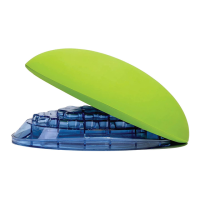
syndrome. The Backpod
®
is ideal for treating the
rib cage restriction – an aspect often overlooked
by doctors concentrating perfectly correctly on the
underlying lung problem.
Rib pain in pregnancy is quite common partway
through term as the baby bulge grows bigger. The rib
cage needs to expand to accommodate it, and pain
results if the joints and muscles are too tight to allow
it. The pain can be sharp and severe, and certainly
detracts from the experience of bearing a child.
It does not always clear as the pregnancy continues,
even though Relaxin hormone release will be
facilitating joint hypermobility throughout the body.
The suggested mechanism is that Relaxin will soften
ligaments but not adhesive fibrosis, so any old scarring
restrictions will actually become tighter relative to the
other joints as the pregnancy continues - this further
explains the onset of pain partway through term. The
problem may be becoming much more common, as so
many young mothers now start into pregnancy carrying
a hunched thoracic spine and rib cage tightness
from much use of laptops, tablets and smartphones.
(See the Wikipedia entry on the iHunch.) It doesn’t
respond well to general stretching, as the already
well-moving parts of the rib cage machinery simply
stretch more, and the tight bits stay tight.
The restriction is usually at the posterior rib
articulations (costovertebral joints) where the ribs
join onto the spine, but can include tight, scarred
intercostal muscles between the ribs. As well,
immobile rib joint movement at the back can cause
compensatory overuse straining at the other ends of
the rib where they join onto the sternum (breastbone).
This is then diagnosed as costochondritis, or Tietze’s
Syndrome if there is sufficient observable swelling at
the rib joints on the sternum as well.
The problem usually responds very well and quickly
to the Backpod used slightly to the sides of the
spine to stretch free tight posterior rib joints, as
for costochondritis and other costovertebral joint
problems (see page 19). Tightness and scarring in the
intercostal muscles between the ribs responds well to
specific stretching of those muscles, by a partner or
therapist. The technique is described 10 minutes into
the YouTube video ‘How to Fix (most) Costochondritis
and Tietze’s Syndrome Chest Pain’ Part (2).
22
Health Practitioner pages


 To Next Page