manipulated or mobilised, with the Backpod
®
or any
other technique. These problems are best treated by
support muscle strengthening and stabilisation belts.
Sacroiliac pain during and after pregnancy is
common. Usually it is explained as arising from
excessively moving (i.e. hypermobile) and strained SI
joints, due to the loosening and softening effect on
the ligaments of hormones released during pregnancy
to allow the sacrum to hinge open fully to let the baby
come through the pelvic basin. This surely happens,
however it doesn’t explain unilateral SI pain, since
all the ligaments are presumably loosening equally.
Unpublished New Zealand research and extensive
clinical experience suggests that unilateral SI pain
appearing partway through pregnancy is more usually
from a hypomobile SI. These patients generally have
a history of a fall or impact on the low back, pelvis or
tailbone, presumably leaving the legacy of an adhesed
and hypomobile SI joint. The interpretation is that
as the pregnancy continues, and the surrounding
ligaments get looser, the adhesed SI joint becomes
relatively more hypomobile and then painful.
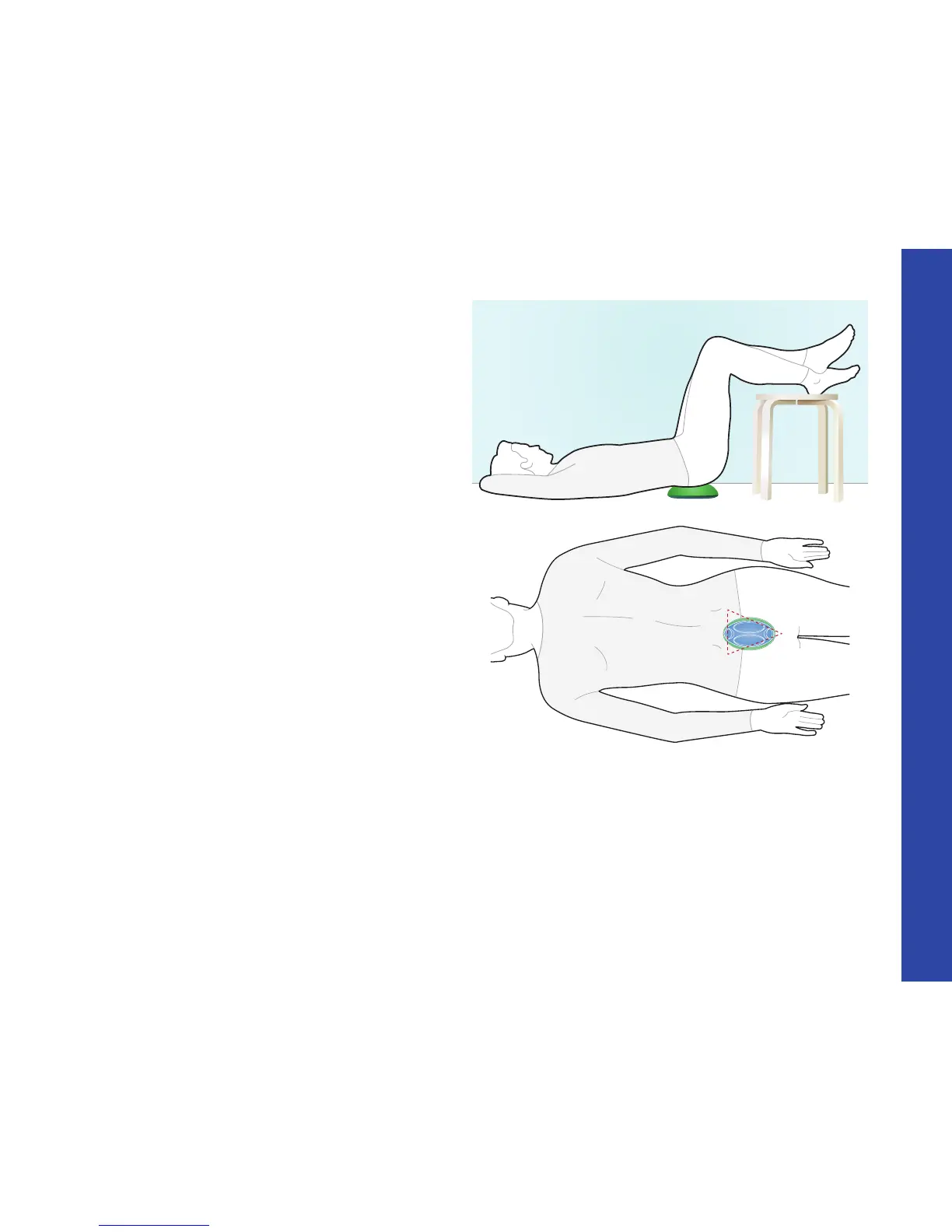
These problems generally respond well and quickly
to mobilising the hypomobile sacrum with manual
physiotherapy techniques, or on the Backpod
®
as
shown. This rather validates the model, as the patient
is no longer sore - even though the pregnancy is
continuing and the baby is getting bigger - so the pain
can’t just be coming from the stresses and strains
of pregnancy. If SI or tailbone pain persists months
after the baby is born it is then usually coming from
SI hypomobility after the ligaments have tightened up
again after the birth. The Backpod
®
is equally effective
in this situation to gently mobilise the tight SI hinges.
26
Health Practitioner pages


 To Next Page