-4-
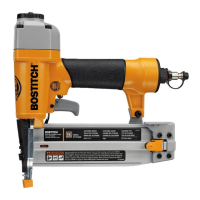
BT35B & BT50B TOOL SPECIFICATIONS
All screws and nuts are metric.
FASTENER SPECIFICATIONS:
TOOL AIR FITTING:
This tool uses a free-flow connector plug, 1/4 N.P.T. The inside diameter should be .200” (5mm) or larger. The
fitting must be capable of discharging tool air pressure when disconnected from the air supply.
OPERATING PRESSURE:
70 to 100 p.s.i.g. (4.9 to 7.0 kg/cm2). Select the operating pressure within this range for best fastener
performance. DO NOT EXCEED THIS RECOMMENDED OPERATING PRESSURE.
AIR CONSUMPTION:
The BT35B requires 2.1 cubic feet per minute (.06 cubic meters) and the BT50B requires 2.2 cubic feet (.06
cubic meters) of free air to operate at the rate of 100 nails per minute, at 80 p.s.i. (5.6 kg/cm2). Take the actual
rate at which the tool will be run to determine the amount of air required. For instance, if your fastener usage
averages 50 nails per minute, you need 50% of the tool’s c.f.m. which is required to operate the tool at 100
nails per minute.
OPERATION
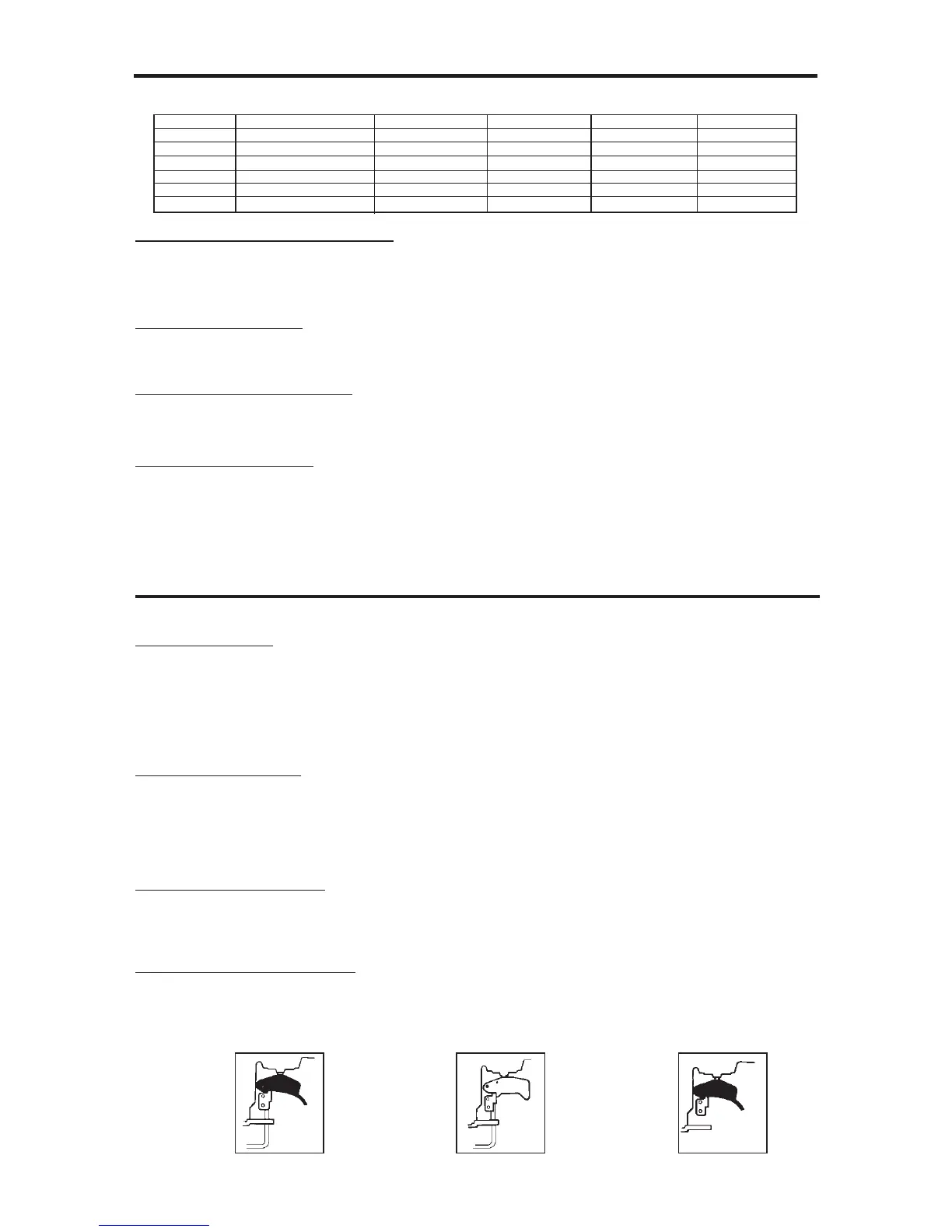
BOSTITCH OFFERS THREE TYPES OF OPERATION FOR THIS SERIES TOOL.
CONTACT TRIP:
The common operating procedure on “Contact Trip” tools is for the operator to contact the work to actuate the trip
mechanism while keeping the trigger pulled, thus driving a fastener each time the work is contacted. This will allow
rapid fastener placement on many jobs, such as sheathing, decking and pallet assembly. All pneumatic tools are
subject to recoil when driving fasteners. The tool may bounce, releasing the trip, and if unintentionally allowed to
recontact the work surface with the trigger still actuated (finger still holding trigger pulled) an unwanted second
fastener will be driven.
SEQUENTIAL TRIP:
The Sequential Trip requires the operator to hold the tool against the work before pulling the trigger. This makes
accurate fastener placement easier, for instance on framing, toe nailing and crating applications. The Sequential
Trip allows exact fastener location without the possibility of driving a second fastener on recoil, as described under
“Contact Trip”. The Sequential Trip Tool has a positive safety advantage because it will not accidentally drive a
fastener if the tool is contacted against the work – or anything else – while the operator is holding the trigger pulled.
TRIGGER OPERATED:
The Trigger Operated model is cycled by actuation of the trigger ONLY. This model does not have a Contact Arm
and is intended for use only where a Contact Arm
CANNOT be used to satisfy the requirements of the application.
The Trigger Operated tool will cycle each time the trigger is actuated.
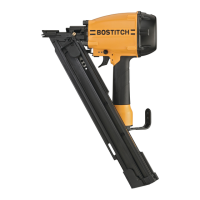
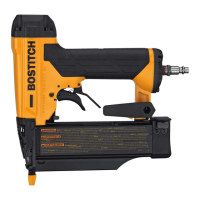
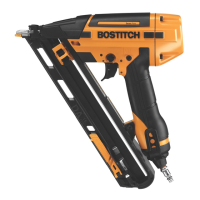
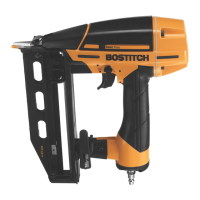
MODEL IDENTIFICATION:
Refer to Operation Instructions on page 7 before proceeding to use this tool.
CONTACT TRIP SEQUENTIAL TRIP TRIGGER OPERATED
Identified by: Identified by: Identified by:
BLACK TRIGGER GRAY TRIGGER BLACK TRIGGER
MODEL TOOL ACTUATION LENGTH HEIGHT WIDTH WEIGHT
BT35B-1 Contact Trip 10-3/8” (263.5mm) 7-7/8” (200mm) 2-5/16” (58.6mm) 2.7lbs. (1.22Kg)
BT35B-2 Sequential Trip 10-3/8” (263.5mm) 7-7/8” (200mm) 2-5/16” (58.6mm) 2.7lbs. (1.22Kg)
BT35B-3 Trigger Operated 10-3/8” (263.5mm) 7-7/8” (200mm) 2-5/16” (58.6mm) 2.7lbs. (1.22Kg)
BT50B-1 Contact Trip 10-3/8” (263.5mm) 9-3/16” (233mm) 2-5/16” (58.6mm) 2.6lbs. (1.18Kg)
BT50B-2 Sequential Trip 10-3/8” (263.5mm) 9-3/16” (233mm) 2-5/16” (58.6mm) 2.6lbs. (1.18Kg)
BT50B-3 Trigger Operated 10-3/8” (263.5mm) 9-3/16” (233mm) 2-5/16” (58.6mm) 2.6lbs. (1.18Kg)
TOOL MODEL BRAD SERIES WIRE SIZE FASTENER RANGE
BT35B BT1300 .050” X .040” (1.27 X 1.04mm) 5/8” - 1-3/8” (15mm-35mm)
BT50B BT1300 .050” X .040” (1.27 X 1.04mm) 1-3/16” - 2” (30mm-50mm)



 To Next Page