EasyManua.ls Logo

Bryant 330AAV - User Manual

Bryant 330AAV
24 pages
Print Icon
To Next Page IconTo Next Page
Loading...
NOTE: Read the entire instruction manual before starting the
installation.
This symbol indicates a change since the last issue.
Index Page
SAFETY CONSIDERATIONS.....................................................1
ELECTROSTATIC DISCHARGE (ESD) PRECAUTIONS
PROCEDURE...........................................................................3
Dimensional Drawing...............................................................2
Clearances to Combustibles......................................................3
INTRODUCTION.......................................................................3-4
LOCATION....................................................................................4
General ......................................................................................4
Location Relative to Cooling Equipment ................................4
Hazardous Locations.................................................................4
AIR FOR COMBUSTION AND VENTILATION...................4-5
Unconfined Space..................................................................4-5
Confined Space......................................................................5-6
AIR DUCTS...................................................................................6
General ......................................................................................6
Ductwork Acoustical Treatment...............................................6
Supply Air Connections............................................................6
Return Air Connections............................................................6
FILTER ARRANGEMENT .......................................................6-7
LEVELING LEGS (IF REQUIRED)............................................7
GAS PIPING..................................................................................8
ELECTRICAL CONNECTIONS...............................................8-9
115-v Wiring..........................................................................8-9
24-v Wiring...............................................................................9
Accessories................................................................................9
VENTING ....................................................................................10
START-UP, ADJUSTMENT, AND
SAFETY CHECK..............................................................10-21
General ....................................................................................10
Sequence of Operation ......................................................11-14
Adaptive Heating Mode ....................................................11-12
Non-Adaptive Heating Mode .................................................12
Cooling Mode .........................................................................12
Continuous Blower Mode.......................................................14
Heat Pump Mode....................................................................14
Defrost.....................................................................................14
Start-Up Procedures...........................................................14-15
Adjustments .......................................................................15-20
Set Gas Input Rate..................................................................15
Set Temperature Rise ........................................................16-20
Set Thermostat Heat Anticipator............................................20
Check Safety Controls.......................................................20-21
Checklist..................................................................................21
SAFETY CONSIDERATIONS
Installation and servicing of heating equipment can be hazardous
due to gas and electrical components. Only trained and qualified
personnel should install, repair, or service heating equipment.
Untrained personnel can perform basic maintenance functions
such as cleaning and replacing air filters. All other operations must
be performed by trained service personnel. When working on
heating equipment, observe precautions in the literature, on tags,
and on labels attached to or shipped with the unit and other safety
precautions that may apply.
Follow all safety codes. In the United States, refer to the National
Fuel Gas Code (NFGC) NFPA No. 54-1999/ANSI Z223.1-1999.
In Canada, refer to the current edition of the National Standard of
Canada CAN/CGA- B149.1- and .2-M95 Natural Gas and Propane
Installation Codes (NSCNGPIC) and Amendment No. 1. Wear
safety glasses and work gloves. Have fire extinguisher available
during start-up and adjustment procedures and service calls.
Recognize safety information. This is the safety-alert symbol
.
When you see this symbol on the furnace and in instructions or
manuals, be alert to the potential for personal injury.
Understand the signal words DANGER, WARNING, and CAU-
TION. These words are used with the safety-alert symbol. DAN-
GER identifies the most serious hazards which will result in severe
personal injury or death. WARNING signifies a hazard which
could result in personal injury or death. CAUTION is used to
identify unsafe practices which would result in minor personal
injury or product and property damage. NOTE is used to highlight
suggestions which will result in enhanced installation, reliability,
or operation.
These instructions cover minimum requirements and conform to
existing national standards and safety codes. In some instances,
these instructions exceed certain local codes and ordinances,
especially those that may not have kept up with changing resi-
dential construction practices. We require these instructions as a
minimum for a safe installation.
ama
CERTIFIED
REGISTERED QUALITY SYSTEM
installation, startup,
and operating instructions
UPFLOW 2-SPEED,
2-STAGE, INDUCED-COMBUSTION
GAS-FIRED FURNACE
Cancels: II 330A-40-8 II 330A-40-9
12-00
330AAV
Series B
or C
—1—


Other manuals for Bryant 330AAV

Question and Answer IconNeed help?

Do you have a question about the Bryant 330AAV and is the answer not in the manual?

Summary

SAFETY CONSIDERATIONS

LOCATION

AIR FOR COMBUSTION AND VENTILATION

GAS PIPING

INSTALLATION PROCEDURES

Procedures and codes for installing the gas supply line to the furnace.

ELECTRICAL CONNECTIONS

VENTING

START-UP, ADJUSTMENT, AND SAFETY CHECK

GENERAL

Initial requirements for power supply and gas pressure before furnace operation.

SEQUENCE OF OPERATION

Detailed steps describing furnace operation in various modes.

ADJUSTMENTS

Procedures for setting gas input rate, manifold pressure, and temperature rise.

Summary

SAFETY CONSIDERATIONS

LOCATION

AIR FOR COMBUSTION AND VENTILATION

GAS PIPING

INSTALLATION PROCEDURES

Procedures and codes for installing the gas supply line to the furnace.

ELECTRICAL CONNECTIONS

VENTING

START-UP, ADJUSTMENT, AND SAFETY CHECK

GENERAL

Initial requirements for power supply and gas pressure before furnace operation.

SEQUENCE OF OPERATION

Detailed steps describing furnace operation in various modes.

ADJUSTMENTS

Procedures for setting gas input rate, manifold pressure, and temperature rise.

Overview

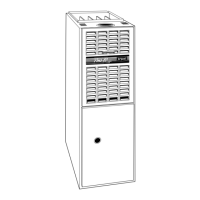
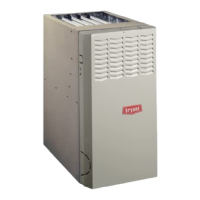
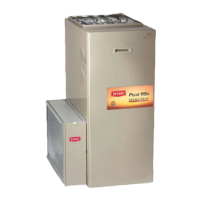
This document describes the installation, startup, and operating instructions for the Bryant 330AAV Series B or C Upflow 2-Speed, 2-Stage, Induced-Combustion Gas-Fired Furnace.

Function Description:

The Bryant 330AAV Series B or C furnace is a forced-air, gas-fired heating unit designed for indoor installation in various residential settings such as alcoves, attics, basements, closets, or utility rooms. It is CSA (A.G.A. and C.G.A.) design-certified for use with natural and propane gases. The furnace features a 2-speed, 2-stage induced-combustion system, allowing for efficient and adaptive heating based on demand. It can operate with either single-stage or two-stage heating thermostats, offering flexibility in control. In adaptive heating mode with a single-stage thermostat, the furnace control CPU determines whether to operate in low- or high-gas heat based on the stored history of previous heating cycles. With a two-stage thermostat, the thermostat directly selects the heating mode. The furnace also integrates with cooling systems, heat pumps, and continuous blower operation, providing comprehensive climate control. It includes safety features such as a manual reset limit switch, draft safeguard switch, and flow-sensing pressure switches to ensure safe operation.

Important Technical Specifications:

  • Model Series: 330AAV Series B or C
  • Type: Upflow, 2-Speed, 2-Stage, Induced-Combustion, Gas-Fired Furnace
  • Input Capacities: Available in sizes from 40,000 to 133,000 Btuh.
  • Gas Type: Design-certified for natural and propane gases.
  • Altitude: Approved for use with natural gas at altitudes 0 - 10,000 ft (0-3,050m). High-altitude conversion kits are required for installations at or above 5500 ft above sea level.
  • Clearances to Combustibles:
    • Top/Plenum: 1 inch
    • Side (furnace): 1 inch
    • Side (vent): 1 inch (# for furnaces wider than 14.25 inches (362mm) may be 0 inches)
    • Front (service): 30 inches minimum
    • Back: 0 inches
    • Bottom: 1 inch
    • For single wall vent type: 6 inches
    • For Type B-1 vent type: 3 inches
  • Electrical Requirements: 115-v, 60 Hz, 1-phase. Specific maximum unit amps, minimum wire gauge, maximum wire length, and maximum fuse or circuit breaker amps vary by unit size (refer to TABLE 5-ELECTRICAL DATA).
  • Gas Service Pressure: Must not exceed 0.5 psig (14-in. wc) and no less than 0.16 psig (4.5-in. wc).
  • Manifold Pressure (Natural Gas):
    • Low heat: 1.3-in. wc to 1.7-in. wc (do not set below 1.3-in. wc or above 1.7-in. wc).
    • High heat: 3.2-in. wc to 3.8-in. wc (do not set below 3.2-in. wc or above 3.8-in. wc).
  • Input Rate Accuracy: Must be within ±2 percent of input on furnace rating plate (at sea level or derated for altitude).
  • Return-Air Temperature Limits: Minimum continuous 60°F, intermittent 55°F, maximum 85°F.
  • Blower Off Delay Settings: Selectable at 90, 135 (factory setting), 180, or 225 seconds via SW-3 and SW-4 switches.
  • Filter Information: Factory-supplied washable filters are included. Filter sizes vary by casing width and return type (side or bottom). External Filter/Media cabinets can also be used.

Usage Features:

  • Adaptive Heating Mode: For single-stage thermostats, the furnace control intelligently selects low- or high-gas heat based on previous cycle history for optimal comfort.
  • Two-Stage Thermostat Compatibility: Allows direct control of low- and high-gas heat operation with a two-stage thermostat.
  • Cooling Mode Integration: Seamlessly integrates with single-speed or two-speed cooling outdoor units, controlling the blower motor speed for efficient cooling.
  • Continuous Blower Mode: Provides continuous air circulation at a low-gas heat speed (identical to low-cool speed) when the R to G circuit is closed.
  • Heat Pump Mode: Supports single-speed and two-speed heat pump operations, adjusting blower motor speed accordingly. An accessory interface kit may be required for single-speed heat pumps.
  • Defrost Operation: During heat pump defrost cycles, the furnace operates in high-gas heat only, with specific blower motor and ignitor timing.
  • Component Test System: Features a diagnostic tool to help identify system problems by initiating a sequence of component operations (inducer motor, ignitor, blower motor at various speeds).
  • LED Status Indicator: A visible LED on the control board provides status codes for troubleshooting, viewable through a sight glass on the blower compartment door.
  • Adjustable Gas Input Rate: Allows for precise adjustment of manifold pressure to achieve the correct gas input rate, considering altitude, heat value, and specific gravity.
  • Adjustable Temperature Rise: Blower speed can be adjusted to achieve the desired temperature rise within the specified range on the unit rating plate.
  • Thermostat Heat Anticipator Setting: Instructions are provided for setting the heat anticipator on non-electronic thermostats to match the electrical current draw of the heating circuit.

Maintenance Features:

  • Filter Arrangement: Filters can be installed in an external Filter/Media cabinet or the furnace blower compartment. Factory-supplied washable filters are included, and instructions are provided for their placement and securing.
  • ESD Precautions: Detailed procedures for protecting electronic components from electrostatic discharge during installation and servicing, including grounding oneself before touching controls or wires.
  • Gas Piping: Requirements for installing gas piping, including sediment traps, manual shutoff valves, and pressure testing, to ensure safe and leak-free operation.
  • Electrical Connections: Guidelines for 115-v and 24-v wiring, ensuring proper grounding and adherence to national and local electrical codes. Includes specifications for wire gauge and fuse/circuit breaker sizes.
  • Safety Control Checks: Procedures for verifying the proper operation of the primary limit control, draft safeguard switch, and flow-sensing pressure switches.
  • Accessibility: Designed with ample space for servicing and cleaning. The junction box can be moved to either side for flexible power supply connections.
  • User Manual: A user's manual is provided and should be reviewed by the owner for proper operation and maintenance.
  • Professional Servicing: Emphasizes that only trained and qualified personnel should perform installation, repair, or service, while basic maintenance like filter replacement can be done by untrained personnel.

Bryant 330AAV Specifications

General IconGeneral
BrandBryant
Model330AAV
CategoryFurnace
LanguageEnglish

Related product manuals