NOTE: Read the entire instruction manual before starting the
installation.
This symbol → indicates a change since the last issue.
TABLE OF CONTENTS
SAFETY CONSIDERATIONS.....................................................1
INTRODUCTION..........................................................................1
CODES AND STANDARDS........................................................3
ELECTROSTATIC DISCHARGE (ESD) PRECAUTIONS........3
LOCATION....................................................................................4
General ......................................................................................4
Location Relative to Cooling Equipment ................................4
Hazardous Locations.................................................................4
AIR FOR COMBUSTION AND VENTILATION ......................4
Unconfined Space.....................................................................5
Confined Space.........................................................................5
Air Ducts...................................................................................6
General Requirements .........................................................6
Ductwork Acoustical Treatment .........................................6
Supply Air Connections ......................................................6
Return Air Connections.......................................................6
Filter Arrangement ..............................................................7
INSTALLATION...........................................................................7
Upflow Furnace Installation.....................................................7
Horizontal Furnace Attic Installation.......................................9
Construct a Working Platform............................................9
Install Furnace .....................................................................9
Horizontal Furnace/Crawlspace
Installation.................................................................................9
Leveling Legs (If Required For Upflow) ................................9
Gas Piping.................................................................................9
Electrical Connections ............................................................10
115-v Wiring......................................................................10
24-v Wiring........................................................................10
Accessories ........................................................................11
Venting...............................................................................11
START-UP, ADJUSTMENT, AND SAFETY CHECK ............11
General ....................................................................................11
Sequence of Operation............................................................13
Set-up Procedures ...................................................................17
Start-up Procedures.................................................................17
Adjustments.............................................................................19
Check Safety Controls............................................................25
Checklist..................................................................................25
SAFETY CONSIDERATIONS
Installation and servicing of heating equipment can be hazardous
due to gas and electrical components. Only trained and qualified
personnel should install, repair, or service heating equipment.
Untrained personnel can perform basic maintenance functions
such as cleaning and replacing air filters. All other operations must
be performed by trained service personnel. When working on
heating equipment, observe precautions in the literature, on tags,
and on labels attached to or shipped with the unit and other safety
precautions that may apply.
Follow all safety codes. In the United States, follow all safety
codes including the National Fuel Gas Code (NFGC) NFPA
54-1999/ANSI Z223.1-1999 and the Installation Standards, Warm
Air Heating and Air Conditioning Systems (NFPA 90B)
ANSI/NFPA 90B. In Canada, refer to the current edition of the
CAN/CGA-B149.1- and .2-M00 National Standard of Canada,
Natural Gas and Propane Installation Codes (NSCNGPIC). Wear
safety glasses and work gloves. Have a fire extinguisher available
during start-up and adjustment procedures and service calls.
Recognize safety information. This is the safety-alert symbol
.
When you see this symbol on the furnace and in instructions or
manuals, be alert to the potential for personal injury.
Understand the signal words DANGER, WARNING, CAUTION,
and NOTE. These words are used with the safety-alert symbol.
DANGER identifies the most serious hazards which will result in
severe personal injury or death. WARNING signifies hazards
which could result in personal injury or death. CAUTION is used
to identify unsafe practices which would result in minor personal
injury or product and property damage. NOTE is used to highlight
suggestions which will result in enhanced installation, reliability,
or operation.
These instructions cover minimum requirements and conform to
existing national standards and safety codes. In some instances,
these instructions exceed certain local codes and ordinances,
especially those that may not have kept up with changing residen-
tial construction practices. We require these instructions as a
minimum for a safe installation.
INTRODUCTION
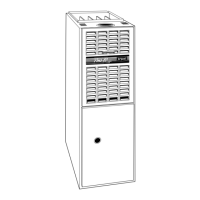
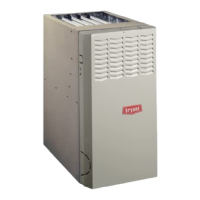
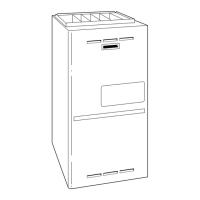
The models 333BAV and 333JAV Series D furnaces are available
in sizes 60,000 through 117,000 Btuh input capacities. These
furnaces use variable-speed motors manufactured by General
Electric (GE) and known as ICM2+ motors. They are integrated
control motors, which include a pre-programmed micro-processor-
based control to precisely control the selected airflow rates. The
motor will be referred to as ICM2+ in the rest of this document.
The design of the upflow/horizontal gas-fired furnace is C.S.A.
(A.G.A. and C.G.A.) design-certified for use with natural and
propane gases and for installation on combustible wood flooring,
REGISTERED QUALITY SYSTEM
C
a
r
r
i
e
r
C
o
r
p
o
r
a
t
i
o
n
R
E
G
I
S
T
E
R
E
D
F
I
R
M
I
S
O
9
0
0
1
#
A
2
8
8
3
®
EFFICIENCY
RATING
CERTIFIED
CERTIFIED
installation, start-up,
and operating instructions
UPFLOW/ HORIZONTAL
TWO-STAGE, VARIABLE SPEED
GAS FURNACE
Cancels: II 333B-60-5 II 333B-60-6
9-01
333BAV
333JAV
Series D
—1—



 To Next Page

 General