(use of a storm collar is also
suggested).
Never vent more than one appliance
(stove, furnace, etc.) into the
chimney.
9.
same
Mobile
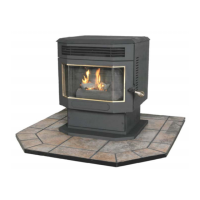
our BUFFALO PELLET stove has been
ome installation.
addition to all previously identified
nce with
ndard
bustion air utilizing metal
pipe (rigid or flexible) and connecting it
h
2. the
olting the stove to the floor
r
3.
f
using a minimum of
5.
Sm
ue to multiple potential sources of fire within
gly recommend installing
moke detectors. The most appropriate
ill
ITH
y
cost savings and the
nvironmental benefits far outweigh the
as
ts
he
Pellet Fuel
stitute. The standards guarantee that the
has
the
m
histicated,
e occasional bad log gets through. The
t of
y,
Home Installation
Y
tested and listed for mobile h
In
installation requirements, mobile home
installations must meet the following
requirements and must be in accorda
the Manufactured Home and Safety Sta
(HUD), CRF 3280.
1. Stove must be connected to an outside
source of com
directly to the fresh air intake located
on the back of the stove. A rodent
guard (¼” wire mesh) must be
attached to the outside end of the fres
air intake.
Stove must be bolted directly to
floor of the mobile home. Connection
points for b
are located below the ash pan of you
pellet-burning appliance.
The structural integrity of the floor,
walls and ceiling must be confirmed
and maintained.
4. The appliance must be permanently
electrically grounded to the chassis o
the mobile home,
8 AWG copper wire.
The appliance must NOT be located in
a sleeping area.
oke Detectors
D
any home, we stron
s
location of a smoke detector in proximity to
the stove is in a hallway adjacent to the room
that contains the heating appliance (this w
reduce the possibility of false activation from
the heat produced by the stove). If local code
requires a smoke detector be installed within
the same room, you must follow the
requirements of your local code. Check with
your local building department for
requirements in your area.
INTRODUCTION TO HEATING W
WOOD PELLETS
Heating with wood pellets presents man
challenges, but the
e
challenges. Pellet fuel is “Green House G
Neutral”, meaning that the carbon produc
emitted from burning were absorbed by t
trees used for the pellets when growing.
Unlike fossil fuels, that release green house
gases to the environment, pellet fuels come
from renewable resources.
Pellet fuels are produced using national
standards established by the
In
fuel produced at a particular plant overall
the characteristics that were agreed to by
Institute. These include a maximum pellet
length of 1.25”, minimum fines (or sawdust),
ash, salt, and mineral contents. Does this
mean that every bag coming from that plant
adheres to the standard? No, it does not.
Quality of fuel varies from manufacturer to
manufacture, can vary from load to load from
the same manufacturer, it can even vary fro
bag to bag within the same load.
Pellets are made from sawdust, and although
inspection techniques are very sop
th
wood may have a high bark content, have
mud mixed in or simply be old rotting timber.
These variations in pellet fuels lead to mos
the irregularities in burn characteristics,
efficiency and stove failure. Although the
Buffalo Pellet Stove was designed to work
with all types of wood pellet fuel efficientl
there may need to be adjustments made to
the stove to make it operate properly.
Page 15 of 37


 To Next Page