Clean Heat Exchanger Tubes (daily, if
possible or at a minimum bi-weekly - every
6 to 9 bags of pellets)
Page 25 of 37
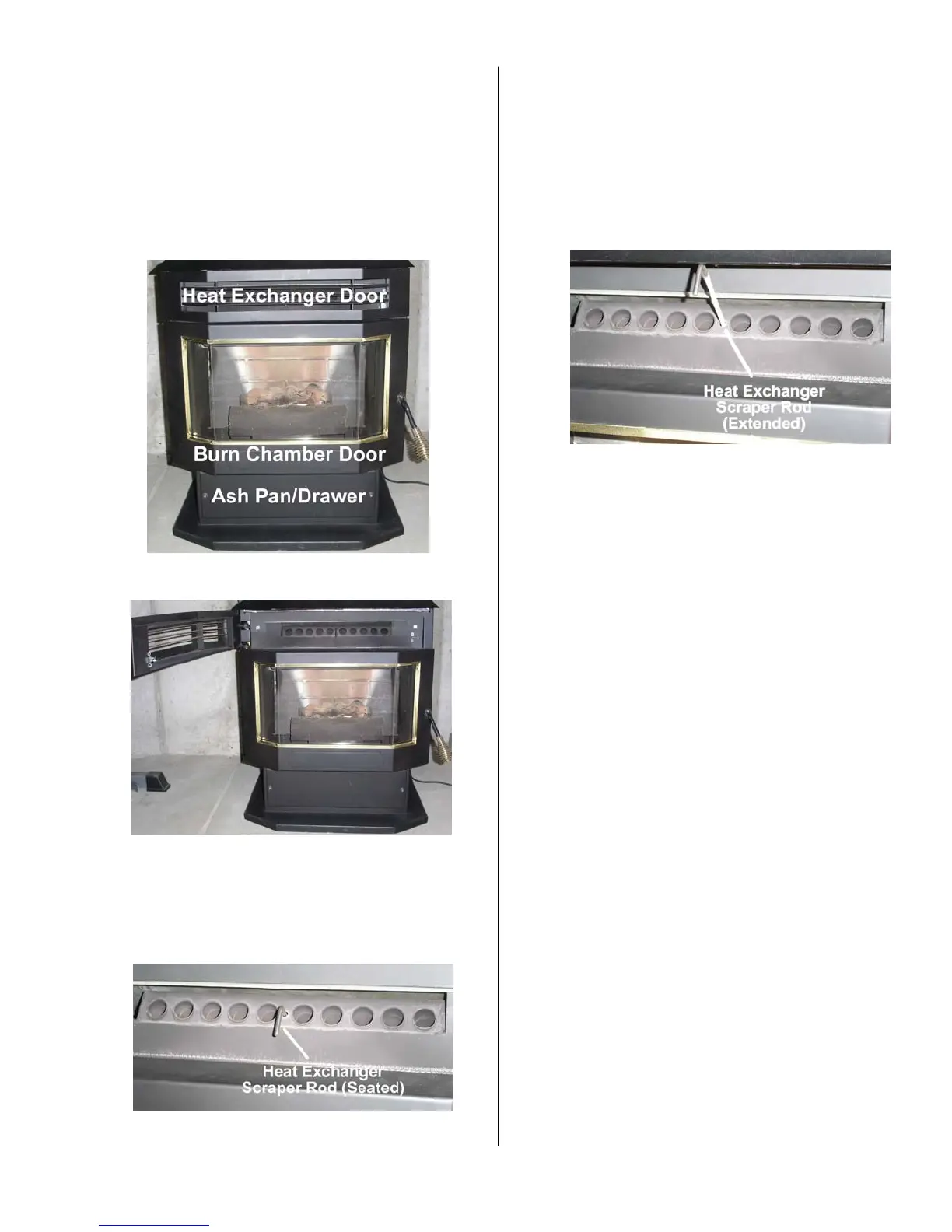
• Open Heat Exchanger door above
Burn Chamber door to expose the
heat exchanger tubes and heat
exchanger scraper rod (leave Burn
Chamber door closed, Figure 8).
Figure 7
Figure 8
• Cautiously confirm that heat
exchanger scraper rod is cool
(Figure 9).
Figure 9
• Grasp heat exchanger scraper rod and
move rod up and down to clean
deposits from the outside of the heat
exchanger tubes. Use of both hands
will enable full even strokes to clean
deposits from the entire length of the
heat exchanger tubes (full stroke
length approximately 5.25”).
Figure 10
• If the scraper becomes stuck while
cleaning the heat exchanger tubes,
gently wiggle the rod left and right
while putting moderate upward or
downward pressure on the rod (use of
channel locks on the rod may be
required if the scraper becomes
securely lodged). If daily cleaning of
the heat exchanger tubes is not done,
eventually the heat exchanger tubes
will become encrusted with deposits,
not enabling the tubes to be cleaned at
all. Deposits accumulated on the heat
exchanger tubes will result in less
efficient transfer of heat from the burn
chamber to the home.
NOTE: If the heat exchanger tubes
are not cleaned on a regular basis by
following the above-identified
procedure, eventually deposits will
build-up to the point that the scraper
rod and attached scraper will not
move. All heat exchanger scrapers
and scraper rods are checked at the
factory before shipment to confirm
functionality. Repair of an immovable
heat exchanger scraper rod is cost
prohibitive. This repair is not covered
under warranty.


 To Next Page