6
2.2 Preparing a Good Foundation2.2 Preparing a Good Foundation
NOTE: We strongly recommend that a qualified, licensed contractor prepare the foundation for your spa.
Damage caused by inadequate or improper foundation support is not covered by the warranty. It is the
responsibility of the spa owner to provide a proper foundation for the spa.
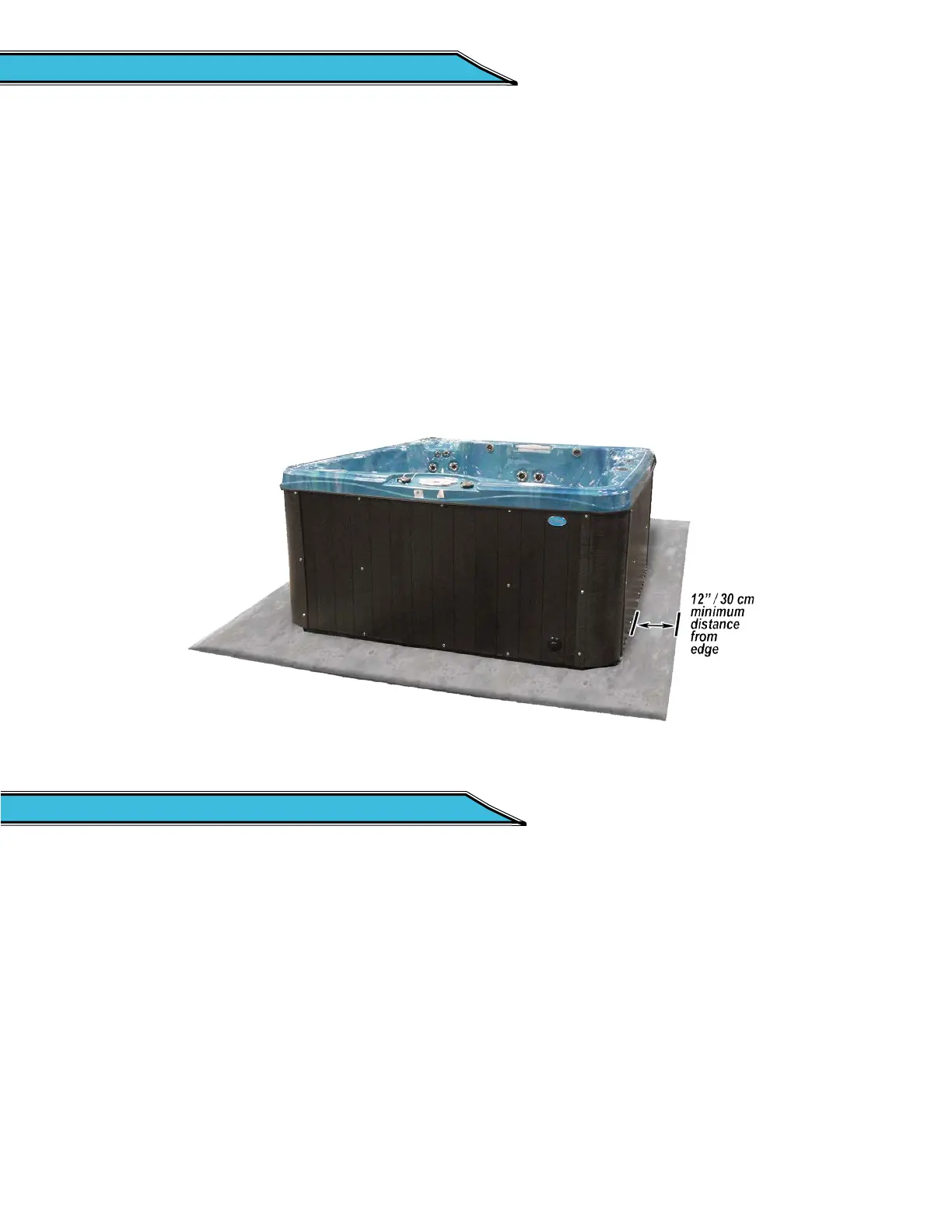
Your spa needs a solid and level foundation. The area that it sits on must be able to support the weight of the
spa, with water and occupants who use it. If the foundation is inadequate, it may shi or settle aer the spa is in
place, causing stress that could DAMAGE YOUR SPA SHELL AND FINISH.
Place the spa on an elevated 3 to 4” / 30
cm concrete slab. Pavers, gravel, brick, sand, timbers or dirt foundations are
not
adequate to support the spa.
If you are installing the spa indoors, pay close attention to the flooring beneath it. Choose flooring that will not
be damaged or stained. If you are installing your spa on an elevated wood deck or other structure, it is highly
recommended that you consult a structural engineer or contractor to ensure the structure will support the
weight of 150 lbs per square foot (732 Kg/m
2
).
2.3 240 Volt Electrical Installation2.3 240 Volt Electrical Installation
NOTE: These instructions describe the only acceptable electrical wiring procedure. Spas wired in any other
way will void your warranty and may result in serious injury. The electrical circuit must be installed by an
electrical contractor and approved by a local building or electrical inspector. Failure to comply with state
and local codes may result in a fire or personal injury and will be the sole responsibility of the spa owner.
All 240V spas must be permanently connected (hard wired) to the power supply. When installed in the United
States, the electrical wiring of this spa must meet the requirements of the NEC 70 and any applicable local, state,
and federal codes. The power supplied to the spa must be on a dedicated GFCI protected circuit as required by
NEC 70 with no other appliances or lights sharing the power. Use copper wire with THHN insulation. DO not use
aluminum wire. Use the table on the next page to determine your GFCI and wiring requirements. Wires that run
over 100 feet must increase wire gauge to the next lower number. For example: A normal 50 amp GFCI with four
#6 AWG copper wires that run over 100 feet would require you to go to four #4 AWG copper wires.





 To Next Page