EasyManua.ls Logo

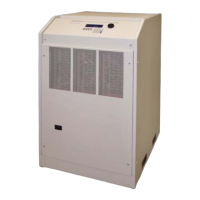
California Instruments MX Series - User Manual

Default Icon
257 pages
Print Icon
To Next Page IconTo Next Page
Loading...
7003-960 Rev AY www.programmablepower.com
MX Series
AC and DC Power Source
User Manual
Series I / Series II

Table of Contents

Questions and Answers

  • M
    Molly WillisAug 1, 2025
    What to do if one or more outputs (phase A, B or C) of California Instruments AC Power Distribution do not produce an output?
    • J
      Juan Pennington IIIAug 1, 2025
      If one or more outputs (phase A, B or C) do not produce an output, it could be due to amplifier failure. Contact customer service support@calinst.com before attempting any troubleshooting steps on your own.
  • R
    Rebecca TrujilloAug 5, 2025
    What to do if one or more of the 30A fuses (F1 through F8) on the DC power distribution board of California Instruments AC Power Distribution is open?
    • M
      Mia WilliamsAug 5, 2025
      If one or more of the 30A fuses (F1 through F8) on the DC power distribution board is open, it's likely that one or two of the IGBT switch devices on one of the 4 heat sinks have shorted. The affected IGBT's need to be replaced.
  • C
    Clinton BradyAug 11, 2025
    What to do if PFC failure occurs in California Instruments MX AC Power Distribution?
    • P
      Paul DanielAug 11, 2025
      PFC failure means that one or all three of the IGBT power modules on the large PFC heat sink have shorted. If there is any sign of damage, the PFC power devices must be replaced. If not, they need to be checked for continuity using a DMM or diode checker.
  • P
    Peter PowellAug 15, 2025
    What to do if the PFC control boards of California Instruments MX AC Power Distribution are damaged?
    • S
      Stephanie ReedAug 15, 2025
      If the PFC control boards (7003-705 or 7003-712) have sustained damage in the isolated gate drive section of the board, the board itself may have to be replaced.
  • P
    Peter PittmanAug 21, 2025
    What to do if there is no voltage at all measured at terminals 5 and 6 of California Instruments MX AC Power Distribution?
    • A
      Ashley BakerAug 21, 2025
      If no voltage at all is measured at terminals 5 and 6, it is possible that the AC power stage inside the module has failed. In this case, it will be necessary to remove the power module from the chassis for closer inspection.
  • M
    marissa54Aug 26, 2025
    How to troubleshoot LEDs on California Instruments MX AC Power Distribution?
    • K
      Kimberly StrongAug 26, 2025
      Both LEDs should be lit, indicating the +/-19Vdc and +/-15Vdc supplies are OK. If one or both of the LEDs is not lit, then there is something wrong with the LV power supply, and it will have to be serviced.

Summary

MX Series Specifications

Electrical Specifications

Covers electrical parameters including input voltage, VA, current, frequency, efficiency, and power factor.

Output Specifications

Details output parameters such as modes, voltage ranges, resolution, accuracy, and distortion.

Unpacking and Installation of MX Series

Power Requirements

Specifies the AC input power requirements, including voltage and phase configurations.

AC Input Connections and Wiring

Provides guidance on connecting AC input power, including circuit breakers and wiring practices.

Output Connections for MX Series

Multiple Cabinet System Configurations

Multiple Cabinet Power Up;Down Procedures

Outlines the correct procedures for powering up and powering down multi-cabinet MX Series systems.

Basic Initial Functional Test Procedures

Performing Functional Tests

Step-by-step guide to perform a basic functional check of the MX Series power system.

Front Panel Operation of MX Series

Tour of the Front Panel Controls

Provides an overview of the front panel layout and controls like buttons and display.

Understanding the Shuttle Knob

Explains the operation and modes (IMMEDIATE, SET) of the shuttle knob for parameter adjustment.

Output Programming and Waveform Management

Setting Output Parameters

Explains how to set output parameters using the PROGRAM screen in IMMEDIATE or SET mode.

Waveform Management Features

Covers standard waveforms, custom waveform creation, and phase selection for MX Series.

Advanced Measurements with 3 Pi Controller

Harmonic Analysis and FFT Data

Details how to perform Harmonic Analysis using FFT and acquire data in TABLE, BAR, or TRACE modes.

Calibration Procedures for MX Series

Front Panel Calibration Screens

Details how to access and perform output and measurement calibration via the front panel.

Routine Measurement Calibration

Step-by-step guide for calibrating voltage and current measurements using external equipment.

Routine Output Calibration Steps

Provides instructions for calibrating output parameters like voltage and current across different ranges.

Service and Troubleshooting Guide

Advanced Troubleshooting Steps

Covers procedures for troubleshooting power-on issues using LEDs and internal component checks.

Firmware Updates Procedure

Provides instructions and requirements for updating the MX Series firmware via RS232C interface.

MX Series Options Overview

Error Messages and Troubleshooting

List of Error and Status Messages

Provides a comprehensive list of error and status messages, their causes, and remedies.

California Instruments MX Series Specifications

General IconGeneral
Output Power15 kVA, 30 kVA, 45 kVA
Voltage Range0-300 V
Output Voltage0-300 V
Frequency Range16 Hz - 2 kHz
Output Phase1-phase, 3-phase
MeteringVoltage, Current, Power, Power Factor, Frequency
Harmonic AnalysisUp to 50th harmonic
Communication InterfaceGPIB, RS-232
Voltage Accuracy±0.1% of full scale
Current Accuracy±0.2% of full scale
Frequency Accuracy±0.01%
ModelsMX15, MX30, MX45

Related product manuals