EasyManua.ls Logo

Carrier AC350 - User Manual

Carrier AC350
63 pages
Print Icon
To Next Page IconTo Next Page
Loading...
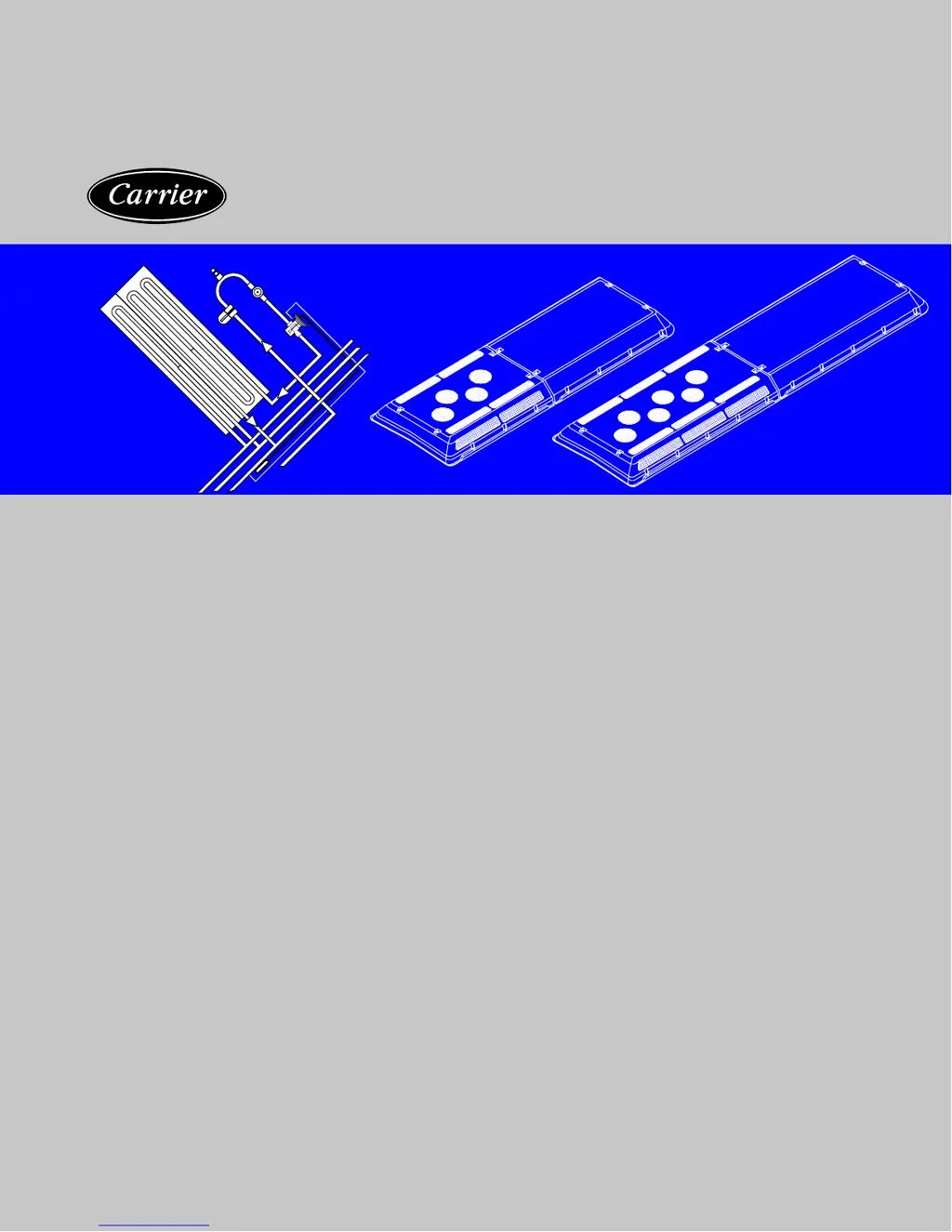
Transport Air Conditioning
T--304 Rev A Change 07/09
OPERATION AND SERVICE
for
MODELS AC310 & AC350
Rooftop Air Conditioning Units
With
BT324 Carrier Sutrak Digital Display (CSDD)
or
280P/282P Electronic Thermostat

Table of Contents

Questions and Answers

  • J
    Jennifer StewartAug 6, 2025
    Why is my Carrier AC350 Air Conditioner providing insufficient heating?
    • J
      jasmine76Aug 6, 2025
      If your Carrier Air Conditioner is experiencing insufficient heating, it could be due to a dirty or plugged heater core; clean it. Also, check the coolant solenoid valve(s) for malfunctions or blockages, and replace if necessary. Low coolant level, plugged strainers, or closed hand valve(s) may also be the cause. Water pumps may be defective, requiring repair or replacement. The auxiliary heater might also be malfunctioning, needing repair or replacement.
  • S
    Stephanie LawsonAug 11, 2025
    Why is the discharge pressure high in my Carrier AC350?
    • B
      Brenda GarciaAug 12, 2025
      High discharge pressure in your Carrier Air Conditioner may occur due to several reasons. It could be caused by refrigerant overcharge or noncondensable substances in the system. Check these issues. Also, a dirty condenser coil or condenser motor failure could be the cause. Clean the coil.
  • R
    Ricardo Thomas MDAug 16, 2025
    What to do if there is no or partial evaporator air flow in Carrier Air Conditioner?
    • N
      natalie31Aug 16, 2025
      If your Carrier Air Conditioner has no or partial evaporator airflow, it might be due to defective motor(s) or motor brushes, which may need repair or replacement. Also, check for a loose or defective evaporator fan, which may also require repair or replacement. Damaged fans should be repaired or replaced. A dirty return air filter, icing of the coil, or defective fan relay(s) could also be responsible. Ensure the return air filter is cleaned or replaced. Clean or defrost any ice buildup on the coil. Check the fan relays and replace if needed. Also, verify the safety device is not open.
  • D
    Donna FlynnAug 21, 2025
    What to do if the air flow through the coil is blocked in Carrier AC350?
    • S
      Steven MaysAug 21, 2025
      If the air flow through the coil of your Carrier Air Conditioner is blocked, it could be due to several reasons. The coil may be frosted over, in which case you should defrost it. A dirty coil can also block airflow, so clean it. Additionally, a dirty filter can restrict airflow; clean or replace it.
  • R
    rebeccapalmerAug 26, 2025
    What causes low suction pressure in a Carrier AC350?
    • S
      sherry45Aug 27, 2025
      Low suction pressure in a Carrier Air Conditioner can be caused by several factors. The suction service valve may be partially closed; open it. The filter-drier inlet valve may also be partially closed; check and open it. Other causes include a partially plugged filter-drier, low refrigerant charge. Also, an expansion valve malfunction or restricted air flow might be the cause.
  • K
    kruizAug 31, 2025
    What causes low suction pressure with high superheat in Carrier AC350 Air Conditioner?
    • C
      Christopher CarterAug 31, 2025
      If your Carrier Air Conditioner has low suction pressure with high superheat, it may be due to low refrigerant charge. Check the refrigerant level. It could also be caused by wax, oil, or dirt plugging the valve orifice. Ice formation at the valve seat, power assembly failure, loss of bulb charge, or a broken capillary tube can also lead to this issue.

Summary

Safety Summary

General Safety Notices

General safety notices supplement specific warnings and cautions for operation and maintenance.

Specific Warnings and Cautions

Lists specific warnings and cautions for system operation, including handling refrigerants and electrical safety.

Section 1 Description

1.1 Introduction

Manual overview, equipment covered, and system interfaces.

1.2 General Description

Details on rooftop units, condensing, evaporator sections, and system components.

1.3 Refrigeration System Component Specifications

Specifications for refrigerant charge, compressors, and valves.

1.4 Electrical Specifications - Motors

Details on evaporator and condenser motor specifications.

1.5 Safety Devices

Explanation of safety devices like pressure switches, fuses, and circuit breakers.

1.6 Air Conditioning Refrigeration Cycle

Description of the vapor compression system's cooling process.

1.7 Heating Cycle

Description of the system's heating process using engine coolant.

Section 2 Operation (Manual Controller)

2.1 Starting, Stopping and Operating Instructions

Instructions for starting, stopping, and operating the manual control system.

2.2 Pre-Trip Inspection

Procedures for performing a pre-trip inspection of the unit.

2.3 Modes of Operation

Details on cooling, heating, vent, and override modes of operation.

2.4 Sequence of Operation (280 P; 282 P)

Explains the system's operational sequences for the 280P/282P thermostat.

Section 3 Operation BT324 Controller

3.1 Starting, Stopping and Operating Instructions

Instructions for starting, stopping, and operating the BT324 controller.

3.2 Pre-Trip Inspection

Pre-trip inspection procedures specific to the BT324 controller system.

3.3 Sequence of Operation BT324 CSDD

Details on key functions and display indications for the BT324 CSDD controller.

3.4 Operating Instructions BT324

Detailed operating instructions for the BT324 controller, including display and modes.

3.5 Changing Between °F and °C

Procedure for changing the BT324 controller's temperature units between Fahrenheit and Celsius.

Section 4 Troubleshooting

4.1 System Will Not Cool

Troubleshooting steps for when the system fails to cool.

4.2 System Runs But Has Insufficient Cooling

Troubleshooting steps for insufficient cooling performance.

4.3 Abnormal Pressures

Diagnosing and addressing abnormal system pressures.

4.4 Abnormal Noise Or Vibrations

Troubleshooting causes of abnormal noise or vibrations in the system.

4.5 No Evaporator Air Flow

Troubleshooting issues related to no or restricted evaporator air flow.

4.6 Expansion Valve Malfunction

Diagnosing and resolving expansion valve malfunctions.

4.7 Heating Malfunction

Troubleshooting steps for various heating system malfunctions.

Section 5 Service

5.1 Maintenance Schedule

Routine maintenance schedule for the HVAC system.

5.2 Removing Evaporator Cover

Procedure for removing the evaporator section cover.

5.3 Removing Condenser Cover

Procedure for removing the condenser section cover.

5.4 Installing Manifold Gauge Set

Instructions for connecting a manifold gauge set for system service.

5.5 Pumping System Down or Removing Refrigerant Charge

Procedures for pumping down or removing refrigerant from the system.

5.6 Refrigerant Leak Check

Procedure for performing a refrigerant leak check on the system.

5.7 Evacuation and Dehydration

Steps for evacuating and dehydrating the refrigeration system.

5.8 Adding Refrigerant to System

Procedures for checking and adding refrigerant to the system.

5.9 Checking for Noncondensibles

Method for checking the system for noncondensable gases.

5.10 Checking and Replacing High or Low-Pressure Cutout Switch

Procedure for checking and replacing pressure cutout switches.

5.11 Filter-Drier

Information and procedures for checking and replacing the filter-drier assembly.

5.12 Servicing the Heat Valve

Maintenance and replacement procedures for the heat valve.

5.13 Servicing the Liquid Line Solenoid Valve

Maintenance and replacement procedures for the liquid line solenoid valve.

5.14 Service Valves

Description of the high-side service valves used for system servicing.

5.15 Replacing Return Air Filters

Procedure for removing and replacing the vehicle's return air filters.

5.16 Thermostatic Expansion Valve

Information on the thermostatic expansion valve, its functions, and replacement.

Section 6 Electrical

6.1 Introduction

Overview of electrical wiring schematics for the AC units.

Carrier AC350 Specifications

General IconGeneral
BrandCarrier
ModelAC350
CategoryAir Conditioner
LanguageEnglish

Related product manuals