Need help?
Do you have a question about the cias MANTA and is the answer not in the manual?
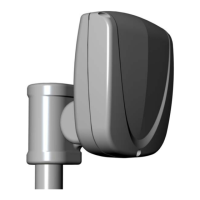
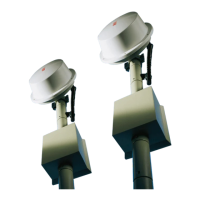
MANTA is a digital microwave barrier from CIAS designed for both internal and external volumetric protection. This system detects the presence of moving bodies within a sensitive field established between a Transmitter (TX) and a Receiver (RX). The received signal is digitally analyzed using Fuzzy logic methods, which allows for excellent detection performance and a reduction in false alarms.
The MANTA barrier is available in two range options:
Modulation: Pulsed, with a 50/50 duty cycle. Number of channels: 16
The MANTA barrier offers flexible installation options. It can be mounted on a pole or wall. For pole installation, the recommended height from the ground to the center of the antenna is 900 mm (ranging from 850 to 950 mm). The pole should be buried in concrete with radial anti-rotation elements. For wall mounting, the length of the bracket depends on the wall type and the distance between TX and RX. The facade/wall becomes the working plane for the barrier, and it is crucial that there is only one working plane. Considerations for wall installation include using the correct bracket, choosing the appropriate height, positioning the barrier to account for its shadow zone and lobe of protection, verifying the flatness of the wall, and checking for vegetation along the path.
It is not recommended to install the device along paths with high grass (over 10 cm), ponds, longitudinal waterways, or rapidly changing terrain. Metallic fences can cause microwave reflections; therefore, they should be securely fixed, not installed parallel to the path, and if two metallic fences delimit the sensitive beam, the corridor between them should be at least 5 m wide. Trees, hedges, and general vegetation near or within the protection beams require careful attention as they can grow and move with the wind, potentially causing false alarms or creating dead zones.
CIAS provides a free application called "CIAS Volumeter" (available on their website, App Store, and Google Play) to theoretically calculate the microwave beam dimensions and dead zones based on TX-RX distance and sensitivity.
The working plane is the surface that reflects the microwave beam, enabling the barrier's operation. The distance between the antenna's center and the working plane is the "barrier height," which depends on the ground surface type (asphalt, concrete, grass, etc.). The working plane must be singular. Walls or metallic fences nearby can cause the microwave to "see" two planes (wall/fence and ground). The correct height is determined using the built-in alignment tools to ensure microwave field stability.
MANTA barriers feature an electronic alignment system, parameter adjustment, and test system, simplifying installation and maintenance without special tools.
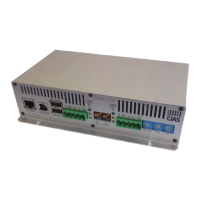
For synchronized operation of two transmitters, connect terminals 8 "SYNC" and 7 "GND" on both TX units. One TX is set as "Master" (Jp3 "OUT") and the other as "Slave" (Jp3 "IN"). Synchronization wires should be as short as possible (max 10 meters); for longer distances, use a SYNC 01 repetition circuit.
Connect terminal 7 "ST.BY" on the receiver to ground and terminal 5 "ST.BY" on the transmitter to ground. Stand-by deactivates event recording in historical and monitor files but does not inhibit barrier operation.
Connect terminal 6 "TEST" on the transmitter to ground to activate the test. If successful, alarm relays on the receiver will activate after 10 seconds. Periodic tests are recommended for high-risk protection.
Both TX and RX units have a standard RS-485 serial interface for communication. Parameters: Asynchronous Half-Duplex, 9600 b/s, 8-bit character, no parity, 1 stop bit. Connections are "multi-drop" (BUS) type. Use a low-capacity, twisted, shielded cable (< 70 pF/m), e.g., Belden 9842. The maximum bus length is 1200 m. For longer distances or star architectures, use BUS-REP repeaters/regenerators. Up to 32 devices (TX/RX) can be connected per line. The shield must be grounded at only one point, near the power supply.
A PC with "WAVE-TEST2 CIAS" software can be used to view and manage all barrier software parameters, including analog levels of thresholds and received signals.
The manual provides a table of common defects, possible causes, and solutions.
CIAS offers maintenance kits with circuit boards fitted with microwave cavities. Replacing these boards does not require re-alignment of the heads.
 General
| Brand | cias |
|---|---|
| Model | MANTA |
| Category | Protection Device |
| Language | English |

 To Next Page