Need help?
Do you have a question about the cias SIOUX and is the answer not in the manual?
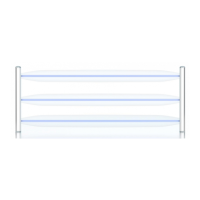
Explains the Sioux system's purpose, components, and how it detects disturbances on fences.
Provides initial data needed for installation, including perimeter length, sensor spacing, and cable limits.
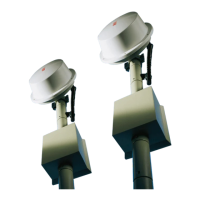
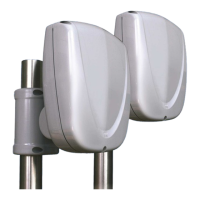
Details how to install Sioux-master and Sioux-slave sensors in shielded containers on fences.
Describes the mounting and connection of the Sioux-CU control unit, including power and tamper connections.
Explains how to use the 'Sioux test' software for system configuration, sub-systems, and zones.
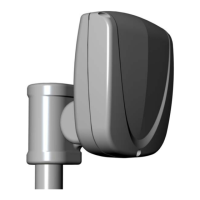
Outlines the Sioux system components and their functions in a maximum configuration.
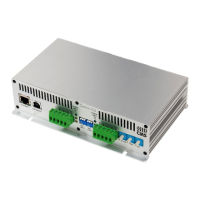
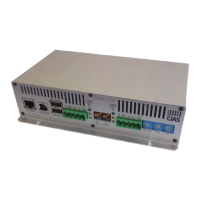
Details the Sioux-CU's role and internal structure.
Details connectors, LEDs, and DIP switches on the front of the Sioux-CU unit.
Describes connectors, buttons, LEDs, and terminal blocks on the rear of the Sioux-CU unit.
Explains Sioux-CU function selection, device numbering, and zone configuration.
Details the communication, function, and addressing of the Sioux-Master board.
Explains the function of the Sioux-slave board and its role in connecting to a master board.
Describes the requirement for terminating each branch of the Sioux-CU with a termination connector.
Illustrates the typical connections for a Sioux system.
Details wiring and color codes for standard connection cables.
Explains the use of a distribution box when the Sioux-CU is located far from sensors.
Details technical characteristics for the standard Sioux system components.
Lists technical characteristics specific to the Sioux system using Power over Ethernet (PoE).
 General
| Model | SIOUX |
|---|---|
| Application | Industrial |
| Operating Temperature | -40°C to +85°C |
| Protection Class | Type 2 |
| Voltage Rating | Up to 1500 V DC (depending on model) |
| Standards | IEC 61643-11, EN 61643-11, UL 1449 |
| Poles | 1, 2, 3, 4 (depending on model) |
| Mounting | DIN rail |

 To Next Page