EasyManua.ls Logo

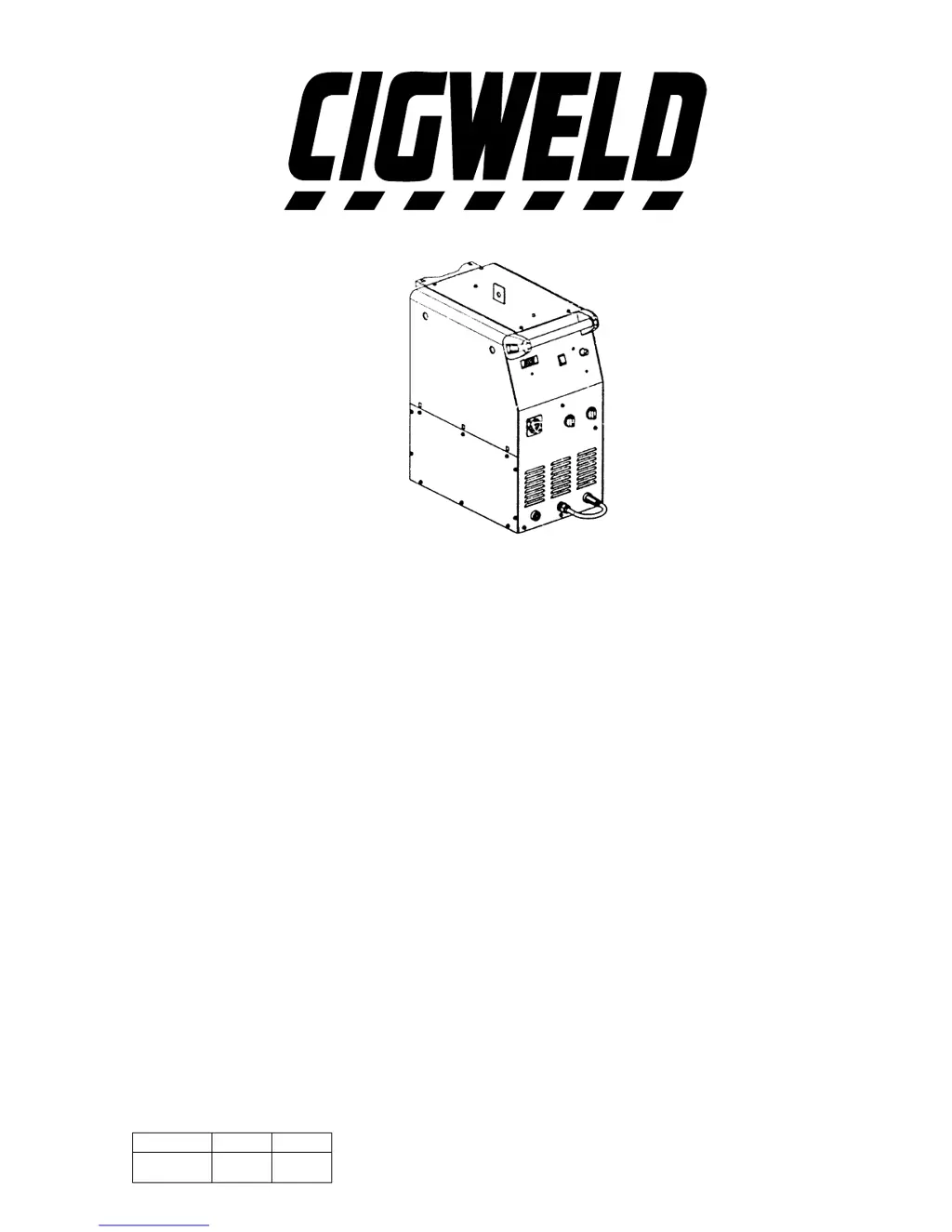
CIGWELD TRANSMIG 220 - User Manual

CIGWELD TRANSMIG 220
38 pages
Print Icon
To Next Page IconTo Next Page
Loading...
OPERATING MANUAL
MIG POWER SOURCE
Model Description Plant Power Source
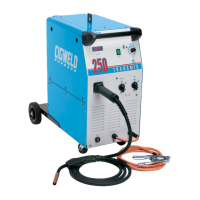
TRANSMIG 220 710024 710025
(Single Phase)
TRANSMIG 250 710018 710019
(Single Phase)
TRANSMIG 253 710009 710013
(Three Phase)
PART NO. ISSUE DATE
719454 02 403

Questions and Answers

  • C
    Christopher EvansAug 19, 2025
    How to fix porosity in CIGWELD Welding System?
    • S
      shelbyhernandezAug 19, 2025
      To fix porosity issues in your CIGWELD Welding System, ensure the gas cylinder isn't empty and the flow meter is correctly adjusted to 15 liters per minute. Check for gas leaks between the regulator/cylinder connection and in the gas hose to the power source. Also, make sure the hose from the solenoid valve to the MIG torch adapter is connected and not fractured. Shield the weld area from wind or increase the gas flow. Clean contaminants off the plate, and keep the distance between the MIG torch nozzle and the workpiece to a minimum. Ensure the gas holes aren't blocked and gas exits the torch nozzle. Prevent spatter buildup inside the MIG torch nozzle to avoid restricting gas flow.
  • D
    dawsonbrandonAug 21, 2025
    Why is the wire feed inconsistent in my CIGWELD TRANSMIG 220 Welding System?
    • B
      browntracyAug 21, 2025
      Inconsistent wire feed in your CIGWELD Welding System can be caused by several factors. The wire spool brake might be too tight, causing the feed roller to slip, or too loose, leading to unwinding and tangling. A worn or incorrect feed roller size can also be the culprit; use the correct 'U', 'V', or 'knurled' groove feed roll for the wire type. Misalignment of inlet/outlet guides can cause the wire to rub, reducing feedability. A blocked liner, incorrect contact tip, poor work lead contact, or a bent liner can also contribute to this issue. Ensure all components are in good condition and properly aligned.
  • R
    Ronald HaleAug 25, 2025
    What to do if there is excessive spatter with CIGWELD TRANSMIG 220 Welding System?
    • K
      Katie JohnsonAug 25, 2025
      Excessive spatter in your CIGWELD Welding System can occur if the voltage is too high or too low. To correct this, lower the voltage by reducing the voltage selection switch or increase the wire speed control if the voltage is too high. If the voltage is too low, raise the voltage by increasing the voltage selection switch or reduce the wire speed control.
  • M
    michelle39Aug 26, 2025
    How to prevent undercut when using CIGWELD TRANSMIG 220?
    • M
      Michael QuinnAug 26, 2025
      Undercut in your CIGWELD Welding System can be due to a welding arc voltage that's too high, an incorrect torch angle, or excessive heat input. Reduce voltage by lowering the voltage selection switch position or increase the wire feed speed. Adjust the torch angle, and increase the torch travel speed and/or reduce welding current by reducing the voltage selection switch position or reducing the wire feed speed.
  • D
    Dr. William HawkinsAug 28, 2025
    Why is the weld shape irregular with my CIGWELD TRANSMIG 220?
    • S
      Samantha ChambersAug 28, 2025
      An irregular weld shape with your CIGWELD Welding System can stem from incorrect voltage and current settings (convex shape indicates voltage too low; concave shape indicates voltage too high), a wandering wire, incorrect shielding gas, or insufficient/excessive heat input. Adjust voltage and current using the voltage selection switch and wire speed control. Replace the contact tip if the wire is wandering. Check the shielding gas, and adjust the wire speed control or voltage selection switch to manage heat input.
  • A
    andrewwillisAug 30, 2025
    What causes lack of penetration in CIGWELD Welding System?
    • K
      Kevin PalmerAug 30, 2025
      Lack of penetration in your CIGWELD Welding System can be caused by a welding current that is too low, a joint preparation that is too narrow or a gap that is too tight, or an incorrect shielding gas. Increase welding current by increasing wire feed speed and increasing the voltage selection switch position. Increase the joint angle or gap. Change to a gas which gives higher penetration.
  • T
    Tamara BrownSep 1, 2025
    Why is the wire feed jerky in my CIGWELD TRANSMIG 220 Welding System?
    • B
      Beth DavisSep 1, 2025
      A jerky wire feed in your CIGWELD Welding System can be caused by a worn or dirty contact tip, a worn feed roller, excessive back tension from the wire reel hub, or a worn, kinked, or dirty conduit liner. Replace the contact tip or feed roller if worn. Reduce brake tension on the hub. Clean or replace the conduit liner.
  • C
    Caroline YangSep 3, 2025
    What causes weld cracking when using CIGWELD Welding System?
    • K
      Kim FletcherSep 3, 2025
      Weld cracking in your CIGWELD Welding System can be attributed to weld beads that are too small, weld penetration that is narrow and deep, excessive weld stresses, excessive voltage, or a cooling rate that is too fast. Decrease travel speed. Reduce current and voltage and increase MIG torch travel speed or select a lower penetration shielding gas. Increase weld metal strength or revise the design. Decrease voltage by reducing the voltage selection switch. Slow the cooling rate by preheating the part to be welded or cool slowly.
  • B
    Brittany BrownSep 6, 2025
    Why is there no gas flow in my CIGWELD TRANSMIG 220 Welding System?
    • S
      samanthasmithSep 6, 2025
      If there is no gas flow in your CIGWELD Welding System, it could be due to a cut gas hose, impurities in the gas passage, or the gas regulator being turned off. Replace or repair the gas hose. Disconnect the gas hose at the rear and raise the gas pressure to blow out impurities. Ensure the gas regulator is turned on.
  • Q
    qrochaSep 8, 2025
    Why won't arc establish on CIGWELD Welding System?
    • A
      Amanda BoyerSep 8, 2025
      If your CIGWELD Welding System feeds wire when the trigger is depressed but the arc cannot be established, this is due to poor or no work lead connection. Clean the work clamp area and ensure a good electrical contact.

Summary

Introduction and Safety

Gases, Fumes, and Electric Shock Hazards

Covers risks from gases, fumes, electric shock, and their health implications.

Fire, Noise, and Arc Ray Hazards

Details safety precautions for fire, explosion, noise, and arc ray exposure.

Important Safety Precautions

Provides essential safety guidelines for operating welding equipment.

Electromagnetic Compatibility (EMC)

EMC Emission Reduction Methods

General Information and Duty Cycle

Safe Practices for Welding Equipment Use

Operator Precautions

Safety measures for operators during welding, including electrical isolation and body contact.

Personal Protection Equipment

Recommended PPE like gloves, clothing, and face shields for arc welding.

Resuscitation for Electric Shock Victims

Immediate Actions and Breathing

Steps for responding to electric shock victims and administering artificial respiration.

Cardiopulmonary Resuscitation (CPR)

Detailed steps for performing CPR, including compressions and rescue breaths.

Installation Recommendations

Environment, Location, and Ventilation

Guidelines for suitable environments, location, and ventilation for the power source.

Setup Procedure

MIG Torch Operation and Maintenance

Basic Welding Techniques

Troubleshooting Guide

Solving Problems Beyond Welding Terminals

Addresses issues like porosity, gas leaks, and wire feed problems.

Inconsistent Wire Feed Issues

Lists causes and remedies for wire feeding problems, including spool brake and contact tips.

Common Welding Problems and Remedies

Lists welding faults like undercut, lack of penetration, and weld cracking with solutions.

Power Source Operational Faults

Diagnoses issues where the welding arc cannot be established or wire feed fails.

Circuit Diagrams

CIGWELD TRANSMIG 220 Specifications

General IconGeneral
Wire Feed Speed Range2-16 m/min
Input Voltage240V
Input Frequency50Hz
Welding ProcessesMIG, Stick
Output Current Range (MIG)30-220A

Related product manuals