EasyManua.ls Logo

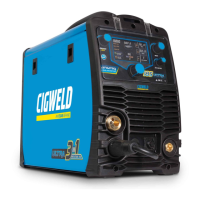
CIGWELD Transmig 310 - User Manual

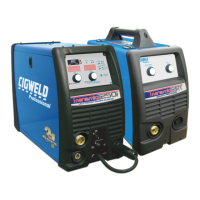
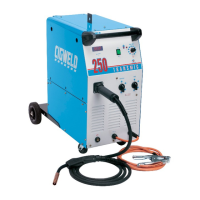
CIGWELD Transmig 310
30 pages
Print Icon
To Next Page IconTo Next Page
Loading...
MIGTRN0001 Issue 2 14/09/98
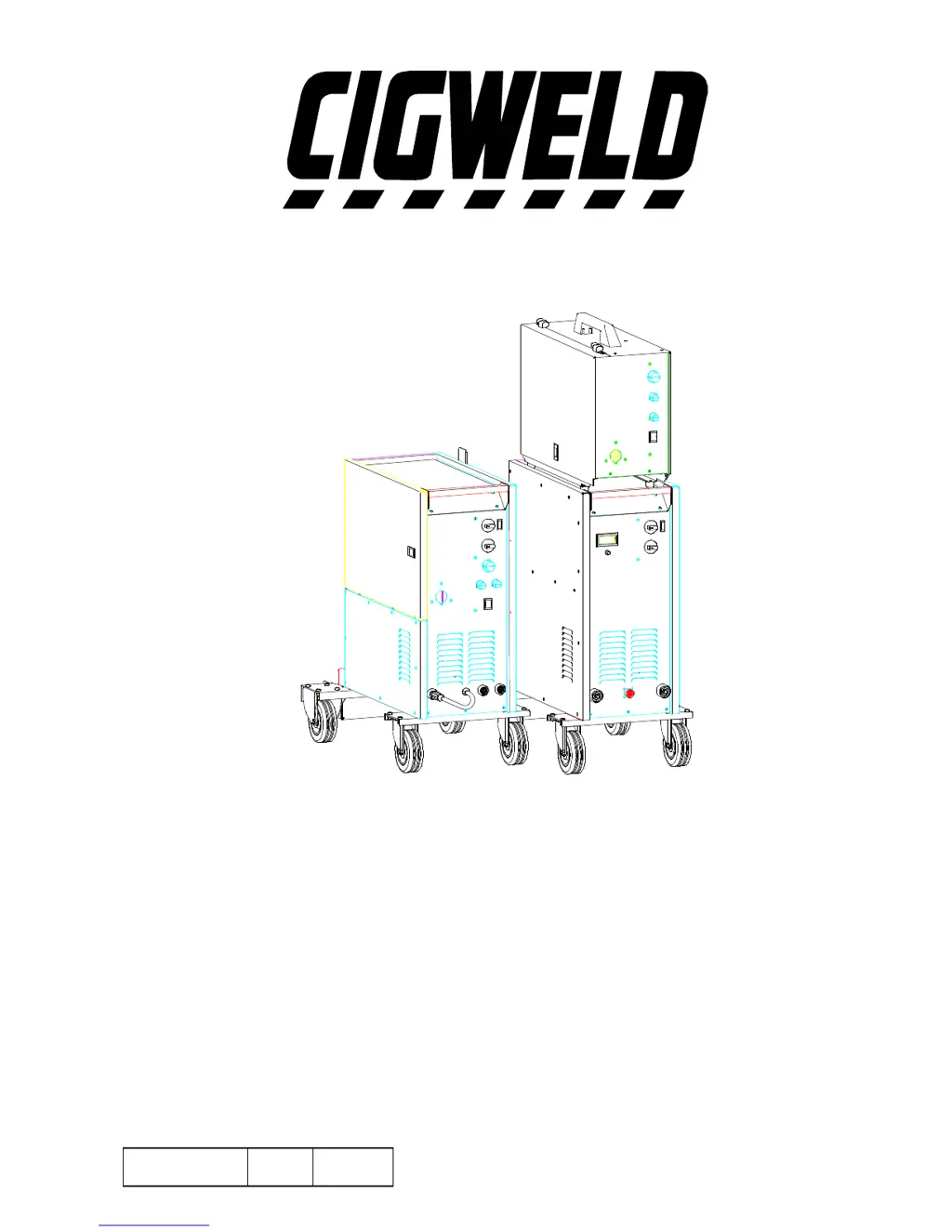
Operating Manual
TRANSMIG 210 Compact Power Source 704832
Remote Power Source 704808
TRANSMIG 250 Compact Power Source 704833
Remote Power Source 704809
2R TRANSMIG 210/250 Wirefeeder 704975
TRANSMIG 310 Compact Power Source 704836
TRANSMIG 330 Remote Power Source 705085
2R TRANSMIG 330 Wirefeeder 704841

Table of Contents

Questions and Answers

  • J
    James ScottAug 20, 2025
    How to fix porosity in CIGWELD Transmig 310 Welding System?
    • R
      rebeccacallahanAug 20, 2025
      To address porosity in your weld, start by cleaning any contaminants from the workpiece. Keep the MIG torch nozzle as close as possible to the workpiece. Make sure the gas holes are clear and gas is flowing from the torch nozzle. Protect the weld area from wind, or increase the gas flow. Verify that the gas cylinder isn't empty and the flow meter is correctly set to 15 liters per minute. Check for gas leaks from the regulator/cylinder connection to the gas hose at the power source. Finally, ensure the hose from the solenoid valve to the torch adapter is intact and properly connected.
  • B
    brendataylorAug 25, 2025
    Why CIGWELD Transmig 310 has excessive spatter?
    • R
      Rebecca GarciaAug 25, 2025
      Excessive spatter can occur if the arc voltage is too high or too low. To fix this, lower the voltage by reducing the Voltage Control switches positions or turn the Wirespeed control knob clockwise if the voltage is too high. If the voltage is too low, raise the voltage by increasing the Voltage Control switches or turn the Wirespeed control knob anti-clockwise.
  • P
    perezdavidAug 26, 2025
    How to resolve undercut in CIGWELD Welding System?
    • M
      Mark MartinezAug 26, 2025
      If you're experiencing undercut, it could be due to several factors. If the welding arc voltage is too high, reduce it by adjusting the Voltage Control switches positions or turn the Wirespeed control knob clockwise. Also, ensure your torch angle is correct and adjust it if necessary. Finally, if there's excessive heat input, increase the torch travel speed or reduce welding current by reducing the Voltage Control switches positions and turn the Wirespeed control knob anti-clockwise.
  • M
    Maria WrightAug 27, 2025
    What causes lack of penetration in CIGWELD Transmig 310 Welding System and how to fix it?
    • J
      Jessica ClarkAug 28, 2025
      Lack of penetration can be caused by a welding current that is too low. Increase welding current by increasing turn the Wirespeed control knob clockwise and increasing Voltage Control switch positions. It can also happen if the joint preparation is too narrow or the gap is too tight, so increase the joint angle or gap. Finally, the shielding gas may be incorrect, so change to a gas which gives higher penetration.
  • A
    Andrea BryantAug 29, 2025
    How to fix irregular weld shape in CIGWELD Welding System?
    • M
      Melissa BaldwinAug 30, 2025
      An irregular weld shape may be due to incorrect voltage and current settings; adjust these using the Voltage Control switches positions and the Wirespeed control knob. Another cause may be that the wire is wandering, in which case you should replace the contact tip. The issue could also stem from incorrect shielding gas, so check your gas selection. Finally, insufficient or excessive heat input can also lead to this problem; adjust the Wirespeed control knob or the Voltage Control switches.
  • C
    Charles KimAug 31, 2025
    What to do if CIGWELD Transmig 310 has weld cracking?
    • C
      Chloe MunozAug 31, 2025
      Weld cracking can occur due to several reasons. If weld beads are too small, decrease torch travel speed. If weld penetration is narrow and deep, reduce current and voltage and increase the MIG Torch travel speed or select a lower penetration shielding gas. Excessive weld stresses can also be a factor, so increase weld metal strength or revise the design. If there's excessive voltage, decrease it by reducing the Voltage Control switches. Lastly, if the cooling rate is too fast, slow it down by preheating the part to be welded or cool it slowly.
  • J
    Jeremy SavageSep 2, 2025
    What to do if CIGWELD Welding System has lack of fusion?
    • R
      ramosandrewSep 3, 2025
      If you're experiencing a lack of fusion, this can be due to the arc voltage being too low. To resolve this, increase the arc voltage by increasing the Voltage Control switches position.
  • R
    Richard BanksSep 5, 2025
    Why arc does not have a crisp sound in CIGWELD Transmig 310 Welding System?
    • J
      jamesrodriguezSep 5, 2025
      If the arc in your CIGWELD Welding System doesn't have a crisp sound, it might be because the MIG torch is connected to the wrong voltage polarity on the front panel. To fix this, connect the MIG torch to the positive welding terminal (+) for solid wires and gas shielded flux cored wires.
  • C
    cookstephenSep 7, 2025
    What causes cold weld puddle in CIGWELD Transmig 310 Welding System?
    • J
      John MendozaSep 7, 2025
      A cold weld puddle may be caused by several factors: * A faulty rectifier unit: Have an Accredited CIGWELD Service Agent test then replace the faulty component. * Loss of a phase in the Mains supply voltage: Check mains power. * Loose welding cable connection: Check all welding cable connections. * Low Mains supply voltage: Contact supply authority.
  • I
    isimonSep 8, 2025
    What to do if CIGWELD Transmig 310 indicator light is ON but welding arc can not be established?
    • M
      Melody JohnsonSep 9, 2025
      If the indicator light is on but a welding arc cannot be established, it might be because the Coarse Voltage Control switch is in the STANDBY position. Switch the Coarse Voltage Control switch to a welding setting.

Summary

Introduction to Transmig Welding

Introduction - Duty Cycle

Explains rated duty cycle for welding power sources and operational limits.

Transmig Specifications Overview

Specifications - Transmig 210;250

Technical data for Transmig 210/250 models, including power, current, and dimensions.

Specifications - Transmig 310;330

Technical data for Transmig 310/330 models, including power, current, and dimensions.

Installation Recommendations

Installation - Mains Supply Voltage Requirements

Details mains voltage tolerance and the importance of correct voltage for performance and component life.

Installation - Alternative Mains Supply Voltages

Provides guidance on required lead sizes and fuse ratings for different mains supply voltages.

Setup for Compact Transmig

Setup - Compact Transmig Procedure

Step-by-step guide for setting up a compact Transmig welding plant, including connections and initial preparations.

Setup for Remote Transmig with Wirefeeder

Setup - Remote Power Source Connections

Details how to connect the power source for a remote Transmig setup.

Setup - Remote Wirefeeder Connections

Explains the connections required for the wirefeeder unit in a remote setup.

Power Source Controls and Features

Controls - Voltage Control Switches

Explains the operation of the Coarse and Fine Voltage Control switches for setting welding voltage.

Controls - Wirespeed Control

Explains how the Wirespeed Control knob adjusts welding current via electrode wire feed rate.

Basic Welding Technique

Welding Technique - Setting Controls

Guidance on setting the Wirespeed and Voltage controls for optimal welding results.

Routine Maintenance and Inspection

Maintenance - Digital Meter Calibration

Procedure for calibrating the digital meter to ensure accurate current measurement.

Basic Troubleshooting

Troubleshooting - Beyond Welding Terminals

Addresses common GMAW problems like porosity, starting from the wire spool to the torch.

Troubleshooting - Welding Problems

Lists common welding faults such as undercut, lack of penetration, and spatter, with causes and remedies.

CIGWELD Transmig 310 Specifications

General IconGeneral
Duty Cycle60% at 310A
Welding ProcessesMIG, Flux Cored, MMA
Wire Diameter Range0.6 - 1.2 mm
Output Current Range10A - 310A
Wire Feed Speed Range2 - 17 m/min

Related product manuals