14
MACHINE PREPARATION
ATTENTION: in order not to cause permanent damage to the batteries it is
essential to avoid their complete discharge: arrange the recharge within a few
minutes of the switching on of the flashing "discharged batteries" signal
ATTENTION: never leave the batteries completely discharged, even if the
machine is not being used
ATTENTION: for the daily recharging of the batteries, you must fully respect
the indications provided by the manufacturer or retailer. All installation and
maintenance operations must be carried out by expert personnel, trained at the
COMAC assistance centre
WARNING Make sure that the battery charger green LED is on before using
the machine again
ATTENTION: danger of exhalation of gas and leakage of corrosive liquids
ATTENTION: danger of fire: do not go near with free flames
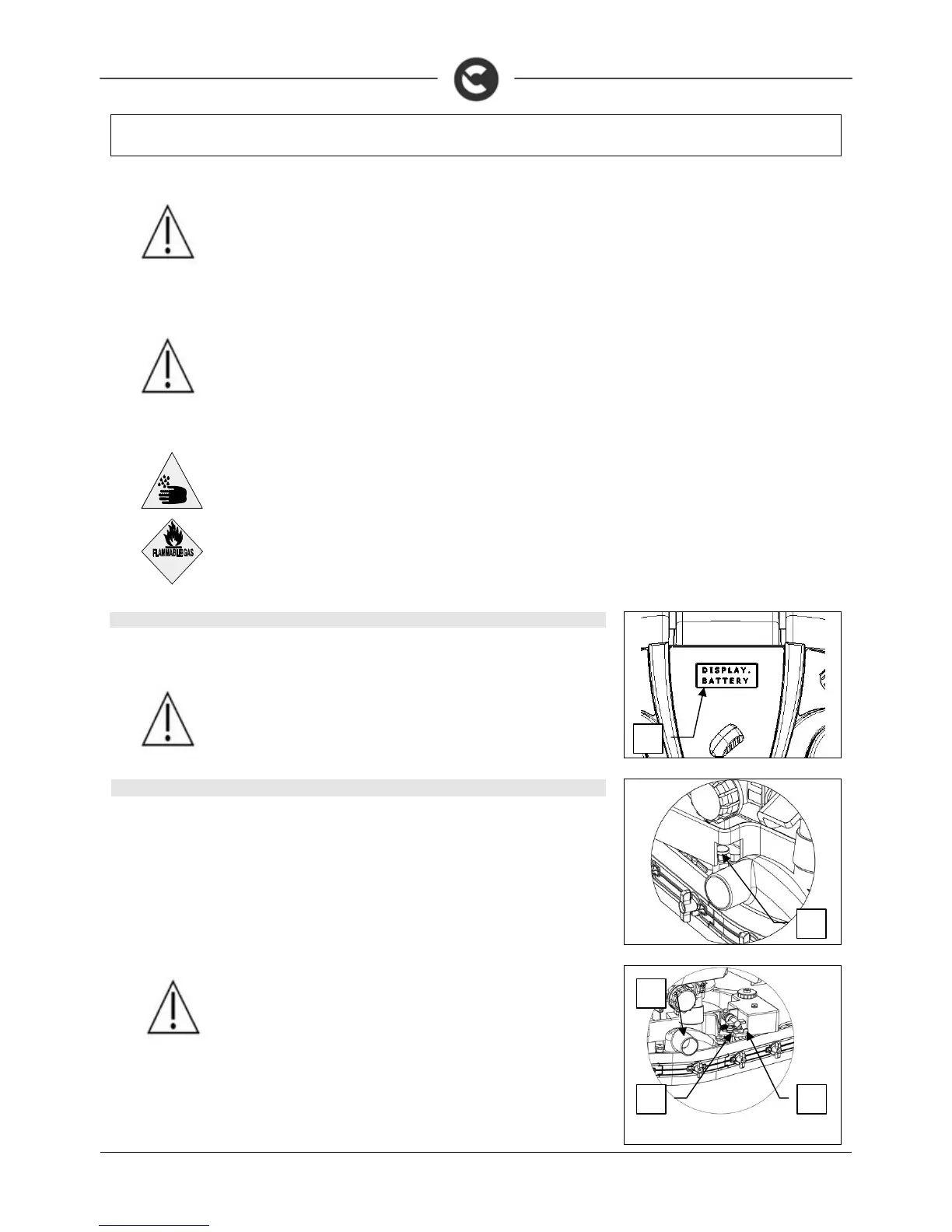
13. BATTERY INDICATOR
On the instrument panel of the machine there is a monitor (1) indicating (amongst other things) the
battery charge status. If the upper line contains 8 light indicators, the battery charge level is 100%. If
the edges of the indicators are flashing, this means the batteries are run down.
ATTENTION: a few seconds after the last indicator on the monitor has flashed,
the brush motor will automatically switch off. With the remaining charge it is
possible to complete the drying process before recharging
14. SQUEEGEE ASSEMBLY
For packaging reasons, the squeegee is supplied disassembled from the machine, and must be
assembled on the machine connection. It is necessary to raise the squeegee coupling using the lever,
and then:
1. raise the squeegee and insert the small left-hand column (1) in the connection hole
2. push the connection lever (2) to the left
3. raise the squeegee and insert the small right-hand column (3) in the connection hole
4. release the connection lever (2) so it is blocked in the flat housing of the small column
5. insert the suction tube in the appropriate squeegee sleeve (4), ensuring that the tube lies to the
right of the lifting cable
ATTENTION: these operations must be carried out using protective gloves to
avoid any possible contact with the edges or tips of metal objects
1
1
2 3
4


 To Next Page