3029
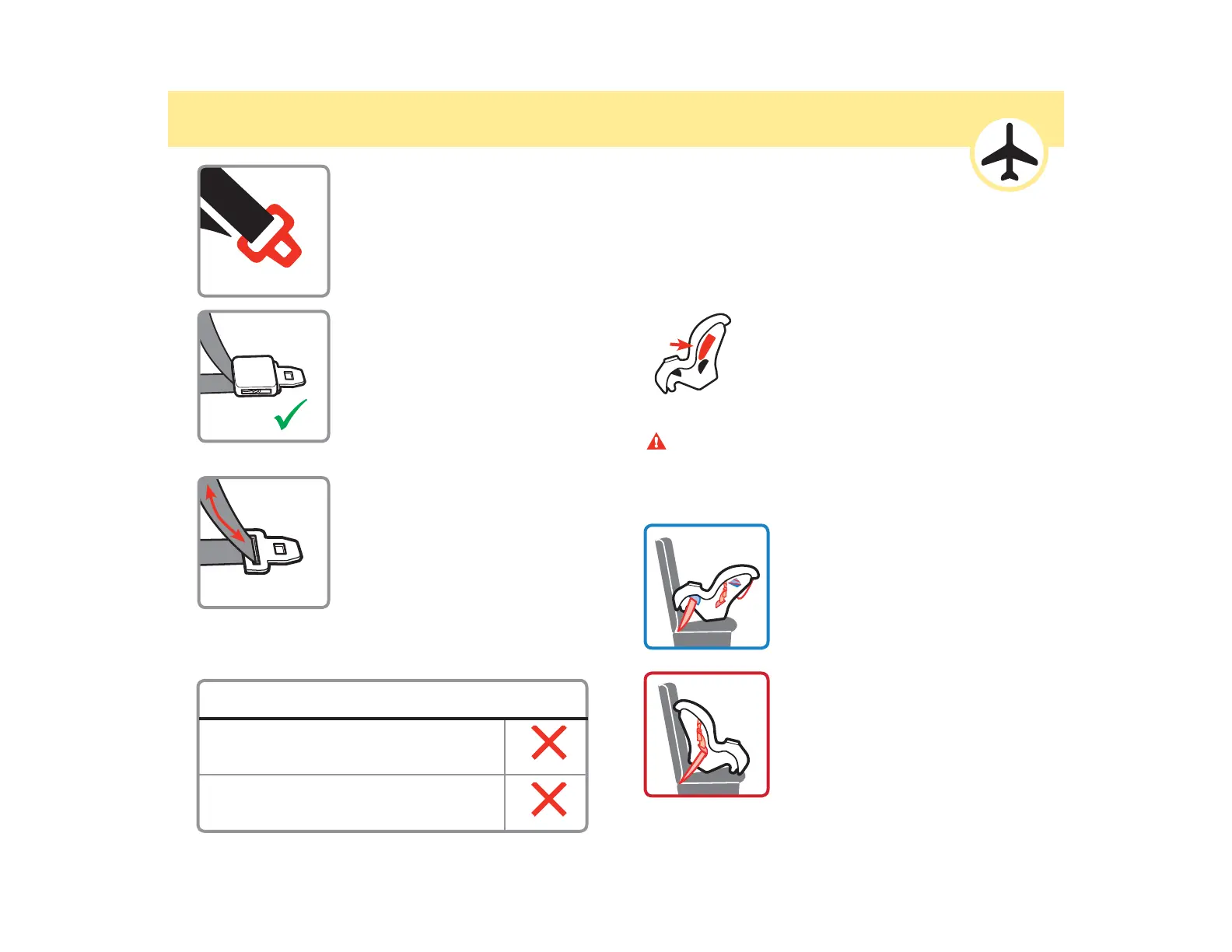
Locking Latch Plate
Emergency Locking
Retractor with a
Sliding Latch Plate
4. Check the Latch Plates
Latch plates are the part of
the seat belt that goes into the
buckle.
Hold the lap belt with one hand
and with your other hand grasp the
tongue of the latch plate (the part
that goes inside the buckle). Pull
the latch plate straight out in line
with the lap belt.
If the latch plate does not slide up
and down the vehicle belt, it is a
locking latch plate.
If the latch plate slides up and
down the vehicle belt, it is a sliding
latch plate.
Sliding latch plates easily slip
between the lap and shoulder por-
tions of the belt.
If you have an Emergency Lock-
ing Retractor with a Sliding Latch
Plate, you
MUST use a locking clip
to install the child restraint. See
pages 47-48.
Emergency Locking Retractor Lap Only Belt
Infl atable Seat Belts
Never Use With This Child Restraint
Aircraft Information
This restraint is certified for aircraft use.
Install the child restraint in a window seat to avoid blocking the
aisle. If the aircraft lap belt is too short, ask the flight attendant for
a belt extender.
Use only on forward facing aircraft seats.
Contact the airline for their specific policies.
Some airlines may ask to see a label stating that
this child restraint is certified for aircraft use.
There is an airplane certification label located on
the side of this child restraint as shown.
WARNING: Store lower anchor belt and tether strap
when using the aircraft belts.
Forward Facing Aircraft Installation
For forward facing installation follow
pages 45-46.
Rear Facing Aircraft Installation
For rear facing installation follow pages
36-38.


 To Next Page