
 Need help?
Do you have a question about the Cradlepoint IBR200 and is the answer not in the manual?
Guidance on optimal placement to ensure efficient operation and avoid RF interference.
Requirements for a wireless broadband data plan and SIM card activation for connectivity.
Lists necessary tools, such as a T6 screwdriver, for the setup process.
Covers checking contents, opening SIM cover, and inserting SIM card.
Details on attaching LTE and Wi-Fi antennas and connecting the Ethernet cable.
Instructions for powering the router and activating it in NetCloud Manager.
Explains the POWER LED behavior and the LED bars for modem signal strength.
Describes LED status for embedded modem, Wi-Fi, and Ethernet port activity.
Links to the IBR200 series router webpage and its data sheet for more information.
Provides access to customer community, support services, and contact information.
Links to terms of service, privacy policy, and GDPR privacy policy.
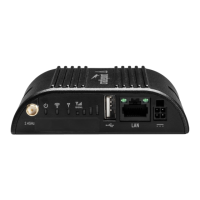
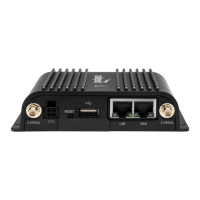
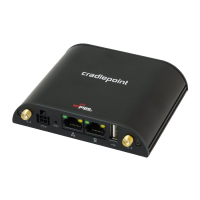
The Cradlepoint IBR200 IoT Router is a compact and robust device designed for wireless broadband connectivity in various environments. It serves as a central hub for internet access, offering both cellular and Wi-Fi capabilities, making it suitable for IoT applications where reliable and flexible network access is crucial. The router is engineered to provide a secure and stable connection, facilitating data transfer and remote management for connected devices.
The IBR200 IoT Router's primary function is to provide internet connectivity through cellular networks, acting as a gateway for other devices to access the internet. It supports an active 2FF-sized SIM card, which, once provisioned by a network operator, enables the router to establish a wireless broadband data connection. This cellular capability is complemented by Wi-Fi functionality, allowing local devices to connect wirelessly to the router and, by extension, to the internet. The router also includes an Ethernet port, enabling wired connections to other network devices or a cable modem for alternative internet access.
The device is designed to be integrated into various IoT solutions, offering features that support remote monitoring and management. It is compatible with NetCloud Manager, a platform that allows users to activate, configure, and troubleshoot the router remotely. This cloud-based management simplifies deployment and maintenance, especially for large-scale IoT deployments. The IBR200 also incorporates General Purpose Input/Output (GPIO) pins, which can be used for various accessory inputs and outputs, such as ignition sensing in vehicular applications or controlling external devices, further enhancing its utility in diverse IoT scenarios.
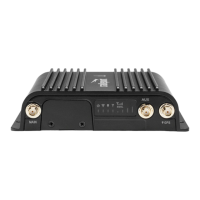
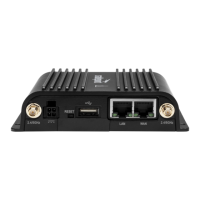
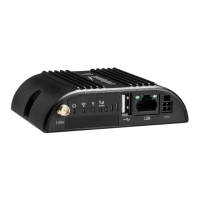
Setting up the IBR200 IoT Router involves a straightforward process, beginning with the physical installation of the SIM card and antennas. Users need to open the SIM cover, insert an activated 2FF-sized SIM card (contacts down, notch in), and then secure the cover. The router requires LTE cellular antennas to be attached to the MAIN and AUX ports, and a Wi-Fi antenna to the port marked 2.4GHz. These antennas should be tightened by hand to ensure optimal signal reception once the router is powered on and mounted.
Mounting the router is flexible, allowing it to be affixed to a wall or ceiling. Best practices for mounting include selecting a location that ensures optimal signal reception and avoids interference from concrete walls, metal surfaces, or microwaves. Pre-drilling holes and using wall anchors are recommended for secure installation. After physical installation, an Ethernet cable can be connected to the LAN port on the router and to a cable modem or other network device, providing a wired connection option.
Powering up the router involves inserting a 4-pin power source into the corresponding port. The GPIO connector pin details specify the functions of each pin: Black for Ground (to vehicle chassis), Red for Power (VDC battery constant), Orange for Input (VDC ignition sensing accessory input), and Blue for Output (General purpose I/O). Once powered, the router undergoes a bootup sequence, typically taking about one minute.
Activation of the router in NetCloud Manager is a key usage feature, enabling remote configuration and management. Users log into their NetCloud Manager account to activate the device, which then allows for the download of its configuration. This cloud integration simplifies the deployment and ongoing management of the router, particularly in distributed IoT environments.
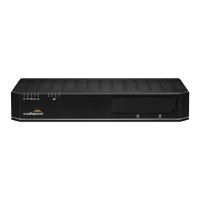
The IBR200 IoT Router incorporates several features to aid in maintenance and troubleshooting, primarily through its LED indicators and cloud management capabilities. The front panel LEDs provide visual cues about the router's status, allowing users to quickly assess its operational state.
The POWER LED indicates whether the router is receiving power. A "No Light" status suggests no power, prompting users to check the power switch and source connection. A solid "Green" light confirms the router is powered on. A "Yellow" light signifies that attention is needed, often indicating issues like the use of a default password, default Wi-Fi PSK, or that the endpoint is not registered in NetCloud Manager. In such cases, users are directed to log into NetCloud Manager and use the Remote Connect menu to address the alert.
The SIGNAL STRENGTH LEDs, represented by bars, indicate the active modem's signal strength. "No Light" means the modem is not operating. Four solid bars indicate the strongest signal, while one blinking bar signifies the weakest signal (half a bar). This visual feedback is crucial for optimizing antenna placement and ensuring robust cellular connectivity.
The EMBEDDED MODEM LED provides connection status for the internal modem. "No Light" means the modem is not connected. A solid "Green" light indicates an active connection. A blinking "Green" light means the modem is connecting. A solid "Yellow" light suggests the modem is not active, while a blinking "Yellow" light points to a data connection error or no modem connection possible. A blinking "Red" light indicates the modem is in the process of resetting.
The WI-FI LED indicates the Wi-Fi status. "No Light" means Wi-Fi is not operating, while a solid "Green" light confirms Wi-Fi is on and operating normally.
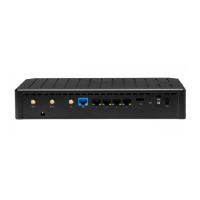
Additionally, the ETHERNET PORT LIGHTS on the backside of the router indicate connection status and activity for the Ethernet port, with a "Yellow" light signifying 10/100 Link/Activity.
For troubleshooting more complex issues, if the device takes longer than five minutes to connect to the internet, users can log into the local UI of the device to make configuration changes. This requires physical co-location with the device. Cradlepoint also provides online resources and documentation, such as articles on "No Internet or Connection Issues," to guide users through troubleshooting steps. Once the router connects to the internet, it automatically connects to NetCloud Manager to download its configuration, streamlining the setup and ongoing management process.
 General
| WAN Ports | 1 |
|---|---|
| WAN Interface | Ethernet |
| LAN Ports | 4 |
| LAN Interface | Ethernet |
| WiFi | Yes |
| Cellular Connectivity | 4G LTE |
| Cellular | Yes |
| Dimensions | 6.5 x 4.5 x 1.5 inches |
| Weight | 1.2 lbs |
| Operating Temperature | -20 to 60 °C |
| VPN Support | Yes |
| Power Input | 12V DC |
| Product Type | Router |
| Device Type | Router |
| Wireless Standards | 802.11n |
| Input Voltage | 12V |
| Security | WPA2 |






 To Next Page