
 Need help?
Do you have a question about the Cradlepoint E300 Series and is the answer not in the manual?
Lists necessary tools like screwdrivers, drill bits, and mounting hardware.
Guide for inserting a SIM card into the SIM1 or SIM2 slots.
Optional steps for setting up and installing the MC400 modular modem.
How to connect the cellular paddle antennas to the router's ports.
Steps to connect the power supply and turn on the router.
Process for activating the router via the NetCloud Manager account.
The Cradlepoint E300 Series Enterprise Branch Router is a versatile networking device designed to provide robust and reliable connectivity for enterprise branch locations. It serves as a central hub for various network services, offering both wired and wireless broadband options to ensure continuous operation and high performance. The router is part of the Cradlepoint NetCloud Enterprise Branch Service, which integrates hardware, software, and cloud management for a comprehensive networking solution.
The primary function of the E300 Series Router is to establish and manage network connections for branch offices. It supports multiple WAN (Wide Area Network) options, including wired Ethernet and cellular broadband, allowing for flexible deployment and failover capabilities. This means that if one internet connection fails, the router can automatically switch to another available connection, minimizing downtime and ensuring business continuity. The router is designed to handle various network demands, from basic internet access to more complex configurations involving VPNs (Virtual Private Networks) and advanced security features.
The E300 Series Router can integrate with optional modular modems, such as the MC400, to enhance its cellular connectivity. This modularity allows businesses to upgrade their cellular capabilities as technology evolves (e.g., from 4G to 5G) or to add redundancy by incorporating multiple cellular modems. The device also supports Wi-Fi broadcasts for both 2.4 GHz and 5 GHz bands, providing wireless access for local devices within the branch.
Through NetCloud Manager, the E300 Series Router offers cloud-based management, enabling remote configuration, monitoring, and troubleshooting. This centralized management platform simplifies network administration, especially for organizations with multiple branch locations. It allows administrators to deploy new devices, update firmware, and manage security policies from a single interface, reducing the need for on-site IT support.
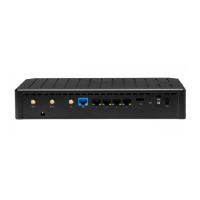
Setting up the E300 Series Router involves a straightforward process, beginning with checking the box contents to ensure all necessary components are present. The router's design facilitates easy installation of SIM cards, which are essential for cellular broadband connectivity. Users simply unclip and remove the modem door, insert an activated 2FF-sized SIM card into the designated slot (SIM1 or optionally SIM2), and then reinstall the modem door. For models supporting modular modems, the process includes inserting the SIM card into the modem's tray and then sliding the modem into the router's slot.
Antenna installation is another key step, with specific instructions provided for attaching LTE cellular paddle antennas to the MAIN and DIV ports, or numbered antenna ports depending on the router model. The device also includes an Antenna Alignment Tool to help optimize cellular signal reception by guiding the correct orientation of the antennas. This tool ensures that antennas are positioned for maximum signal strength, which is crucial for reliable wireless performance.
The router offers flexible mounting options, including placement on a desk, or affixing to a wall or ceiling. For desk placement, rubber feet are provided to ensure stability. When mounting on a wall or ceiling, it's important to use the included mounting insert to mark drill holes and ensure the device is securely fastened. Location considerations emphasize avoiding concrete walls, metal surfaces, or other objects that might interfere with RF signals, and ensuring adequate airflow for ventilation to prevent overheating.
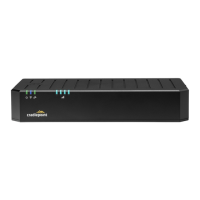
Connecting the router to power is a simple plug-and-play operation, followed by switching the device to the ON position. The router then undergoes a boot-up sequence, after which its status can be monitored using the LED indicators on the front panel. These LEDs provide visual feedback on power status, Wi-Fi activity, VPN connection status, and modem state, allowing users to quickly assess the device's operational health.
Activation of the router in NetCloud Manager is a critical step for full functionality. This cloud-based activation links the physical device to the user's NetCloud account, enabling remote management and configuration. The NetCloud Manager platform provides a comprehensive suite of tools for managing the router's settings, monitoring performance, and applying security policies.
The E300 Series Router is designed for ease of maintenance, with features that simplify troubleshooting and ensure long-term reliability. The LED indicators on the front panel are a primary maintenance tool, offering immediate visual cues about the router's status. For example, a yellow power LED indicates attention is needed, prompting users to log into NetCloud Manager to troubleshoot connection issues. A blinking green modem LED signifies that the modem is connecting, while a blinking yellow modem LED indicates a data connection error. These indicators help users quickly diagnose common problems without needing specialized equipment.
In cases where the router takes longer than expected to connect to the internet, users can log into the local UI of the device to make configuration changes or initiate troubleshooting. This local access provides a direct interface for resolving issues before escalating to remote support. The documentation also points to resources like "No Internet or Connection Issues" articles, guiding users through common troubleshooting steps.
The modular design of the E300 Series, particularly with support for MC400 modular modems, contributes to its maintainability and upgradability. If a modem module experiences an issue or if a technology upgrade is desired, the module can be replaced without replacing the entire router. This modularity extends the lifespan of the device and reduces the cost of future upgrades.
Regular monitoring through NetCloud Manager is a key aspect of maintenance. The platform provides insights into device performance, cellular signal strength, and network health, allowing administrators to proactively identify and address potential issues. Firmware updates, security patches, and configuration changes can all be managed remotely through NetCloud Manager, ensuring the router remains secure and operates efficiently without requiring physical access to the device.
The router's robust construction and attention to installation best practices, such as ensuring proper ventilation and avoiding RF interference, contribute to its overall reliability and reduce the need for frequent maintenance. The comprehensive documentation, including quick start guides and support resources, empowers users to perform basic maintenance tasks and troubleshoot issues effectively. For more complex problems, Cradlepoint Support is available, providing expert assistance to ensure optimal network performance.
 General
| Model | E300 Series |
|---|---|
| Category | Network Router |
| LAN Connectivity | Gigabit Ethernet |
| Power Input | 12V DC |
| WAN Connectivity | Gigabit Ethernet, Cellular |
| Wi-Fi | 802.11ac |
| Ports | Gigabit Ethernet |
| USB Ports | 1 x USB 2.0 |
| Security | Firewall, VPN |
| Cellular Modem | Integrated |
| Mounting Options | Desktop, Wall |




 To Next Page