
 Need help?
Do you have a question about the Cradlepoint CBR400 and is the answer not in the manual?
Lists the items included in the package with the CradlePoint CBR400 router.
Details the hardware and software requirements for using the router.
Provides a general overview of the CBR400's features and capabilities.
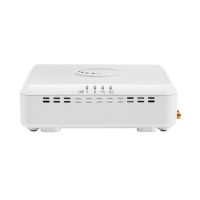
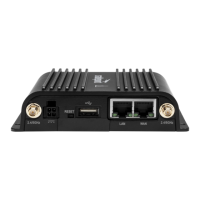
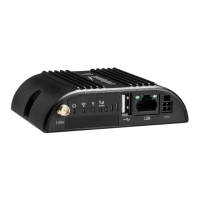
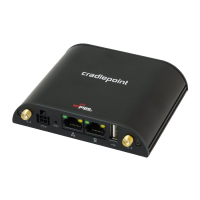
Describes the physical ports, buttons, and switches on the CBR400 router.
Explains the status indicators (LEDs) and their meanings for the router.
Guides users through the initial steps to set up the router for internet connectivity.
Explains how to connect devices wirelessly or via Ethernet to the router.
Lists and provides solutions for frequently encountered issues with the router.
Details how to access and log into the router's administration interface.
Walks users through the initial configuration wizard for customizing network settings.
Highlights quick access points within the web interface for key functions.
Compares the features available in Basic and Advanced modes of the web interface.
Clarifies the distinction between Network Settings and Internet tabs in the interface.
Displays information about all devices currently connected to the router.
Provides an overview of the router's current status and key information.
Shows the router's location data if a GPS-enabled modem is connected.
Displays the status of configured GRE tunnels for network connectivity.
Lists the attached WAN devices used as internet sources.
Shows basic traffic statistics for LAN and WAN connections.
Records and displays events and messages from the router's operation.
Displays the status of configured VPN tunnels for secure connections.
Allows configuration of website filtering rules to control internet access.
Manages IP address assignment for devices on the local network.
Configures Domain Name System settings for name resolution.
Manages the router's firewall settings to protect the network.
Controls network access based on MAC addresses (whitelist/blacklist).
Configures static routes for directing network traffic.
Manages WiFi and local network configurations, including SSIDs and VLANs.
Configures Quality of Service (QoS) to prioritize network traffic.
Manages and configures internet connections via various WAN interfaces.
Allows tracking and managing modem data usage with rules and alerts.
Controls settings for the router's Ethernet WAN port.
Configures GRE tunnels for creating secure connections between private networks.
Distributes traffic across multiple WAN interfaces for increased throughput.
Manages settings and updates for attached modems.
Configures VPN tunnels for secure, encrypted internet connections.
Configures the router to use a WiFi access point as an internet source.
Controls administrative functions like web login, time, and remote access.
Configures email notifications for system events and alerts.
Enables and configures hotspot features for public WiFi access.
Manages router configuration centrally via WiPipe Central server.
Manages router operations like rebooting, factory reset, and ping tests.
Manages firmware upgrades, backups, and restores for the router.
Provides FCC compliance and radio frequency interference information.
Outlines the product warranty terms and conditions from CradlePoint.
Lists the technical specifications for the CBR400 router.
 General
| Ethernet LAN | Yes |
|---|---|
| Networking standards | IEEE 802.3, IEEE 802.3u |
| Ethernet LAN data rates | 10, 100 Mbit/s |
| Ethernet LAN interface type | Fast Ethernet |
| Modulation | CCK, OFDM |
| Wi-Fi standards | 802.11b, 802.11g, Wi-Fi 4 (802.11n) |
| Top Wi-Fi standard | Wi-Fi 4 (802.11n) |
| WLAN data transfer rate (max) | 300 Mbit/s |
| Bandwidth | 2.4 GHz |
| Interface | RJ-45 |
| Compatibility | HSPA, EVDO, LTE, & WiMAX Cellular Network Devices |
| Dimensions (WxDxH) | 122 x 72 x 19 mm |
| Supported network protocols | IP, PPPoE, PPTP, L2TP |
| Security algorithms | 128-bit AES, 3DES, DES |
| Ethernet LAN (RJ-45) ports | 1 |
| Certification | FCC, IC, CE, WiFi, RoHS |
| Operating temperature (T-T) | 0 - 40 °C |
| Cables included | LAN (RJ-45) |
| Product color | Black |
 Weight and Dimensions
| Weight | - g |
|---|



 To Next Page

