
 Need help?
Do you have a question about the Cradlepoint CBA850 and is the answer not in the manual?
Lists the included components of the CBA850 router package.
Highlights the main functionalities and capabilities of the CBA850 router.
Details the necessary hardware and software for operating the CBA850 router.
Provides technical details about the CBA850 router's physical and performance characteristics.
Lists optional accessories available for the CBA850 router.
Details specifications for integrated modems used in CBA850 models.
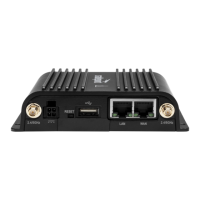
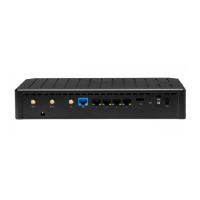
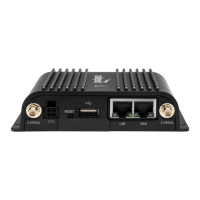
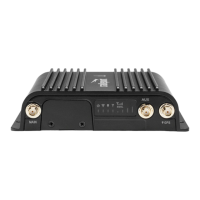
Illustrates the physical layout and ports of the CBA850 router.
Explains the meaning of the various LED lights on the CBA850 router.
Outlines the support services and hardware warranty provided by Cradlepoint.
Provides step-by-step instructions for initial setup and configuration of the CBA850 router.
Guides users through the essential initial steps for getting the CBA850 router operational.
Instructs on how to access and navigate the CBA850 router's web-based management interface.
Describes the initial guided setup process for customizing CBA850 router settings.
Explains how to use Cradlepoint's cloud-based platform for managing the CBA850 router.
Describes how to bookmark and manage frequently used settings within the administration interface.
Introduces the dashboard as a central location for viewing router status information.
Lists and configures available internet connections and their failover order.
Explains how to configure load balancing across multiple WAN interfaces for increased throughput.
Configures modem connections to activate only when needed, saving data.
Sets up checks to ensure WAN interfaces are active and available for failover.
Configures the process of returning to a higher priority WAN after a failover.
Describes how to track and manage data consumption for clients and the router.
Displays detailed status information for active internet connections.
Displays information on data usage per connected client device.
Explains how to gather and view various network statistics and performance data.
Manages connected wired, wireless, and hotspot clients, allowing actions like kicking or blocking.
Manages firewall rules and connection tracking states to control network traffic.
Displays system, GRE, and NEMO routes, and how to configure them.
Provides information on the status and configuration of the CBA850's Ethernet ports.
Details how to enable and view GPS location and status for supported modems.
Explains the configuration of Link Layer Discovery Protocol for network device information sharing.
Manages settings for local area networks, including Ethernet ports and DHCP.
Configures the mode and link speed for the CBA850's Ethernet ports.
Configures the router's DHCP server for assigning IP addresses to network devices.
Details settings for local IP networks, including IP addresses, netmasks, and DHCP server status.
Configures how the router handles IPv4 traffic routing, including NAT and IP Passthrough.
Configures IPv6 address assignment and network behavior.
Manages which network interfaces are attached to specific networks.
Sets up access controls for networks, like admin access or UPnP gateway.
Configures the router to act as a proxy for DHCP broadcast messages.
Configures IGMP proxying to allow multicast streams across the network.
Configures IPv6 address assignment modes and ranges.
Configures interface scheduling, VRRP, and other advanced networking protocols.
Configures Spanning Tree Protocol to prevent network loops.
Sets up IEEE 802.1X port-based network access control for wired connections.
Configures virtual local area networks to segment network traffic.
Adds or modifies static routes to define specific paths for network packets.
Configures split DNS to direct internal and external hosts to different DNS servers.
Sets up dynamic DNS services to map a domain name to a changing IP address.
Creates reusable groups of items for use in filter policy rules.
Defines identities based on host addresses, ports, and MAC addresses for firewall rules.
Configures firewall zones to control communication between network interfaces.
Creates one-way traffic filters applied between network zones for security.
Defines how filter policies affect traffic flow between network zones.
Configures general firewall options like Anti-Spoof and logging.
Opens firewall ports for specific applications to function correctly.
Sets up a Demilitarized Zone for exposing specific services to the internet.
Translates IPv6 prefixes for address independence and load balancing.
Restricts access to remote administration from specific IP addresses.
Allows traffic from the internet to reach specific computers on the internal network.
Configures the web filtering service, including HTTPS traffic and upstream proxy settings.
Creates rules to control network access to external domains and websites based on URL or IP.
Enhances router security with advanced modes, password policies, and spoofing filters.
Configures remote access to the router via WAN, including ping and web administration settings.
Sets the router's system time using NTP and configures time zone and daylight saving.
Manages local network settings like bounce pages, login banners, and system identifiers.
Configures SMS support for basic router queries and commands via text message.
Sets logging levels and enables sending logs to a Syslog server for monitoring.
Configures how router services connect, choosing between WAN or LAN gateway.
Configures Link Layer Discovery Protocol to share network device information.
Manages Cradlepoint routers via a cloud-based platform for configuration and monitoring.
Configures email notifications for various system events and alerts.
Configures SMTP server details to enable email alerts for system events.
Configures USB serial devices for Telnet or SSH access to the router's serial port.
Configures Simple Network Management Protocol for remote monitoring and management.
Manages router and modem firmware updates for new features and fixes.
Saves and restores router configuration settings to/from a computer.
Configures device reboot options, including manual reboot and factory reset.
Tests internet connectivity by pinging a specified hostname or IP address.
Measures internet connection speed to a server for upload and download performance.
Guides the process of registering the router with Cradlepoint Enterprise Cloud Manager.
Guides through initial setup, including admin password, time zone, and wireless settings.
Configures Access Point Name and modem authentication for cellular connectivity.
Sets up tests to verify WAN device connectivity and detect connection failures.
Covers essential safety, regulatory compliance, and warranty details for the device.
Details FCC rules on interference, cautions, and radiation exposure limits.
Warns about hazardous environments and unsafe usage conditions for the device.
Covers Industry Canada statements, warranty, liability, and legal documents.
Details open source software, privacy policy, and router data usage.
 General
| Model | CBA850 |
|---|---|
| Category | Network Router |
| LAN Connectivity | Ethernet |
| LAN Interface | Ethernet |
| WiFi | No |
| Wi-Fi | No |
| Form Factor | Desktop |
| Power Input | 12V DC |
| Cellular Technology | 4G LTE |
| USB Ports | 1x USB 2.0 |
| VPN Support | Yes |
| WAN Interface | Ethernet |
| Power Supply | External Power Supply |
| Cellular Modem | Integrated |
| Security | Firewall, VPN |
| Weight | 0.5 kg |
| WAN Connectivity | LTE, Ethernet |
| SIM Slot | 2x Mini SIM |




 To Next Page