
 Need help?
Do you have a question about the Cradlepoint IBR600C Series and is the answer not in the manual?
Guidelines for selecting an optimal mounting location for the router.
Information on adding a wireless data plan and activating the SIM card.
Details on default router communication and potential data usage charges.
Lists essential tools and optional mounting hardware for router installation.
Verifies all included items based on the specific IBR600C Series model purchased.
Instructions on how to unscrew and remove the SIM cover from the router.
Guides on inserting an activated 2FF SIM card into the router's SIM slots.
Instructions to replace the SIM cover and secure it with SIM door screws.
Guides on connecting the LTE cellular antennas to the MAIN and AUX ports.
Instructions for attaching Wi-Fi antennas to the 2.4GHz ports on IBR600C models.
Best practices and considerations for securely mounting the IBR600C Series router.
How to connect the router using a wired Ethernet WAN connection.
Details on connecting the 4-pin power source and plugging the adapter into an electrical socket.
Guides on activating the router via NetCloud Manager (NCM) account.
Describes the LED status for the router's power indicator.
Explains the LED behavior for Wi-Fi activity and errors.
Details the LED status for the LTE modem connection.
Indicates how blue LED bars represent the active modem's signal strength.
Lists additional LED indications for factory reset and NCOS upgrade errors.
Link to the IBR600C Series Router product webpage.
Link to the IBR600C Series Router datasheet for detailed specifications.
Access to the Cradlepoint customer community forum.
Link to Cradlepoint's official support services.
Provides information on how to contact Cradlepoint support.
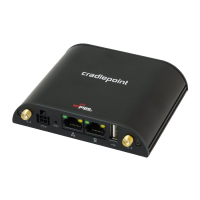
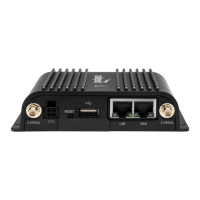
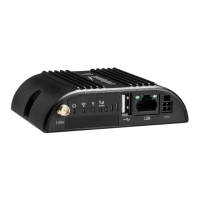
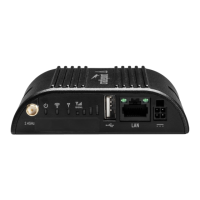
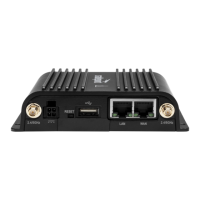
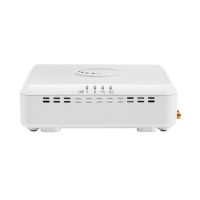
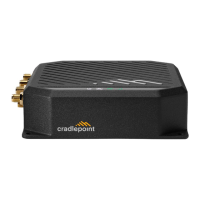
The Cradlepoint IBR600C Series Router is a semi-ruggedized LTE router designed for IoT networks, providing wireless broadband connectivity and robust data management. This device is engineered to operate in various environments, offering flexibility in deployment for diverse IoT applications. Its primary function is to establish and maintain reliable internet connections, facilitating communication between IoT devices and the broader network. The router supports dual SIM cards, enabling failover and failback functionality to ensure continuous connectivity even if one network experiences issues. This redundancy is crucial for critical IoT applications where uninterrupted data flow is paramount.
The IBR600C router is designed for straightforward setup and operation, although professional installation is recommended for optimal performance and security. The setup process involves several key steps, starting with checking the box contents to ensure all necessary components, including the router itself, LTE cellular antennas, a 4-pin power supply, SIM door screws, and reference guides, are present. For IBR600C models, Wi-Fi antennas are also included.
A critical step in the setup is the insertion of an activated 2FF SIM card into the designated SIM slot(s). The router supports dual SIMs, allowing for primary and secondary network connections. The SIM card must be activated and provisioned by a network operator, and users are advised to contact their operator for data plan details and provisioning processes. After SIM insertion, the SIM door is reinstalled and secured.
Antenna attachment is another vital step. LTE cellular (paddle) antennas are connected to the MAIN and AUX ports, while Wi-Fi (stick) antennas (for IBR600C models) are attached to the 2.4GHz ports. It's important to hold the antenna straight and twist the base to thread onto the connector, tightening only with fingers to a maximum torque of 4 in-lbs to avoid over-tightening.
Mounting the router is a flexible process, with options for ceilings, walls, kiosks, or vehicles. Professional installation is highly recommended for mounting to ensure proper placement and secure attachment. Location considerations include ensuring a flat mounting surface free of obstructions, optimal cellular and Wi-Fi signal reception, avoidance of direct sunlight or extreme weather conditions, and sufficient airflow for ventilation. The device should also be placed out of reach and in restricted access areas, as its surface can become hot during operation in elevated ambient temperatures.
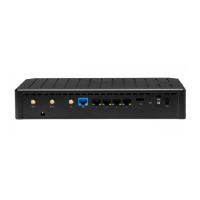
For wired WAN connections, an Ethernet cable can be connected to the WAN port on the back of the IBR600. If using wireless WAN, the router is powered up first, and then access to NetCloud Manager is used for configuration.
Powering up the router involves connecting the 4-pin power source into the corresponding port on the router, ensuring correct pin alignment. The AC power source is designed to allow for using a 4-wire/GPIO cable for hardwired DC connections or GPIO use. After plugging the adapter into an electrical socket, the router requires approximately one minute to complete its bootup sequence.
The router's status is communicated through various LED indicators, providing immediate visual feedback on its operational state. The POWER LED indicates whether the device is receiving power (no light for no power, blue for powered on). The WI-FI BROADCAST LED (for IBR600C) indicates Wi-Fi activity (no light for not connected, green for operating normally, yellow for attention/troubleshooting). For IBR650C models, this LED indicates router errors. The MODEM LED shows the status of the LTE modem (no light for not connected, solid green for an active connection, blinking green for connecting, solid yellow for not active, blinking yellow for data connection error, blinking red for resetting, and blinking red with signal strength LEDs for SIM door not installed/modem off). SIGNAL STRENGTH LEDs (blue bars) indicate the modem's signal strength, from one blinking bar for weakest to four solid bars for strongest. Additional LEDs may blink to indicate a factory reset or errors during NCOS upgrades.
Activation of the router is performed through NetCloud Manager (NCM). The router is bundled with NetCloud services, and users must log into their NetCloud account to activate the device, which then allows for configuration downloads.
The IBR600C Series Router is designed for reliable operation with minimal direct user maintenance. However, understanding its communication and data usage patterns is important for managing operational costs. The router's factory default configuration includes regular communication with Cradlepoint and other resources for NetCloud OS and modem updates, clock synchronization (NTP), and NetCloud Manager. This communication can result in data usage and associated charges, regardless of whether the router uses a wired or wireless internet connection. Users can refer to documentation on "Router Communication/Data Usage" to manage and potentially avoid unwanted data charges.
Troubleshooting is facilitated by the LED indicators, which provide quick insights into potential issues. If the device takes longer than five minutes to connect to the internet, users can log into the local UI of the device to make configuration changes or initiate troubleshooting. Resources like "No Internet or Connection Issues" documentation are available for guidance. Once connected to the internet, the device should automatically connect to NetCloud Manager and download its configuration.
The device's semi-ruggedized design contributes to its durability and reduces the need for frequent physical maintenance. However, ensuring proper ventilation and avoiding extreme environmental conditions are crucial for long-term performance. The recommendation for professional installation also extends to ongoing support, with Cradlepoint Sales and Support available for assistance with installation and troubleshooting. The Cradlepoint Connect Customer Community, Support Services, and direct contact options provide comprehensive resources for users seeking help or further information.
 General
| Model | IBR600C Series |
|---|---|
| Category | Network Router |
| Connectivity | 4G LTE |
| WiFi | 802.11 b/g/n |
| Ethernet Ports | 2 |
| Power | 12V DC |
| Operating Temperature | -30°C to 70°C |
| Security | VPN |




 To Next Page