6
INTRODUCTION
The
tape
recording
process
traditionally
hacbeen
one
of
the
major
sources
of
noise
in recorded music. The
dbx
tape
noise reduction
system
virtually
eliminates tape
hiss.
ln
addition,
dbx
processing permits
recordings to
be
made
at levels that avoid much of the distortion
which
normally
occurs
in
tape recording.
As
a
result. the dbx
tape noise reduction system
not
only reduces
noise. it
can vastly improve
tape
recorder
performance.
With dbx
processing,
virtually
the
only
noise
heard
on
playback
is
that
noise which
was
present
in the
original
program.
Taped records,
upon
playback,
will sound
just
like
the
original disc, taped
FM
broadcasts,
upon
playback.
will
have no more noise
than
was
present
in
the
qriginal
reception of the
program;
and recordings
of
live
music,
conversation, and
so
forth,
will
be indistinguishable
from
the
live event. These
genuine
improvements in the
quality
of
tape recordings
are
due to
a
phenomenal
increase in
recordable
dynamic
range
and the dramatic
absence of tape-induced
noise.
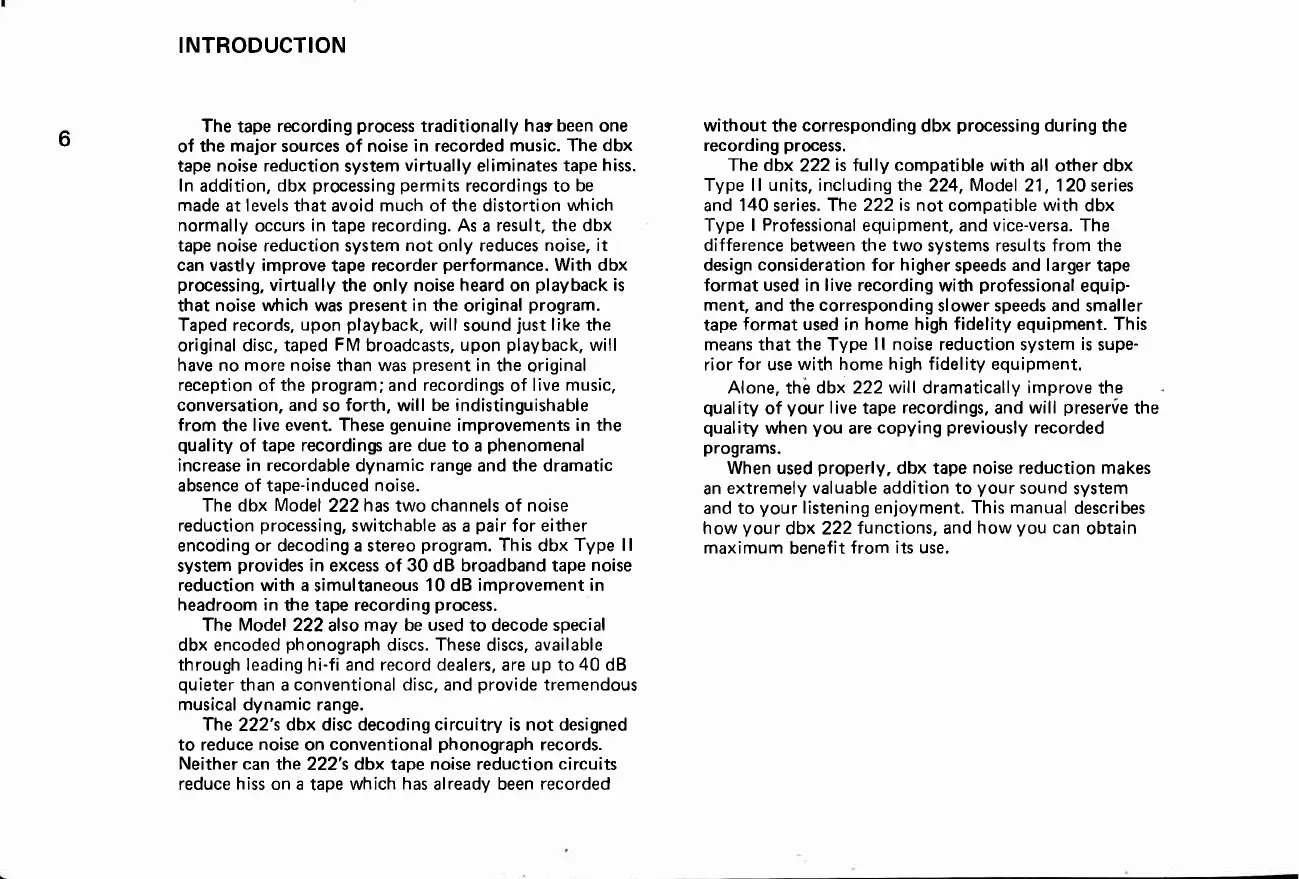
The dbx
Model
222
has
two
channels
of
noise
reduction
processing,
switchable as
a
pair
for either
encoding or decoding a stereo
program.
This
dbx
Type ll
system
provides
in excess
of
30 dB broadband tape
noise
reduction with
a simultaneous
10 dB improvement in
headroom in
the tape recording
process.
The
Model
222
also
may be used
to
decode special
dbx encoded
phonograph
discs.
These
discs, available
through leading hi-fi and record dealers,
are
up to
40
dB
quieter
than a
conventional disc, and
provide
tremendous
musical dynamic range.
The
222's
dbx disc decoding circuitry is not designed
to reduce
noise
on
conventional
phonograph
records.
Neither can
the 222's dbx tape
noise
reduction
circuits
reduce
hiss
on a
tape
which
has
already been recorded
without
the
corresponding
dbx
processing
during
the
recording
process.
The dbx
222is
fully
compatible
with
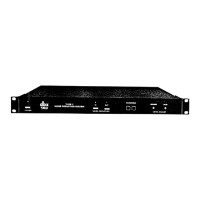
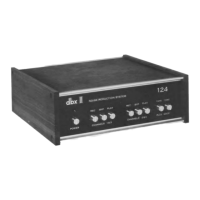
all other dbx
Type ll units, including the
224,
Model
21, 1 20 series
and
140
series.
The 222is not compatible with
dbx
Type
I
Professional
equipment, and
vice-versa.
The
difference
between the
two
systems results from the
design
consideration
for
higher
speeds
and larger
tape
format used
in
live recording
with
professional
equip-
ment, and
the
corresponding
slower speeds and smaller
tape
format used
in
home high
fidelity
equipment. This
means that the Type
ll noise
reduction system
is
supe-
rior
for
use
with home high fidelity equipment,
Alone.
thA
dbx 222 will dramatically
improve
the
quality
of
your
live
tape
recordings,
and
will
preserrie
the
quality
when
you
are
copying
previously
recorded
programs.
When used
properly,
dbx tape noise reduction makes
an
extremely valuable addition to
your
sound
system
and to
your
listening enjoyment. This manual
describes
how
your
dbx 222
functions, and
how
you
can
obtain
maximum
benefit
from its use,



 To Next Page