User_Manual-PILATUS-V1_2.doc 8/57
Data
Detector PILATUS
4 System Description
4.1 Overview
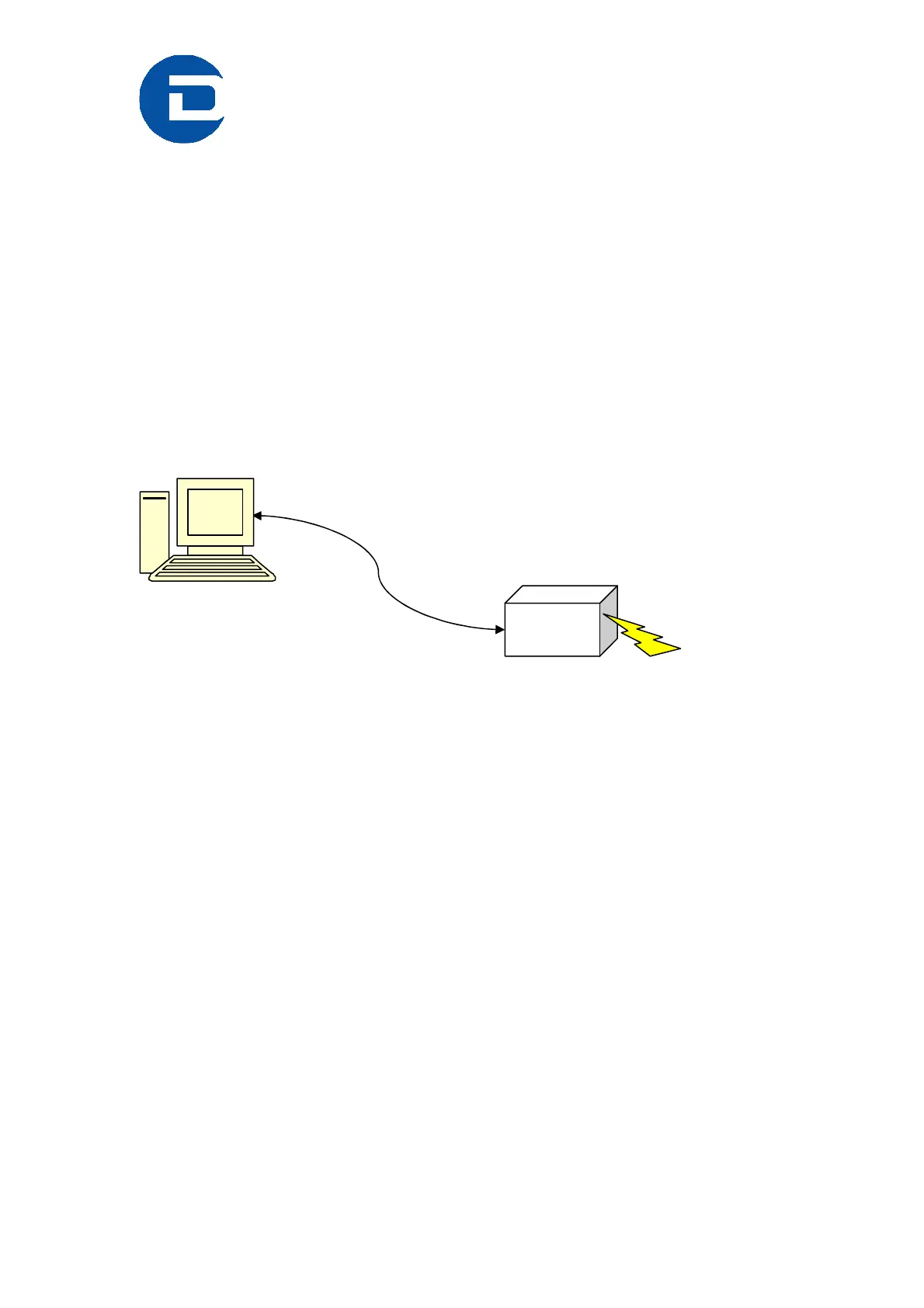
A PILATUS detector system consists of the following components:
• Detector
• Analysis PC with SuSE Linux, the data acquisition tool camserver and
the data analysis tool TVX
• Power supply (where applicable)
• Connecting cables
Figure 1 Overview of the PILATUS detector system setup.
4.2 Principle
DECTRIS X-ray detector systems operate in "single photon counting" mode
and are based on the newly developed CMOS hybrid pixel technology. The
main difference with respect to existing detectors is that the x-rays are directly
transformed into electric charge (Figure 2) and processed in the CMOS
readout chips. This new design has no dark current or readout noise, a high
dynamic range of 1'000'000 (20 bits), a read out time of less than 3 ms, a
framing rate of over 200 images/s and an excellent point spread function of <
1 pixel. The quantum efficiency of the 0.32 mm thick silicon sensor is optimal
for experiments in the energy range from 3-12 keV; however the detectors can
be used for energies of up to 30keV or more. The counting rate is more than
2x10
6
/s/pixel, enough to perform many experiments using the high flux of
modern synchrotron light sources.


 To Next Page